If you've looking how to make salmon gravlax with no cooking, you're in the right place. This easy, foolproof recipe shows you step by step exactly how to create a beautifully cured salmon at home using just a simple salt and sugar cure, no heat required. It's one of the best easy healthy salmon recipes to make when you want something impressive yet surprisingly simple.
This salmon gravlax recipe has become a tradition in my kitchen, especially at Christmas. I make it every Christmas morning for a relaxed, festive breakfast, served piled onto fresh bagels or with creamy scrambled eggs, one of my favourite brunch recipes and perfect for Christmas appetisers or a special breakfast brunch spread. I will make this recipe whenever salmon is on special offer at the local supermarket, turning an everyday ingredient into something that tastes really special.

Gravlax is a classic Scandi food dish, known for its delicate texture and fresh dill flavour. Not only is it a delicious cured salmon recipe, but it's also a great way to enjoy the benefits of salmon, making it a fantastic option if you’re looking for healthy salmon ideas that still feel indulgent. Whether you're planning Mother's Day brunch ideas, festive appetisers, or simply exploring new salmon recipes, this homemade gravlax is a must-try.
Now I’m well aware that buying a side of salmon isn’t cheap, but trust me, this recipe is so worth it. When you see the price of pre-sliced gravlax or smoked salmon in shops, it quickly adds up, and making it yourself works out at a fraction of the cost while tasting fresher and so much more flavourful.
Salmon is genuinely one of the healthiest foods you can eat. It's packed with omega-3 fatty acids, which are amazing for heart health, brain function and reducing inflammation in the body. It's also full of high-quality protein, vitamins and minerals that support everything from your immune system to your energy levels…and it tastes great!
History and Origin of Gravlax:
Gravlax originated in Scandinavia, dating all the way back to the Middle Ages when preserving food was essential for survival. Coastal communities in countries like Sweden and Norway relied heavily on salmon, but without refrigeration, they needed ways to keep their catch from spoiling. So, fishermen developed a simple but ingenious method: they lightly salted the fish, wrapped it, and buried it in the sand above the high-tide line, where it would ferment and cure slowly.
The name "gravlax" actually comes from this traditional technique. It's made up of two Scandinavian words – "grav," meaning "to dig" or "grave," and "lax" meaning "salmon." Put together, it literally translates to "buried salmon."
Over time, as salt became more available and food preservation methods improved, the fermentation process was replaced with the curing technique we use today. Instead of burying the fish, the salmon is "buried" in a mixture of salt, sugar and herbs, which gently cures it over a few days and gives gravlax its signature silky texture and delicate flavour.

If your family loves “Salmon Gravlax” as much as mine does, you’re in good company - we’ve got plenty more delicious healthy recipes for you to try. Here are a few more recipes that always go down well at our table:
- Roasted veg, avocado and baba ganoush sandwich
- Lebanese Turkey kofta Mezze plate
- Pesto Caprese chicken sandwich
- Homemade baba ganoush
- Fresh Mango salsa
- Homemade pesto
- Olive tapenade
- Guacamole
- Creamy Salmon, lemon and dill pasta
- Jerk salmon with rice and peas
- Cottage cheese protein bowl
Jump to:
- History and Origin of Gravlax:
- Ingredients and substitutions for salmon gravlax:
- What equipment will you need to make easy salmon gravlax?
- How do I make easy homemade salmon gravlax?:
- Serving suggestions for homemade healthy salmon Gravlax:
- Variations of fresh homemade guacamole:
- How to store and freeze salmon gravlax:
- FAQ
- Easy Homemade Salmon Gravlax Recipe (No Cooking, 48 Hour Cure & Step-by-Step Tips)
- Related
- Pairing
Ingredients and substitutions for salmon gravlax:
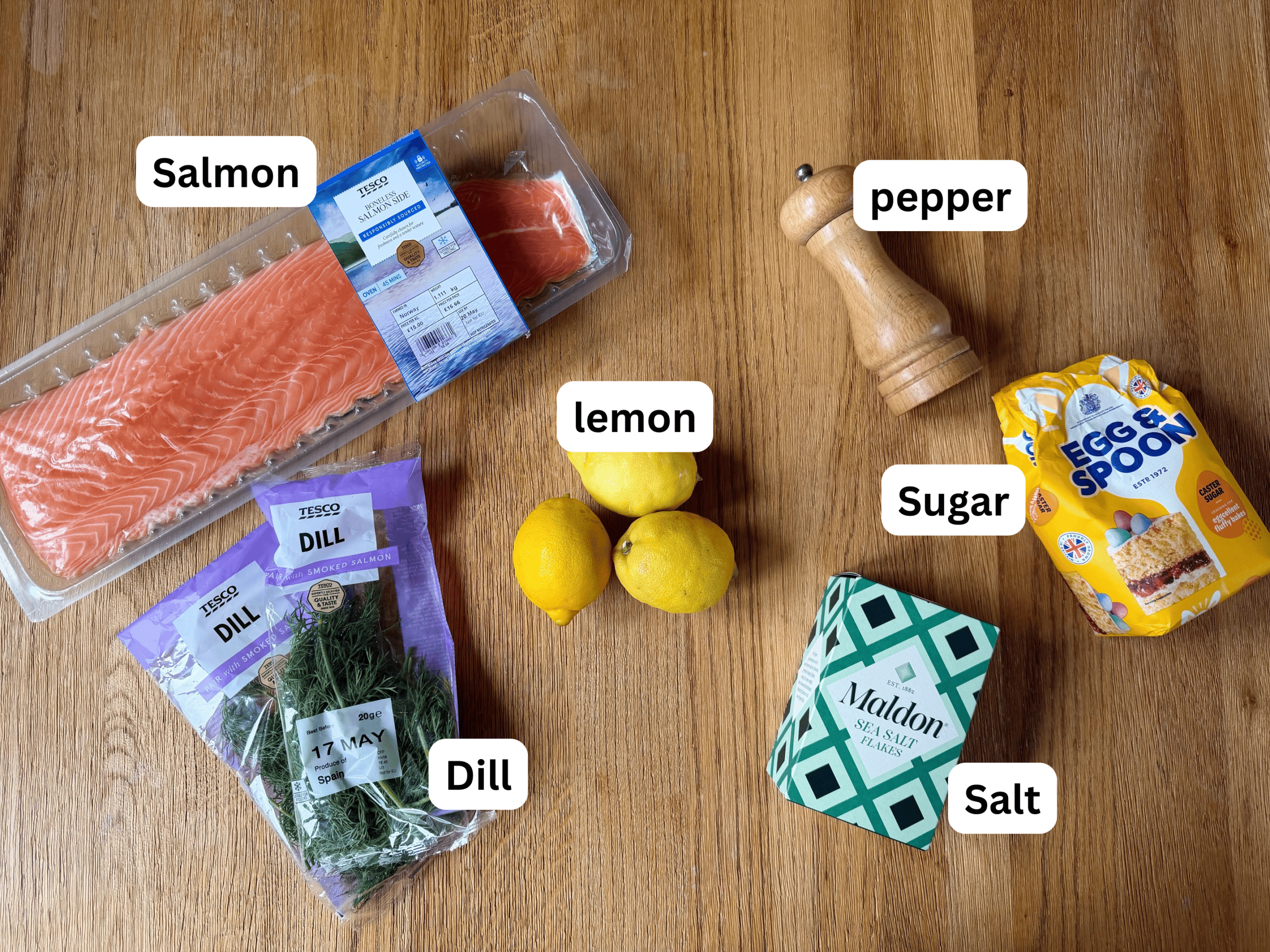
See recipe card for quantities.
Jump to Recipe- Salmon (side or fillet) – The star of the dish – choose the freshest, best-quality salmon you can find. Trout works well if salmon isn't available.
- Fresh dill – Adds that classic Scandinavian flavour. In my opinion there is no substitution for Fresh dill.
- Lemon (zest) – Brings brightness and freshness to the cure. Orange or lime zest for a slightly different citrus note.
- Salt – Essential for curing the fish and drawing out moisture.
- Sugar – Balances the salt and enhances flavour.
- Black pepper – Adds a gentle warmth and seasoning. White pepper for a milder flavour, or crushed pink peppercorns for a more elegant twist.
What equipment will you need to make easy salmon gravlax?
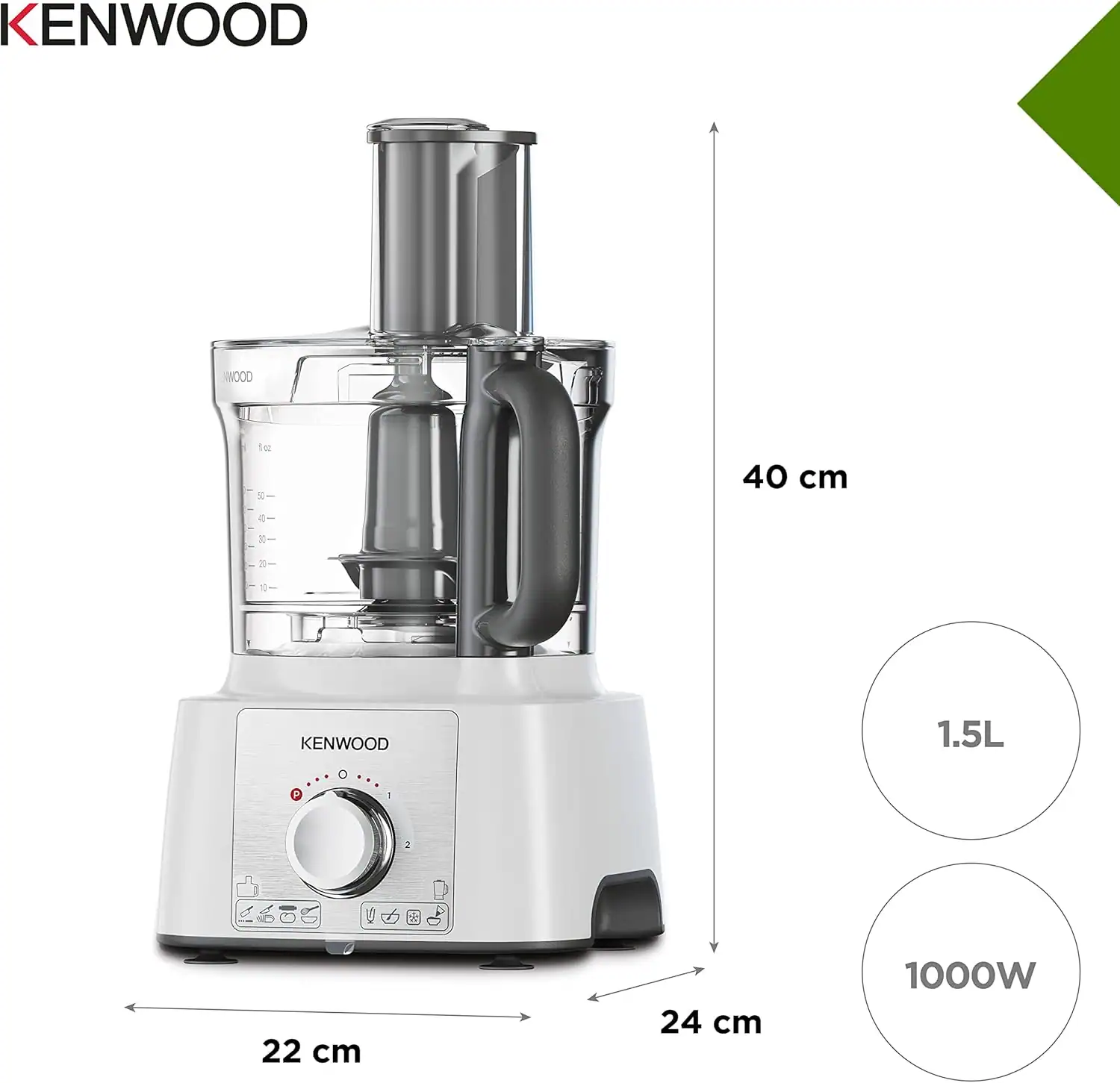
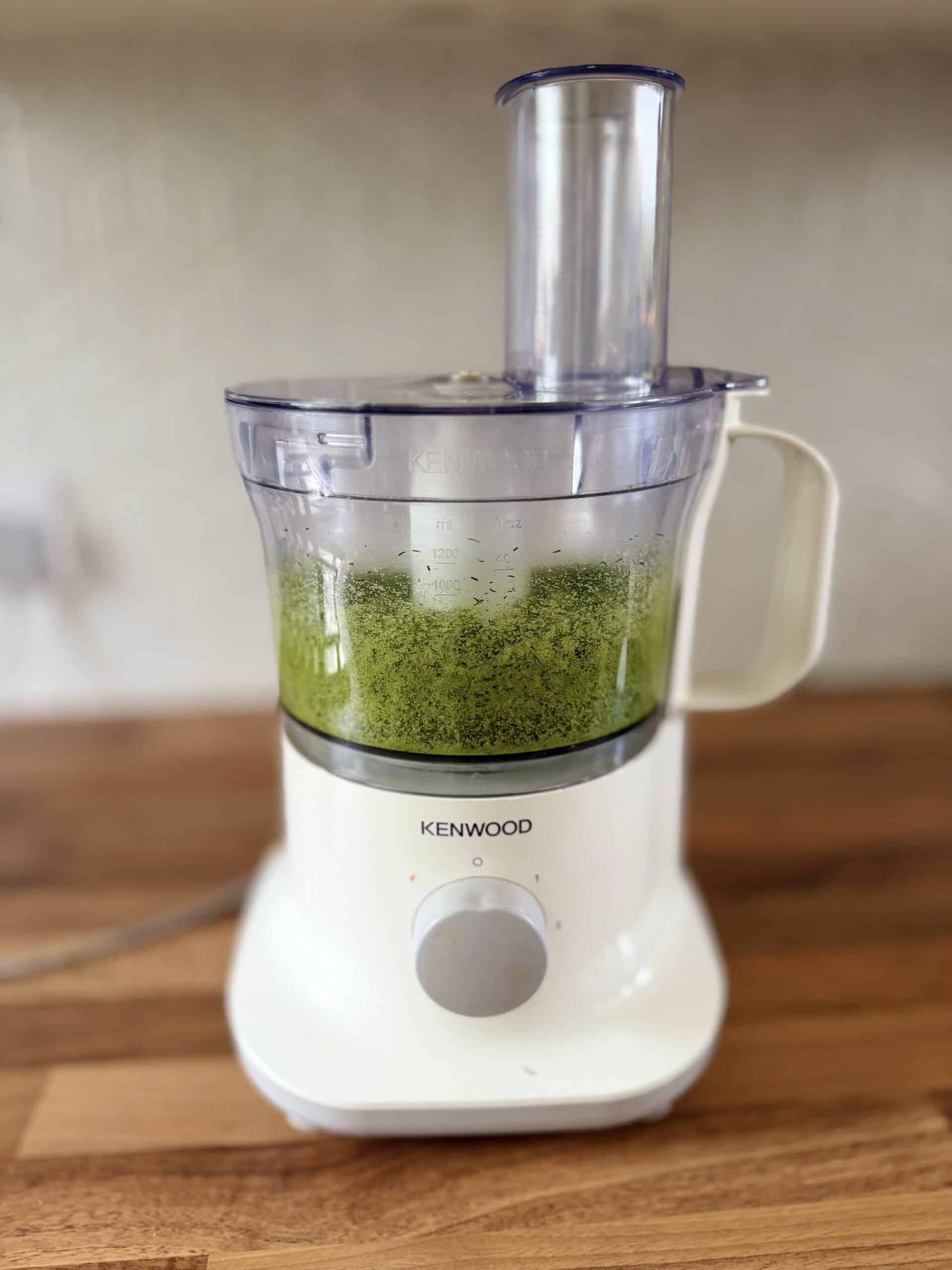
- Food processor: You can make this recipe without a food processor but the result is much better if you do have one. By blending the cure mix you get the classic bright green wet Dill salt mixture that works to cure the salmon. This Kewood food processor is a workhorse in my kitchen, I use it all of the time.
How do I make easy homemade salmon gravlax?:
Making salmon gravlax is surprisingly simple, there's no cooking involved, just a quick cure of salt, sugar, and herbs before letting the fridge do the work. After a couple of days, you'll have beautifully cured, homemade gravlax that's ready to slice and enjoy.
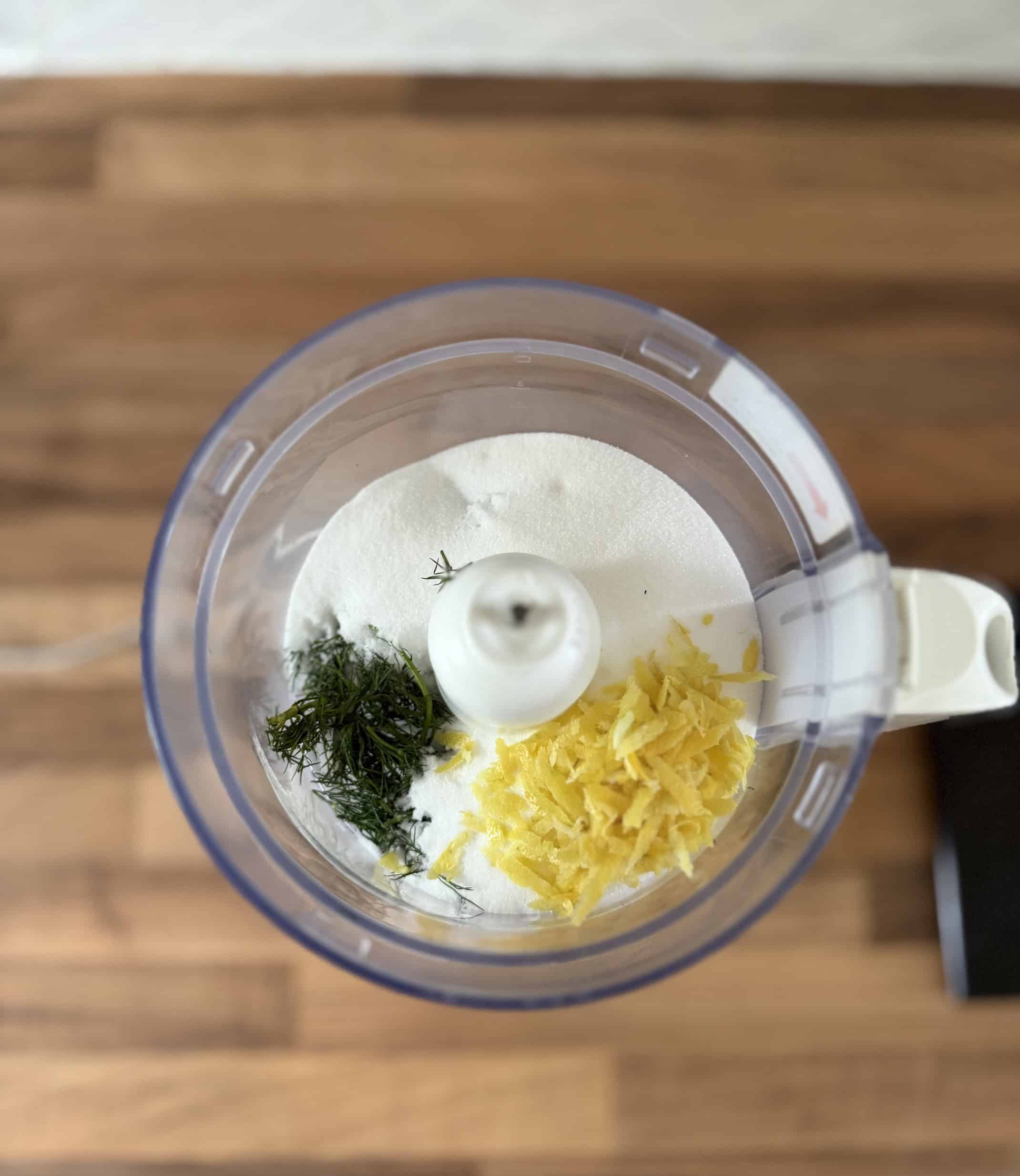
1: Prepare the cure – Add the salt, sugar, half of the dill, and the zest of 2 lemons to a food processor. Blend for about 1 minute until you have a bright green, slightly wet cure.
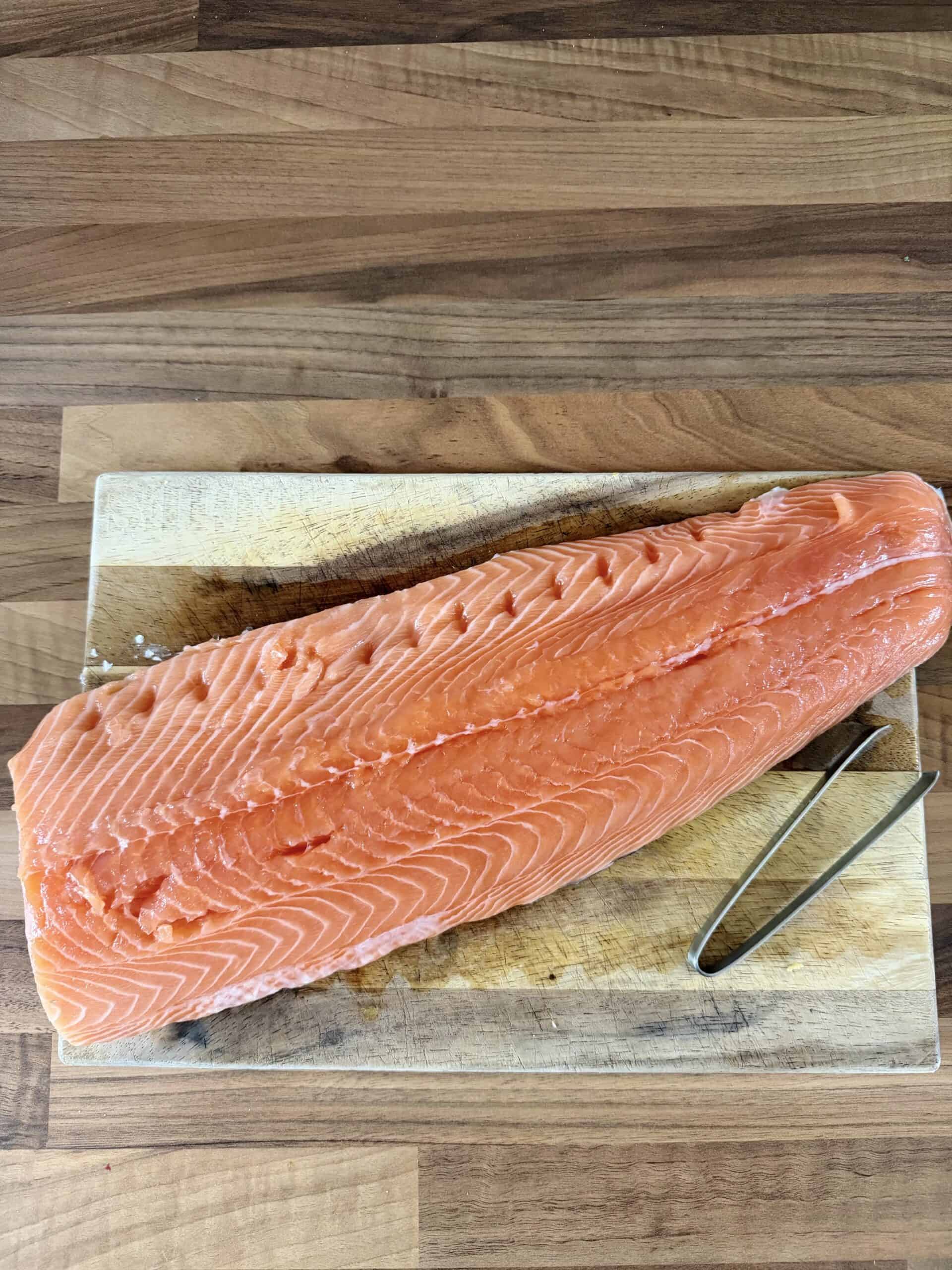
2: Check the salmon – Run your fingers over the salmon to check for any bones. Remove any bones them using fish tweezers or pliers. Cut the side of salmon in half.
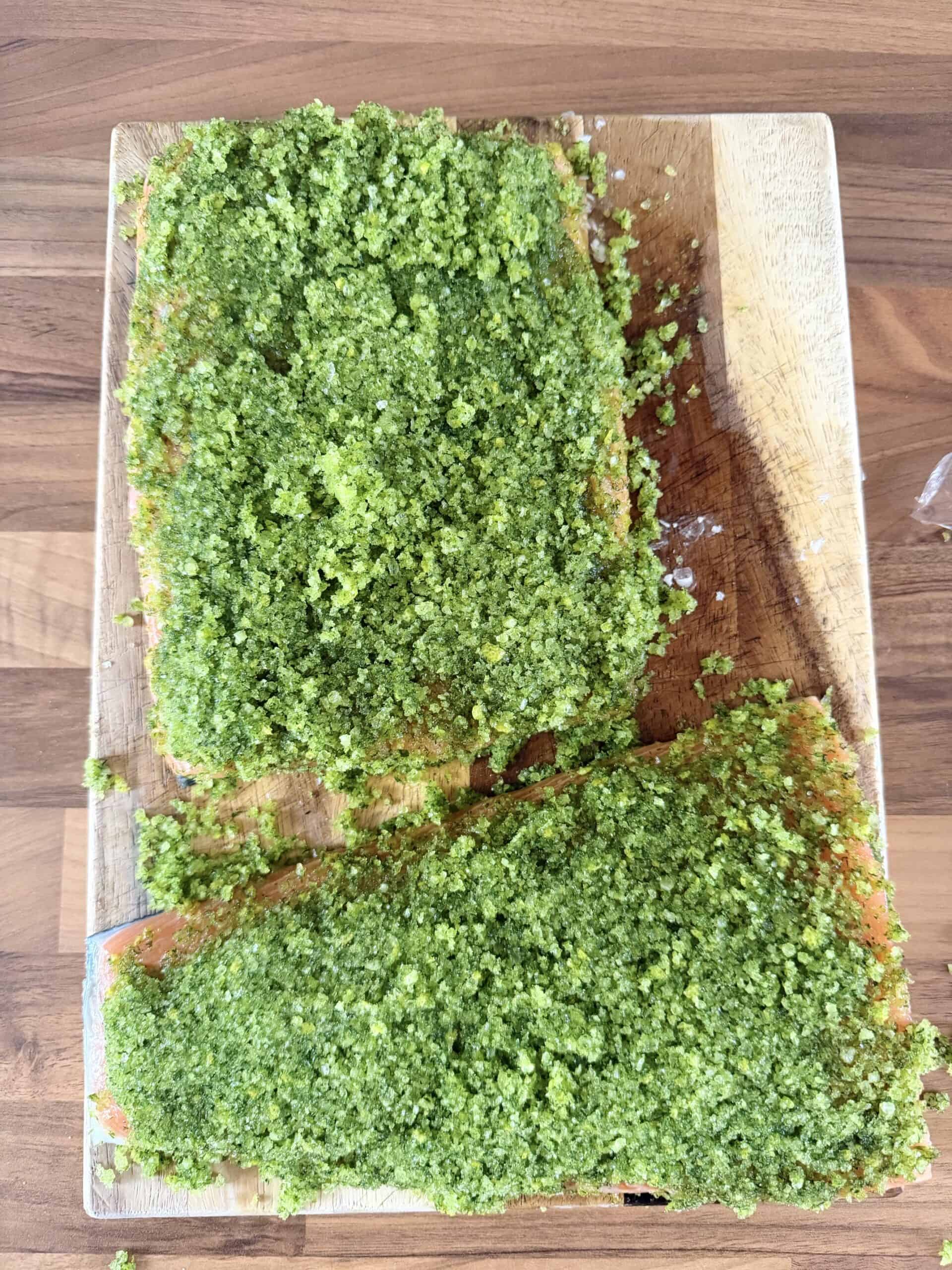
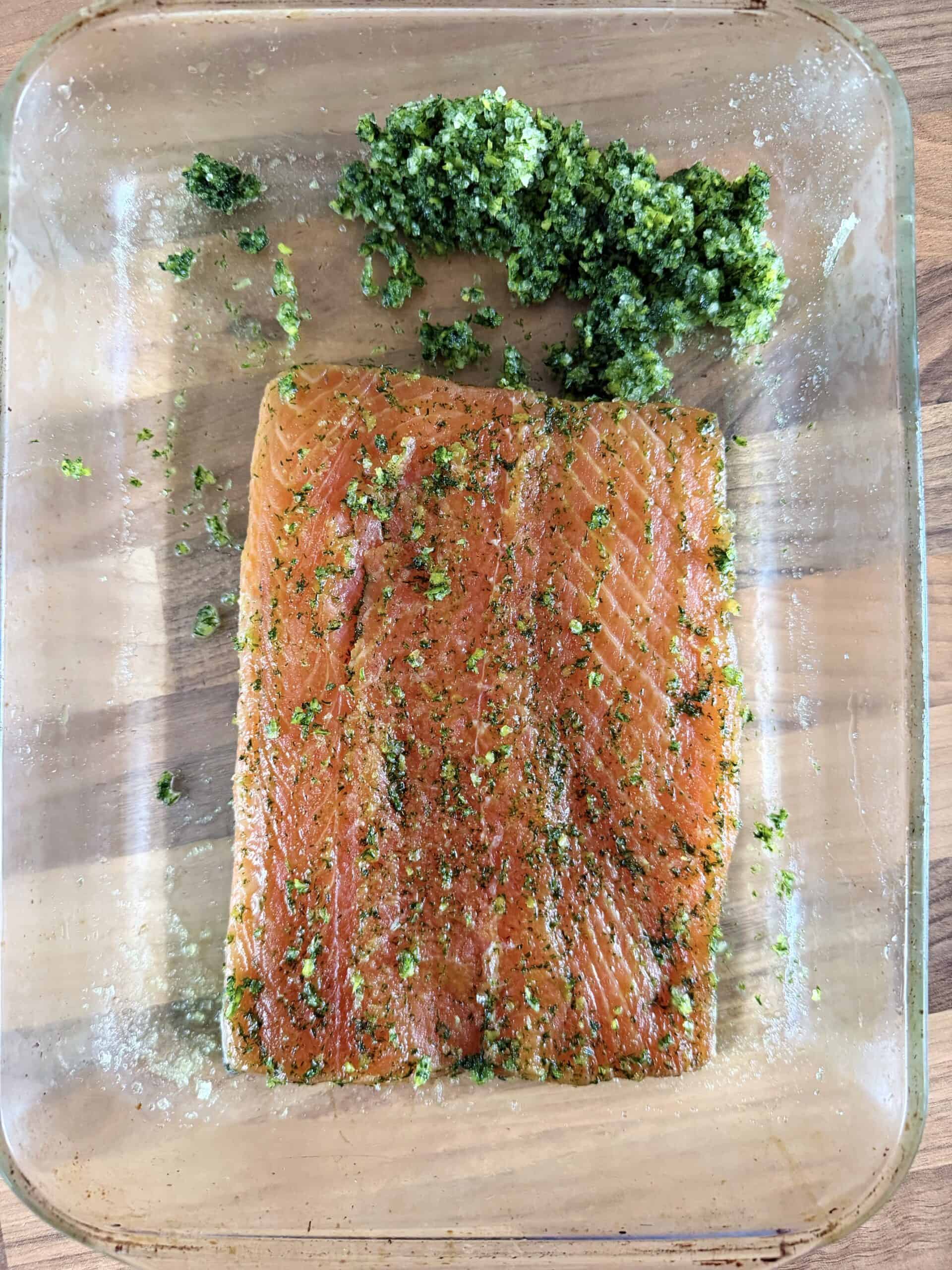
3: Apply the cure – Place the salmon pieces skin-side down. Evenly rub the cure over all the exposed flesh.
Ensure the fish it is fully covered.
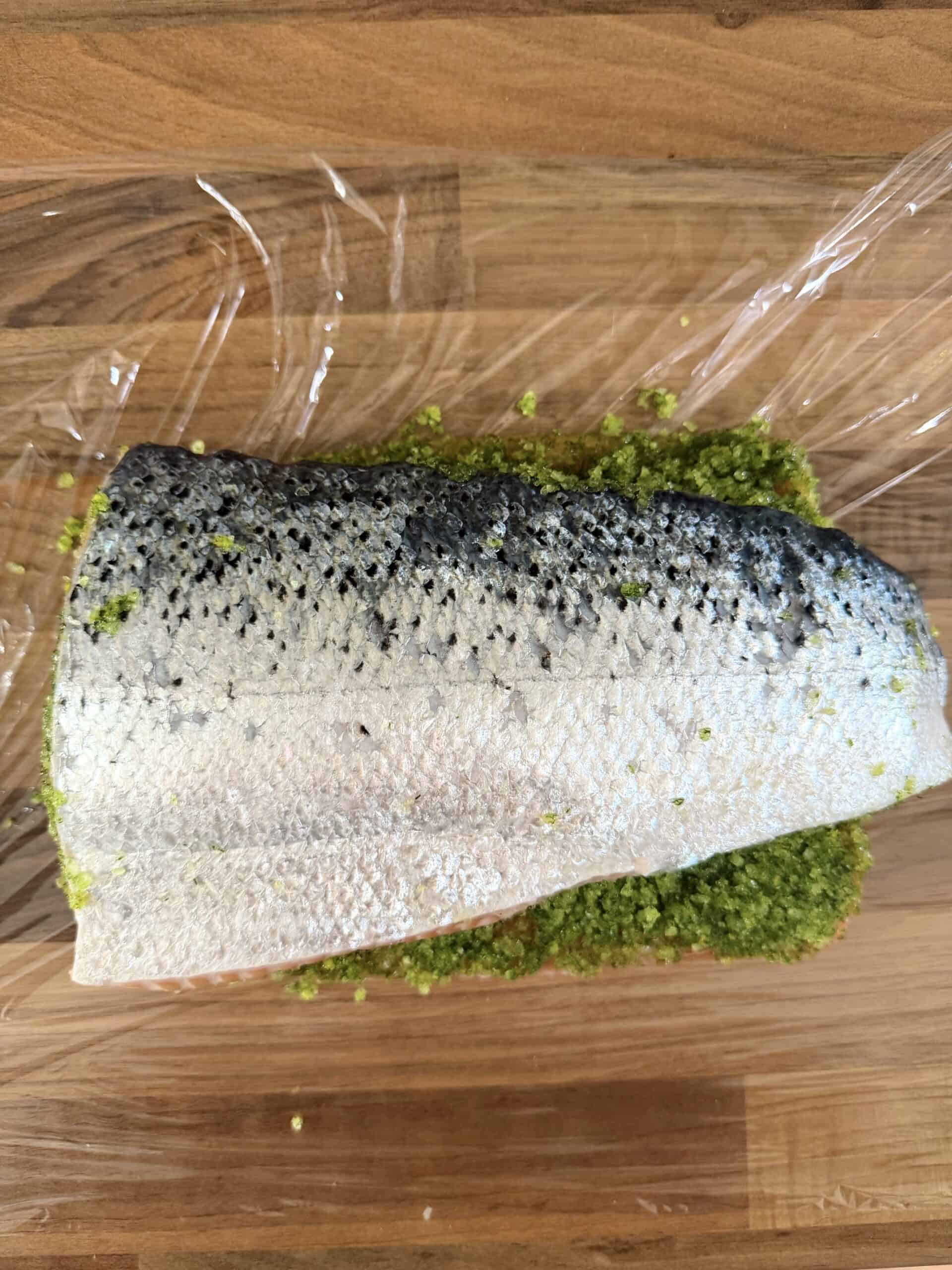
4: Assemble and wrap – Sandwich the two pieces together, flesh side to flesh side. Wrap tightly in cling film, then use a cocktail stick to poke a few small holes to allow excess liquid to escape.
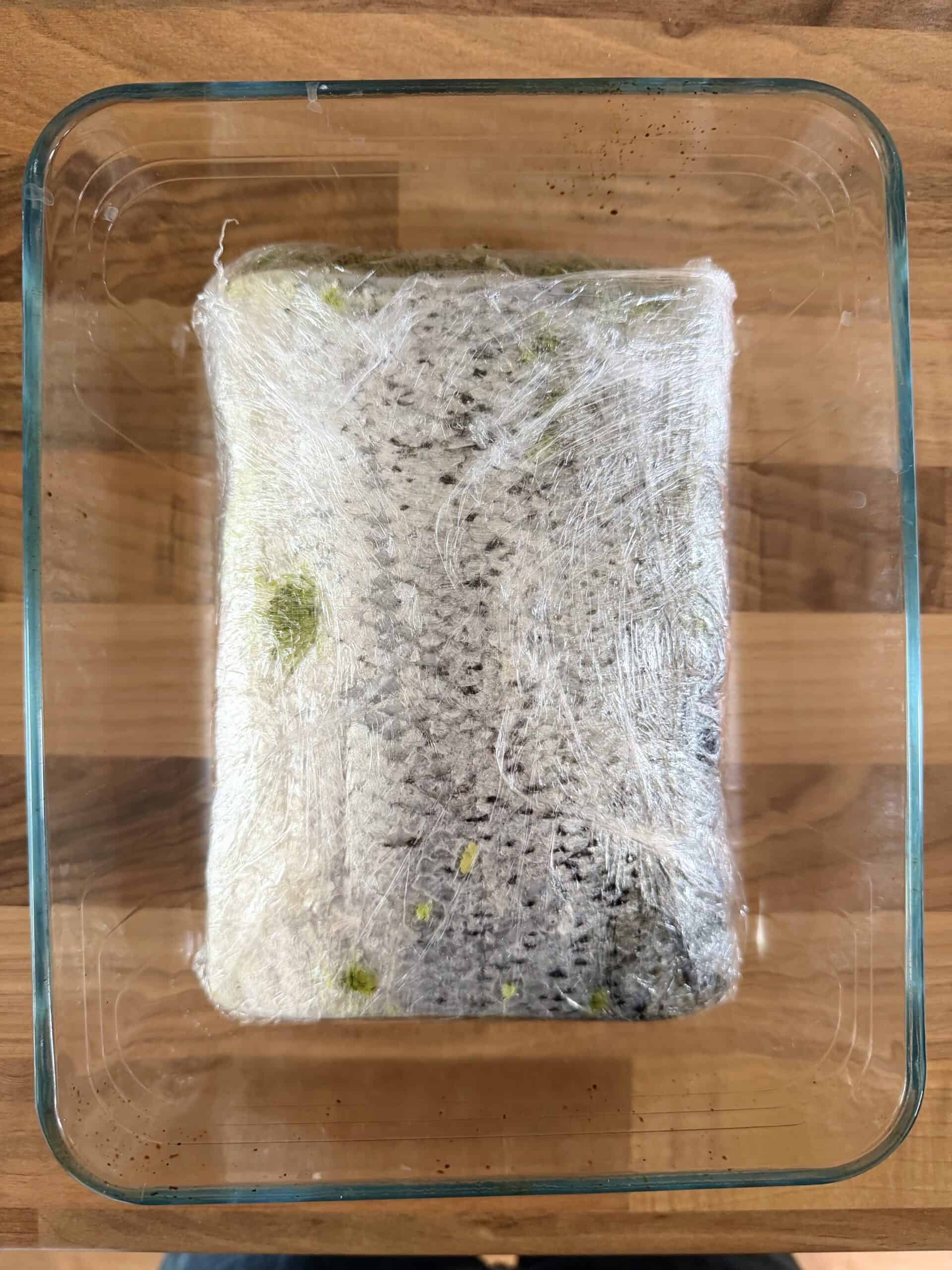
5: Weight and refrigerate – Place the wrapped salmon in a deep tray to catch any liquid released during curing.
Put another tray or board on top and weigh it down (a few tins of beans work perfectly).
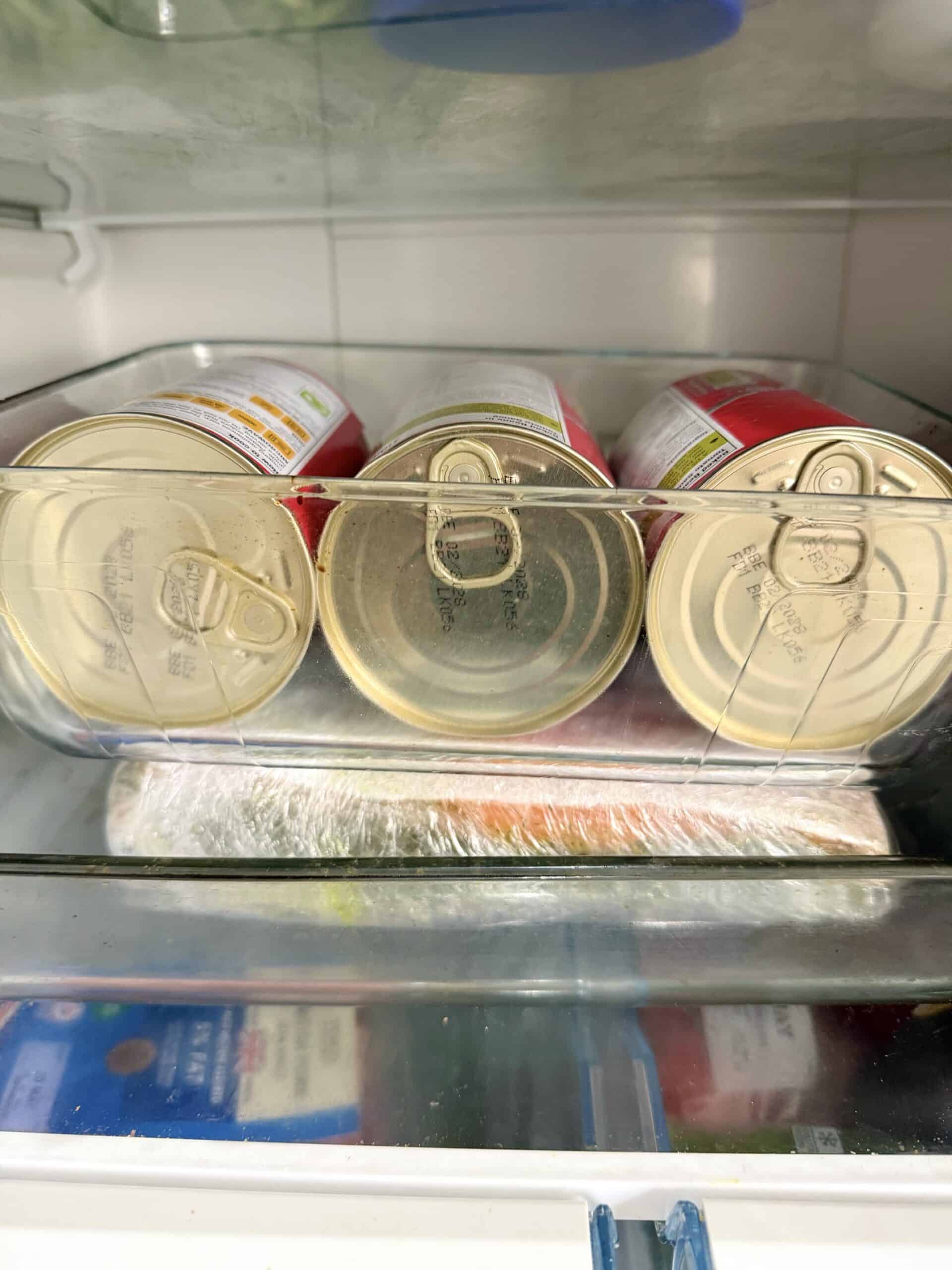
6: Cure the salmon – Refrigerate for 48-72 hours, turning the salmon every 12 hours for an even cure.
For a softer texture, cure for 48 hours, For a firmer texture, cure for 72 hours
7: Rinse and dry
Once cured, remove the salmon from the fridge. Unwrap and scrape off the cure mixture, then rinse briefly under cold water to remove any remaining cure. Pat completely dry with kitchen paper.
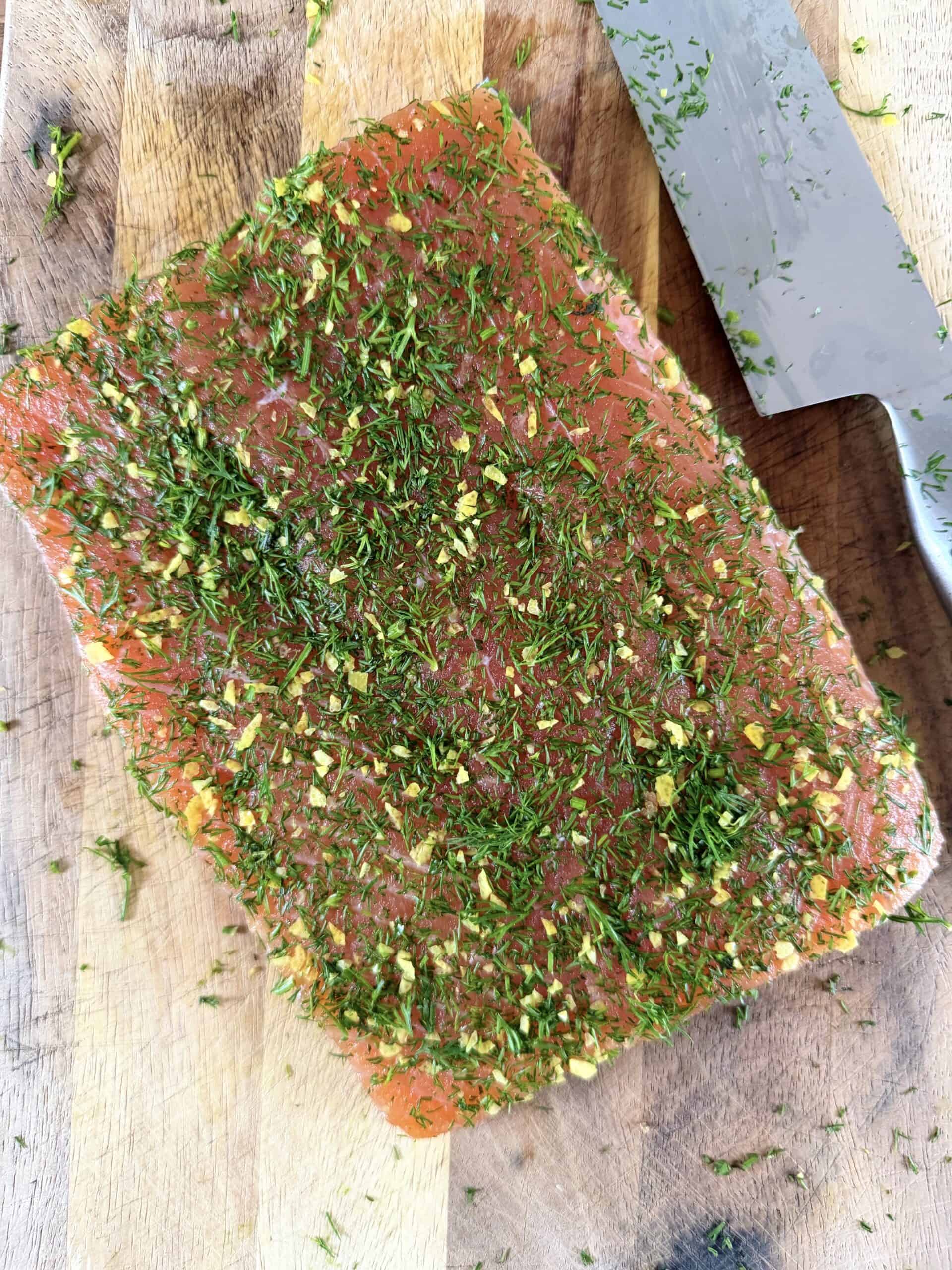
8: Finish with dill and lemon – Finely chop the remaining dill (20g) and zest the final lemon. Sprinkle evenly over the cured salmon.
Press it down so it sticks to the Salmon
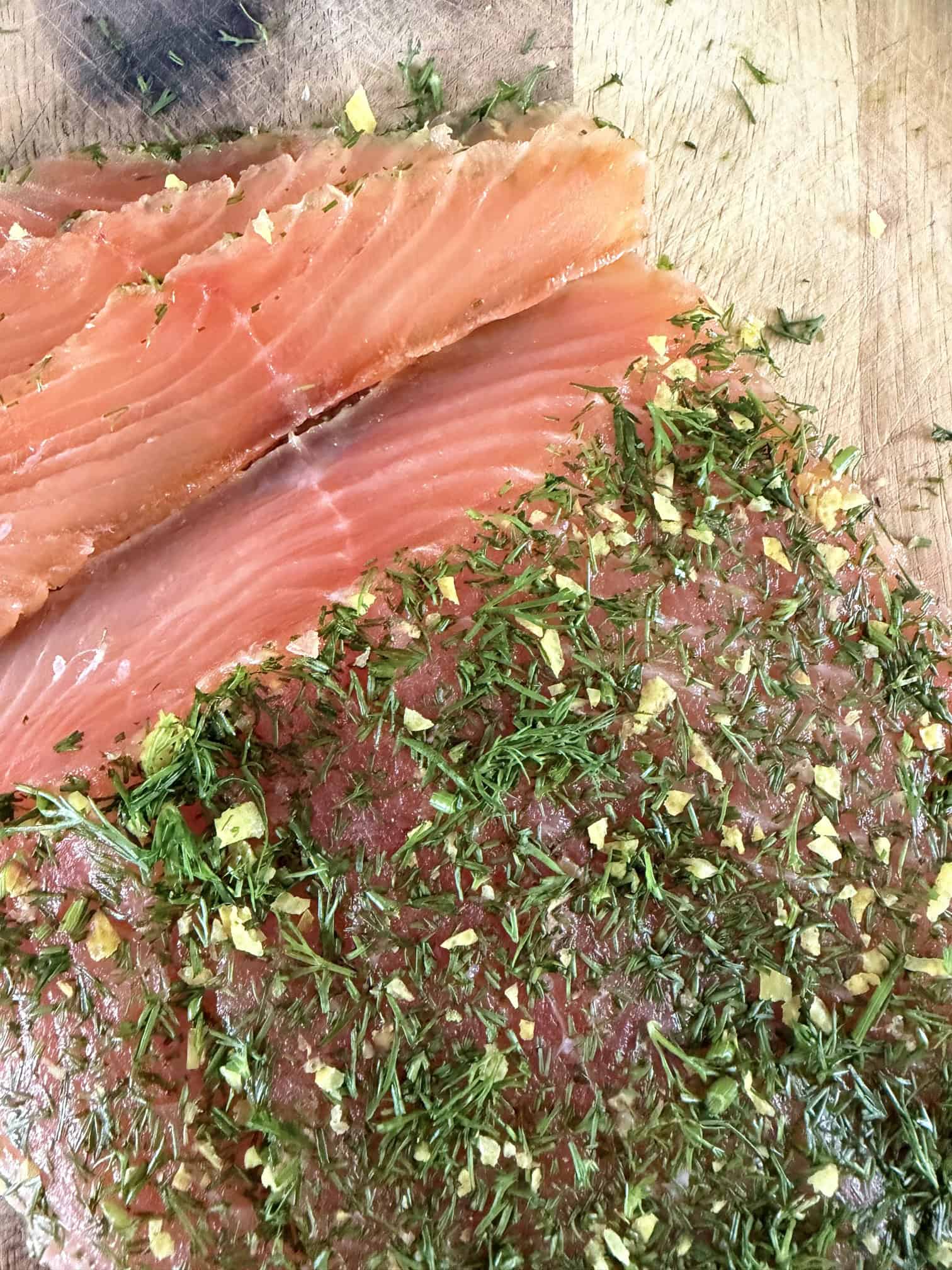
9: Slice and serve
Using a very sharp knife, slice the gravlax thinly on the diagonal. Serve immediately or store in the fridge until ready to enjoy
Serving suggestions for homemade healthy salmon Gravlax:
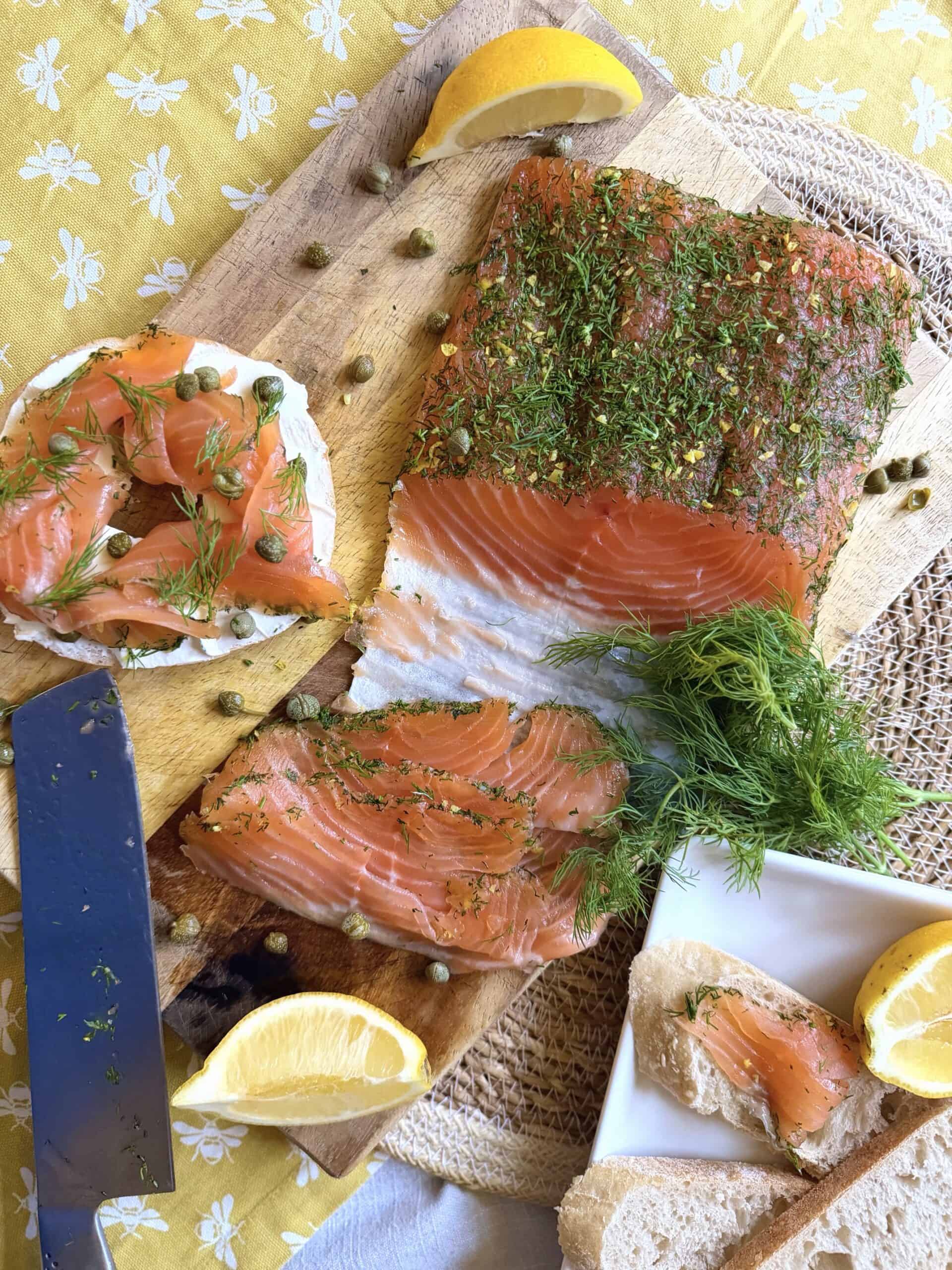
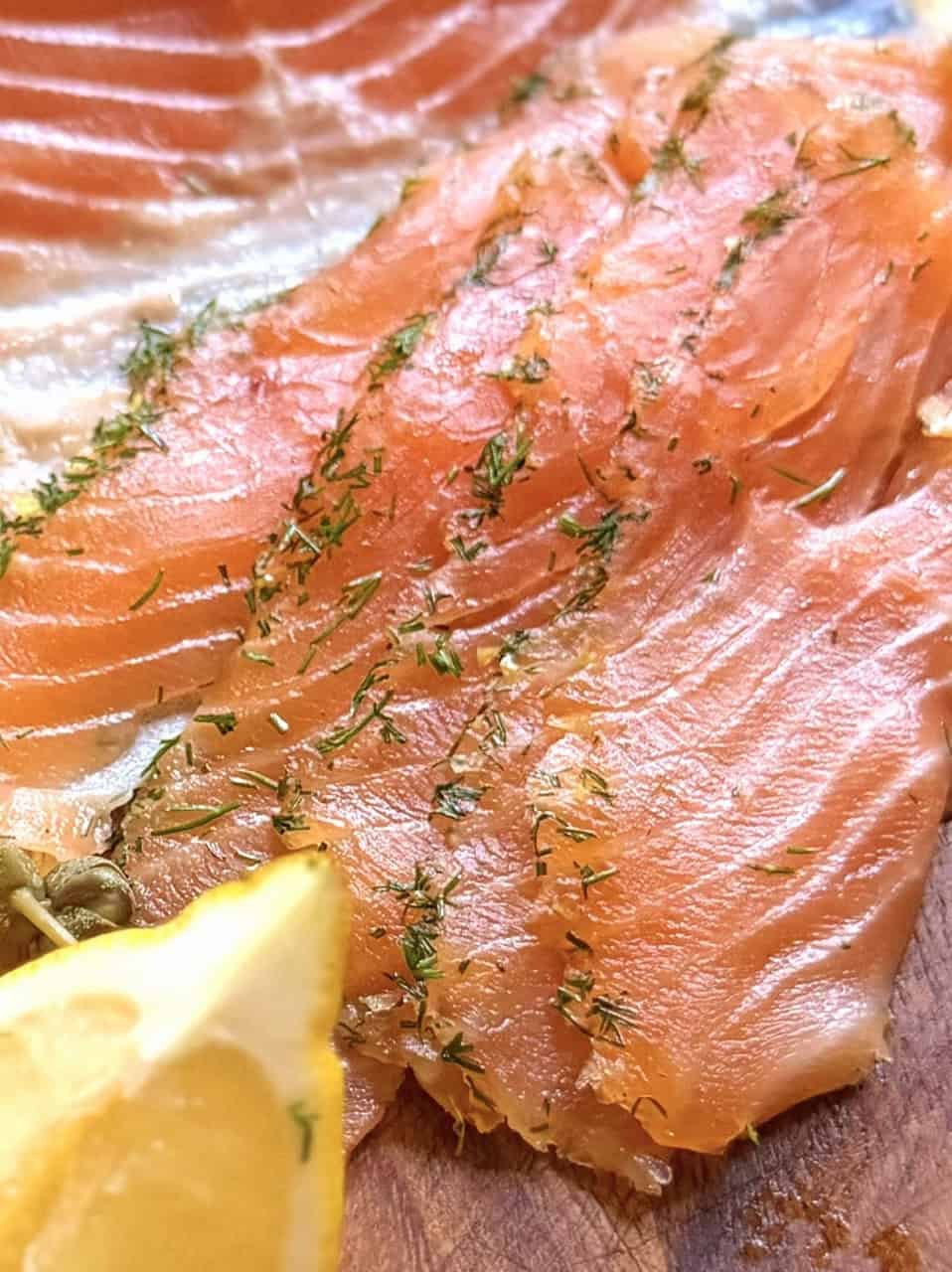
- Serve thin slices of homemade salmon gravlax on toasted bagels with cream cheese, fresh dill, capers, and a squeeze of lemon for a classic gravlax bagel, perfect for a relaxed breakfast brunch
- Add to a brunch spread with crackers, rye bread, or blinis, ideal for Christmas appetisers or other festive appetisers.
- Arrange on a platter with pickled cucumbers, mustard sauce, and fresh herbs for an impressive centrepiece, great for Mother's Day brunch ideas or entertaining.
- Use as a topping for scrambled eggs or avocado toast for a lighter take on healthy salmon ideas.
- Toss into fresh salads for a simple yet elegant way to enjoy this cured salmon recipe.
- Pair with classic Scandi food sides like rye bread, dill, and mustard sauce for a traditional serving style.
Variations of fresh homemade guacamole:
How to store and freeze salmon gravlax:
Storage:
Store your homemade salmon gravlax in an airtight container in the fridge for up to 3-4 days once fully cured. Keep the gravlax tightly wrapped (cling film or parchment paper) to maintain freshness and prevent it from drying out. For best flavour and texture, slice only what you need and keep the remaining piece whole until ready to serve. If any liquid accumulates during storage, simply drain it off before serving.
Freezing:
Yes, gravlax can be frozen! Wrap it tightly in cling film, then place it in a freezer-safe bag or container. Freeze for up to 1-2 months for best quality. Defrost overnight in the fridge, avoid defrosting at room temperature. Once thawed, consume within 1-2 days and do not refreeze.

- Use the freshest salmon you can find, because this is a no‑cook cured salmon recipe, quality really makes a difference.
- Don't skip the curing time, 48-72 hours is what gives that perfect gravlax texture and flavour, so patience is key!
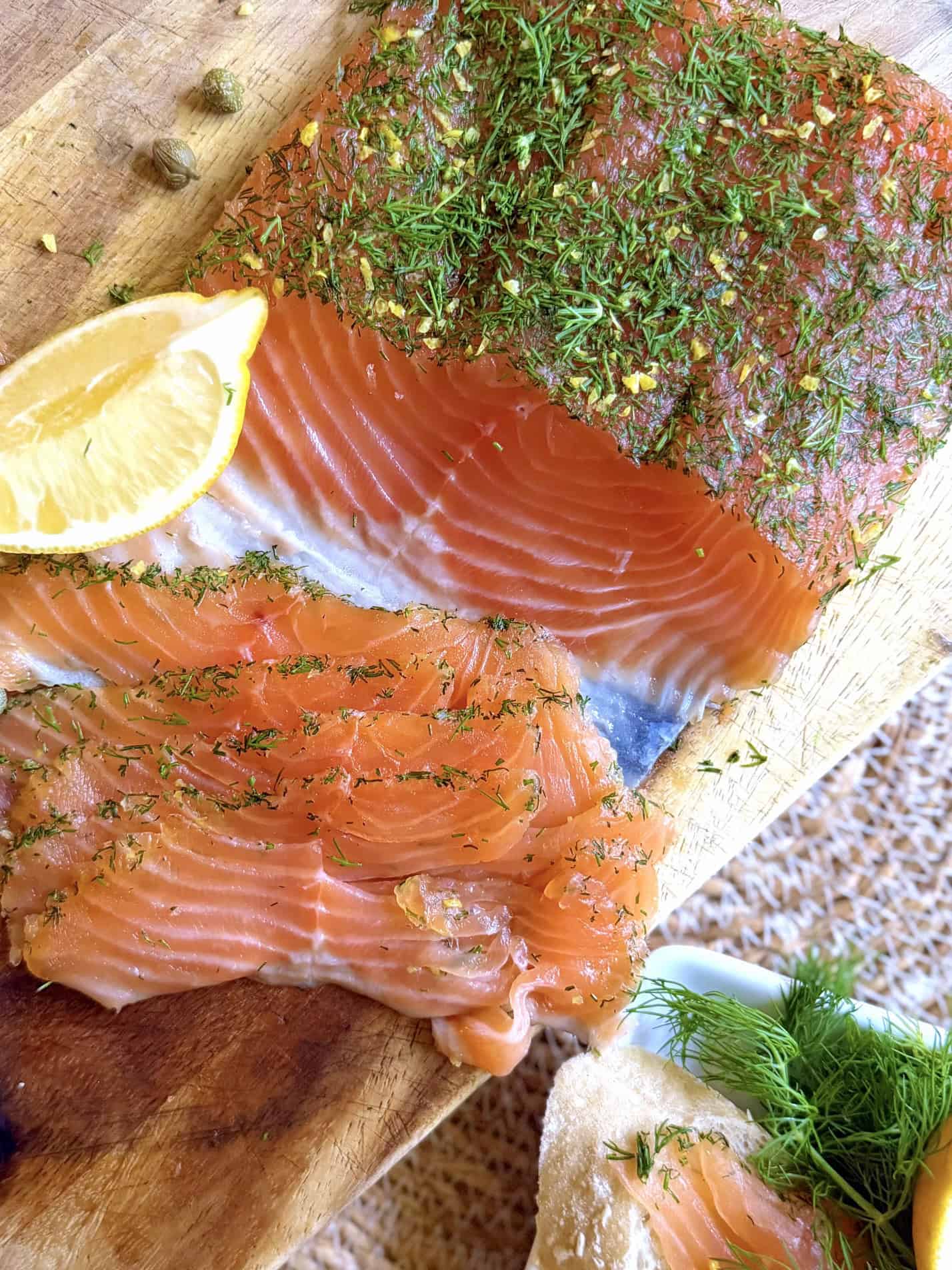
- Always slice your homemade gravlax thinly against the grain, it makes it much more tender and enjoyable to eat.
- Taste before serving, if it's a little too salty, you can lightly rinse and pat dry before slicing.
- Use a sharp knife for clean slices, it makes a big difference when serving on a gravlax bagel or platter.
- Dry the salmon well after curing, this helps improve both texture and flavour.
- Make extra when salmon is on offer, this is one of those easy salmon recipes that tastes fancy but is actually very economical.
- Keep it simple when serving, good bread, cream cheese, and a squeeze of lemon are all you need to let this salmon gravlax recipe shine
FAQ
What is a gravlax of salmon?
Gravlax is a traditional Scandinavian dish made by curing fresh salmon with a mixture of salt, sugar, and fresh dill. Instead of cooking the fish, the curing process draws out moisture and firms up the texture, creating a delicate, silky finish with a lightly seasoned flavour
Is gravlax salmon raw?
Gravlax is technically still raw, but it is cured rather than cooked. The salt and sugar cure changes the texture and flavour of the salmon, making it safe to eat when prepared correctly using fresh, high‑quality fish
Is gravlax healthier than smoked salmon?
Gravlax can often be considered a healthier option than smoked salmon because it is not processed with smoke or additional preservatives. It usually contains fewer additives while still being a great source of protein and omega‑3 fatty acids, making it a fantastic choice if you’re looking for healthy salmon ideas
Whats the difference between gravlax and smoked salmon?
The main difference is how they're prepared. Gravlax is salt‑cured with herbs (often dill), while smoked salmon is either cold- or hot-smoked. This gives smoked salmon its distinctive smoky flavour, whereas gravlax has a fresher, more delicate taste
Can you use frozen salmon to make gravlax?
Yes, you can use previously frozen salmon, in fact, it's often recommended. Freezing helps eliminate potential parasites, making it a safer choice for a no‑cook cured salmon recipe like this.
How long does homemade gravlax last?
Once cured, homemade salmon gravlax will keep in the fridge for around 3-4 days when properly wrapped or stored in an airtight container. For longer storage, it can also be frozen

Did you enjoy this recipe? have a question? It would mean so much to me if you please leave a comment and a rating below!
Easy Homemade Salmon Gravlax Recipe (No Cooking, 48 Hour Cure & Step-by-Step Tips)
Equipment
Ingredients
- 1 side of salmon (approximately 1kg)
- 40 grams Fresh dill
- 200 grams Sea salt flakes
- 150 grams caster sugar
- 3 lemons (zested)
- 1 tablespoon Cracked black pepper
Instructions
- Prepare the cure: Add the salt, sugar, half of the dill, and the zest of 2 lemons to a food processor. Blend for about 1 minute until you have a bright green, slightly wet cure.
- Check the salmon: Run your fingers over the salmon to check for any bones. If you feel any, remove them carefully using fish tweezers or pliers. Cut the side of salmon in half so you have two equal-sized pieces.
- Apply the cure: Place the salmon pieces skin-side down. Evenly rub the cure over all the exposed flesh, ensuring it is fully covered.
- Assemble and wrap: Sandwich the two pieces together, flesh side to flesh side. Wrap tightly in cling film, then use a cocktail stick to poke a few small holes to allow excess liquid to escape.
- Weight and refrigerate: Place the wrapped salmon in a deep tray to catch any liquid released during curing. Put another tray or board on top and weigh it down (a few tins of beans work perfectly).
- Cure the salmon: Refrigerate for 48-72 hours, turning the salmon every 12 hours for an even cure.For a firmer texture, cure for 72 hoursFor a softer texture, cure for 48 hours
- Rinse and dry: Once cured, remove the salmon from the fridge. Unwrap and scrape off the cure mixture, then rinse briefly under cold water to remove any remaining cure. Pat completely dry with kitchen paper.
- Finish with dill and lemon: Finely chop the remaining dill (20g) and zest the final lemon. Sprinkle evenly over the cured salmon.
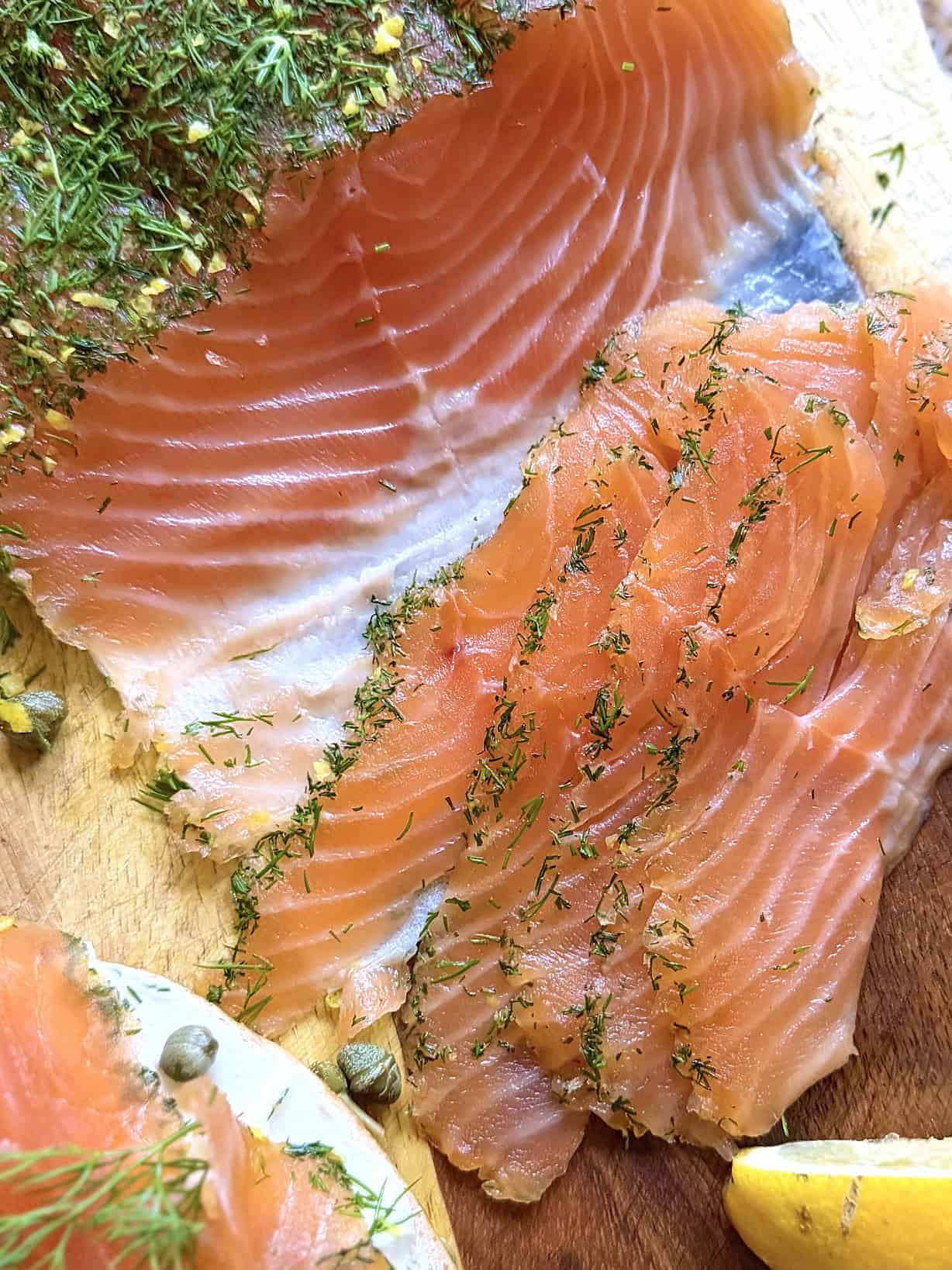
- Slice and serve: Using a very sharp knife, slice the gravlax thinly on the diagonal. Serve immediately or store in the fridge until ready to enjoy.
Notes
- Use the freshest salmon possible - As this is a no-cook recipe, high-quality is recommended for best flavour.
- Adjust curing time to your preference -
48 hours = softer, more delicate texture
72 hours = firmer, more traditional gravlax texture
- Don't skip turning the fish - Turning every 12 hours helps the cure distribute evenly for consistent flavour and texture.
- Expect liquid release - The salt will draw moisture out of the salmon during curing, so always use a deep tray to catch any liquid.
- Slice thinly for the best results - Use a very sharp knife and cut on a diagonal for classic gravlax-style slices.
- As the tail is thinner than the rest of the fish it will be firmer than the rest
Related


Pairing
These are my favorite dishes to serve with [this recipe]: