
Nothing beats making fresh pasta at home, it’s the ultimate kitchen flex! It's quick, it's fun, and it tastes like it came straight from an Italian restaurant. This foolproof pasta dough recipe shows you exactly how to make pasta when you need fresh dinner ideas that feel special without the fuss. If you've ever asked, "How do I make pasta that actually tastes amazing?", this is it.
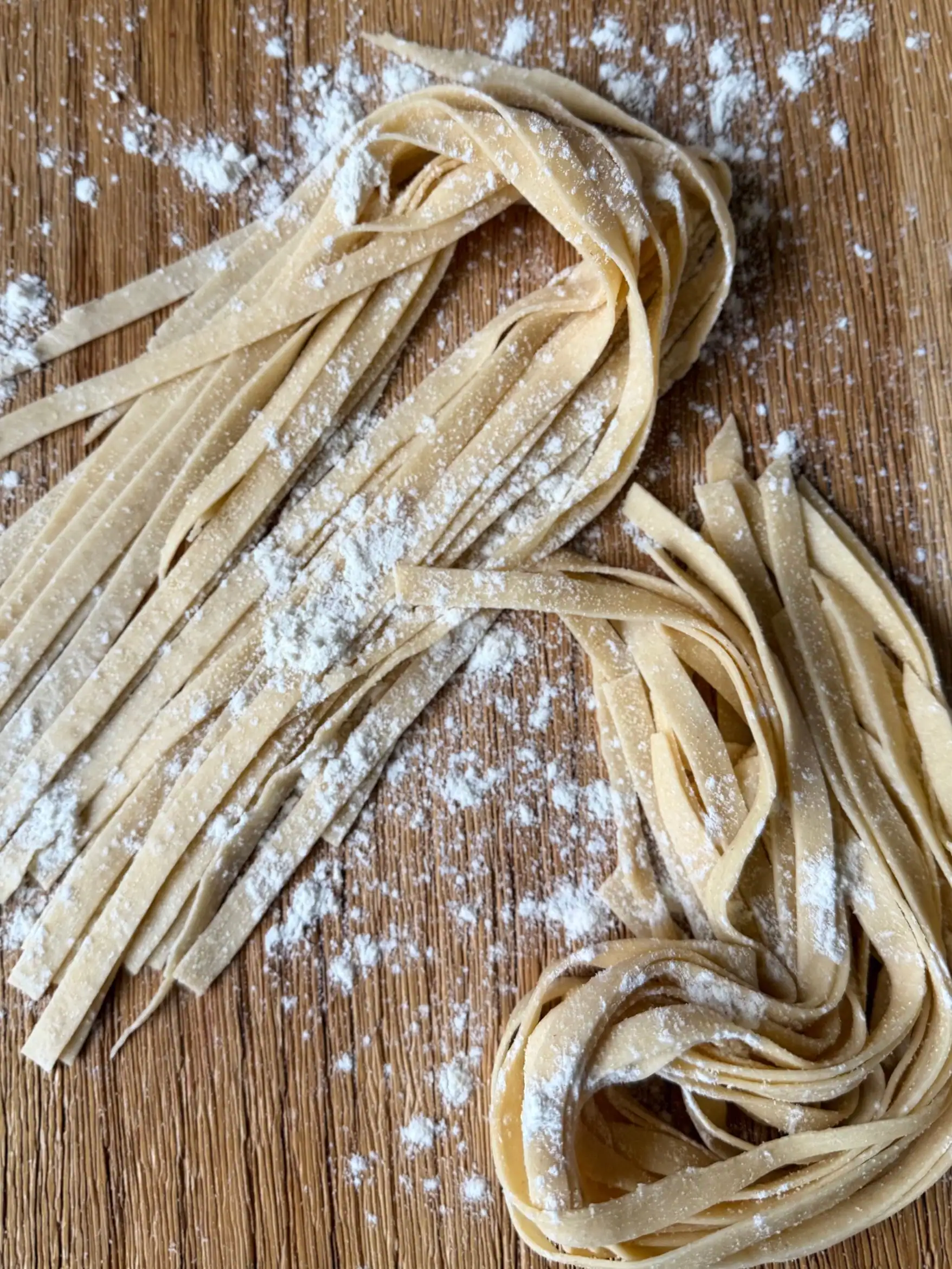
Homemade pasta is one of my favourite "slow down and breathe" weekend rituals – mostly because there is absolutely no universe in which I'm making fresh pasta after work!! By the time my 5 year old argues about snacks and screen time, I definitely don’t have the energy to make fresh pasta. So I save this one for Saturdays, when the pace is calmer and the kitchen becomes a bit of a family workshop.
I love getting my boy involved – cracking eggs, mixing the pasta dough, turning the pasta machine handle like it's a carnival ride. It's messy, loud, and somehow still therapeutic. And if you've ever asked yourself "How do I make pasta from scratch?", this is the moment it finally clicks. A handful of flour, a few eggs, and suddenly you've got homemade pasta that tastes like your in an Italian restaurant. The first time I made this the family were in awe!
If your family loves this Homemade pasta as much as mine does, you’re in good company - we’ve got plenty more flavour‑packed dinners that you can pair this pasta with to elevate your family menu. Here are a few more recipes that always go down well at our table:
Jump to:
Ingredients and substitutions
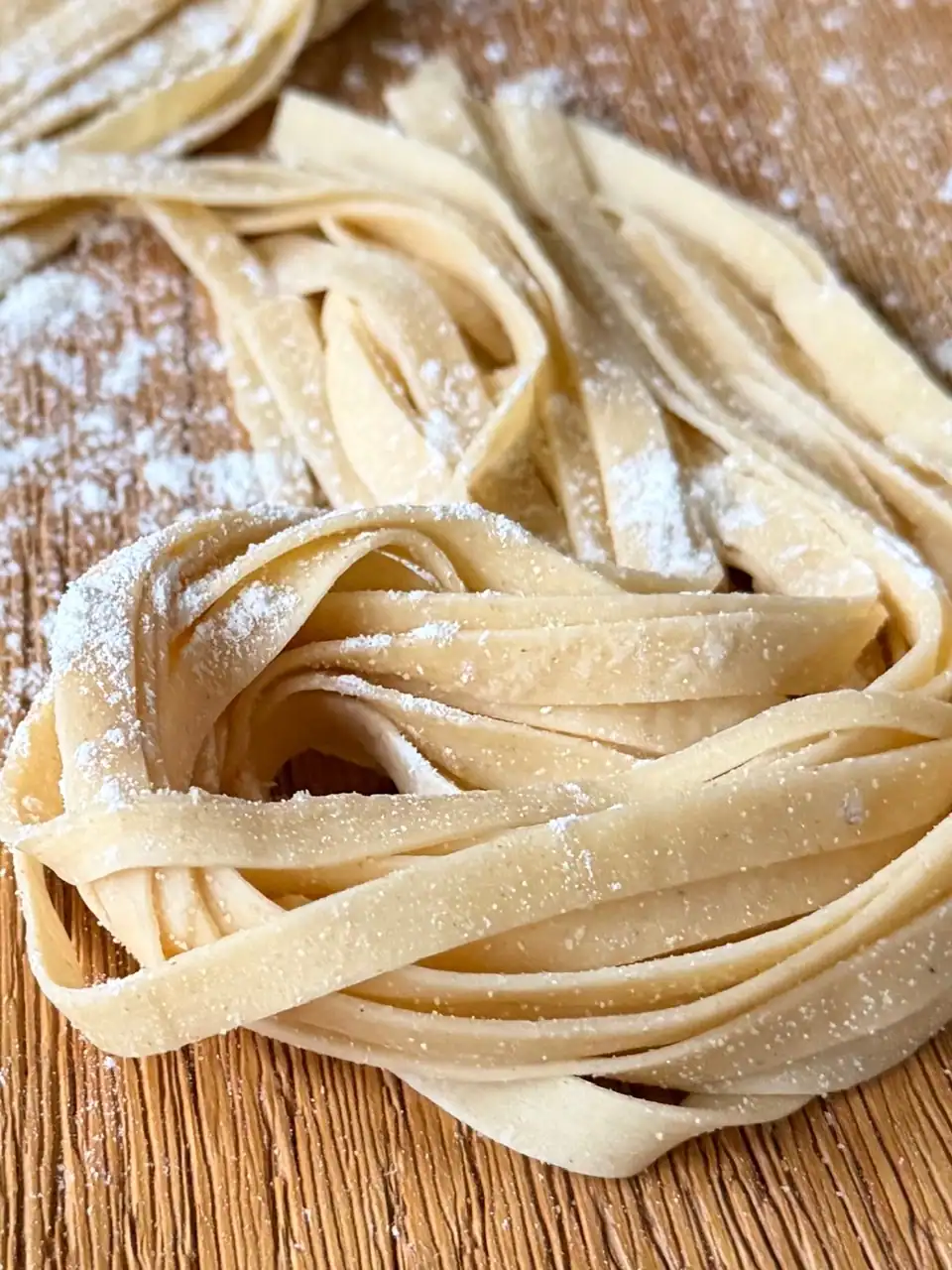
See recipe card for quantities.
- 00 Flour – This finely milled Italian flour gives your homemade pasta that smooth, silky bite you expect from proper fresh pasta. It absorbs moisture evenly, keeps the dough elastic, and makes rolling a whole lot easier. If you've ever wondered why pasta in an Italian restaurant feels different, this flour is a big part of the secret.
- Three large eggs bring richness, colour, and structure to your pasta dough. They hydrate the flour just enough to create a soft, workable dough. If the mixture feels dry, add water a drop at a time; if it's sticky, a light dusting of flour sorts it out.
- Water (only if needed) – Some days the dough behaves perfectly; other days it acts like it has opinions. A teaspoon of water at a time helps bring a dry dough together. Add slowly - it's easier to fix dry than wet
- Fine Semolina (for dusting) – Fine semolina is your best friend for dusting the counter, pasta sheets, and cut noodles. Because it's slightly coarser than flour, it sits on the surface instead of absorbing into the dough, which keeps your pasta from sticking or clumping. It's especially handy when the kids are helping - they can toss pasta in semolina without turning it into glue.
What equipment will you need to me fresh homemade pasta?
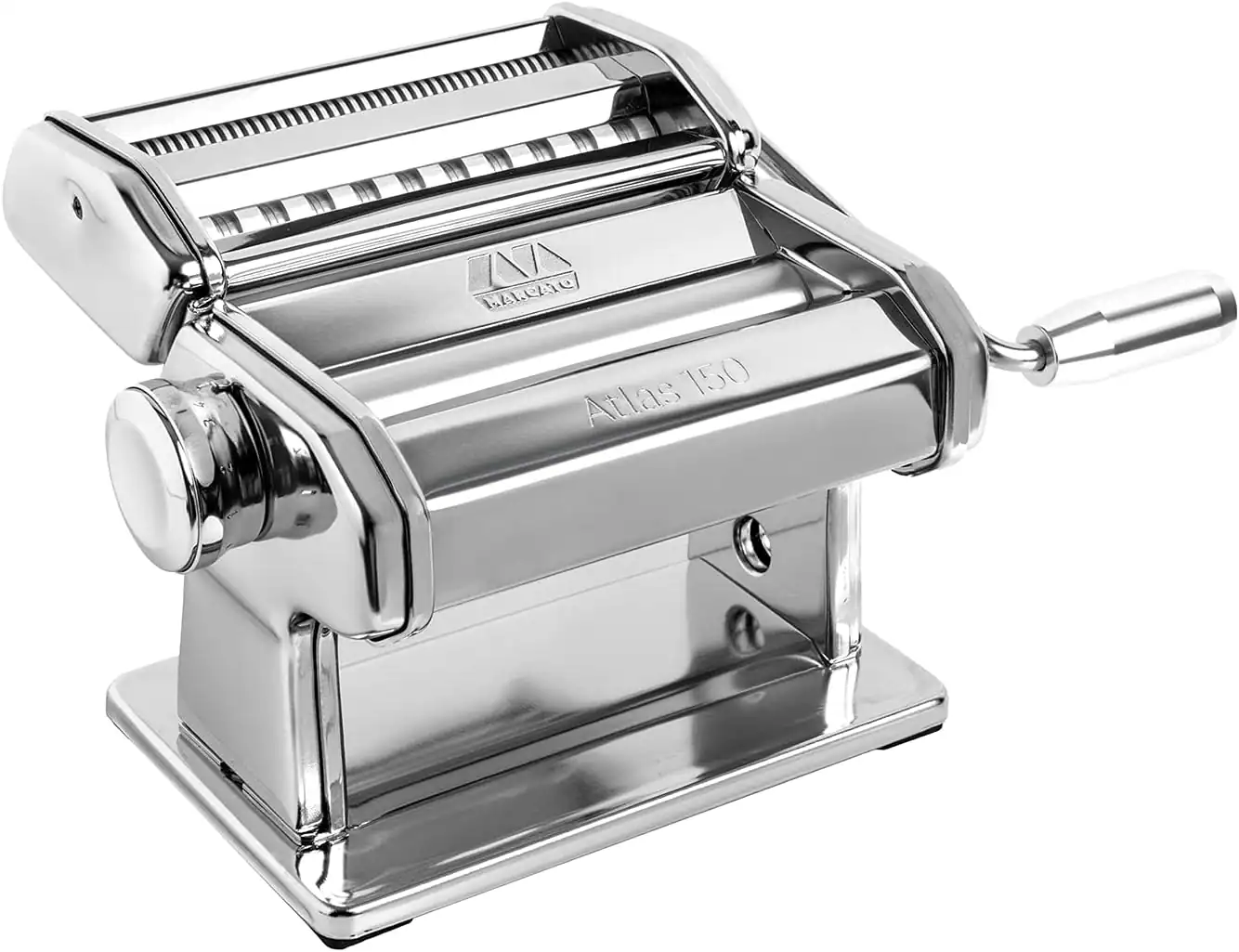
- Pasta Machine – You can make pasta without a machine but it is much easier with one and it helps when getting the kids involved! Click on the link for the machine that I recommend
- Pasta drying rack – Whilst not essential, this is useful if you plan on making your own pasta often. Click on the link for the drying rack I use.

How do I make Homemade fresh pasta?
Making homemade fresh pasta is far less intimidating than it looks – especially once you realise it's really just flour, eggs, and a bit of gentle persuasion. This section walks you through the whole process step by step, from mixing the dough to rolling silky sheets that would make any Italian nonna proud.
1: Tip the flour onto a clean work surface and make a wide well in the centre
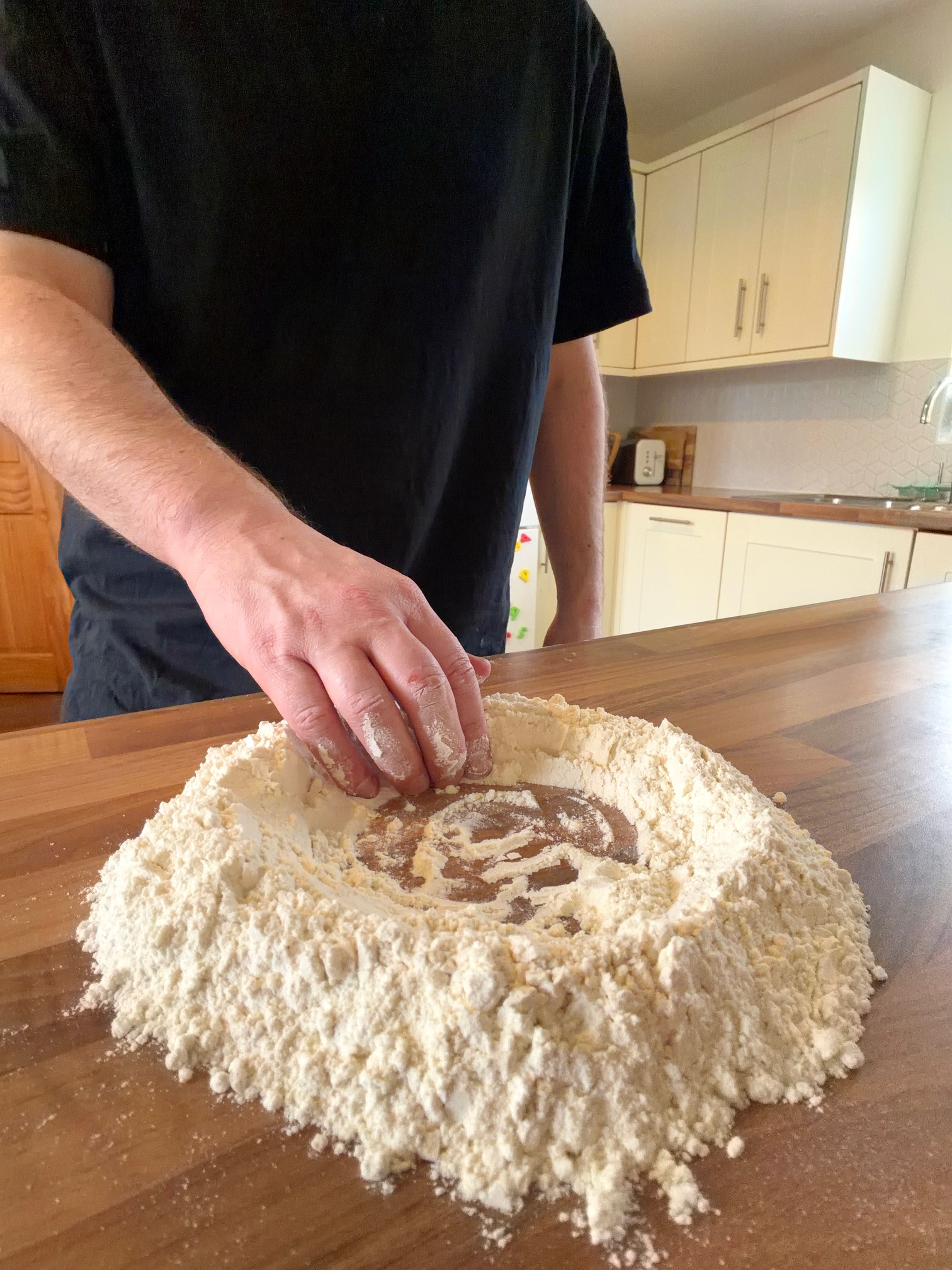
2: Crack 3 eggs into the well. Use a fork to gently whisk the eggs.
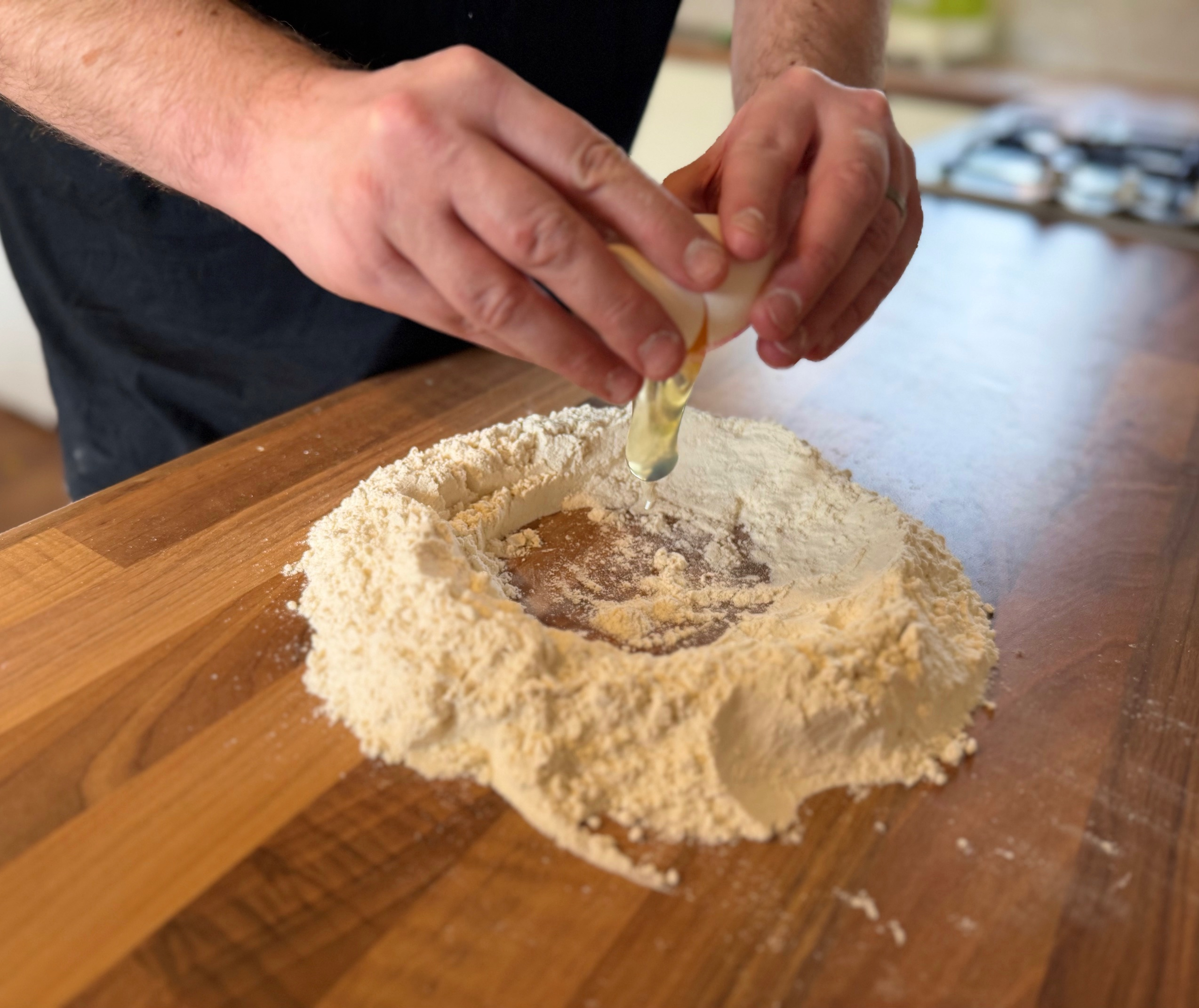
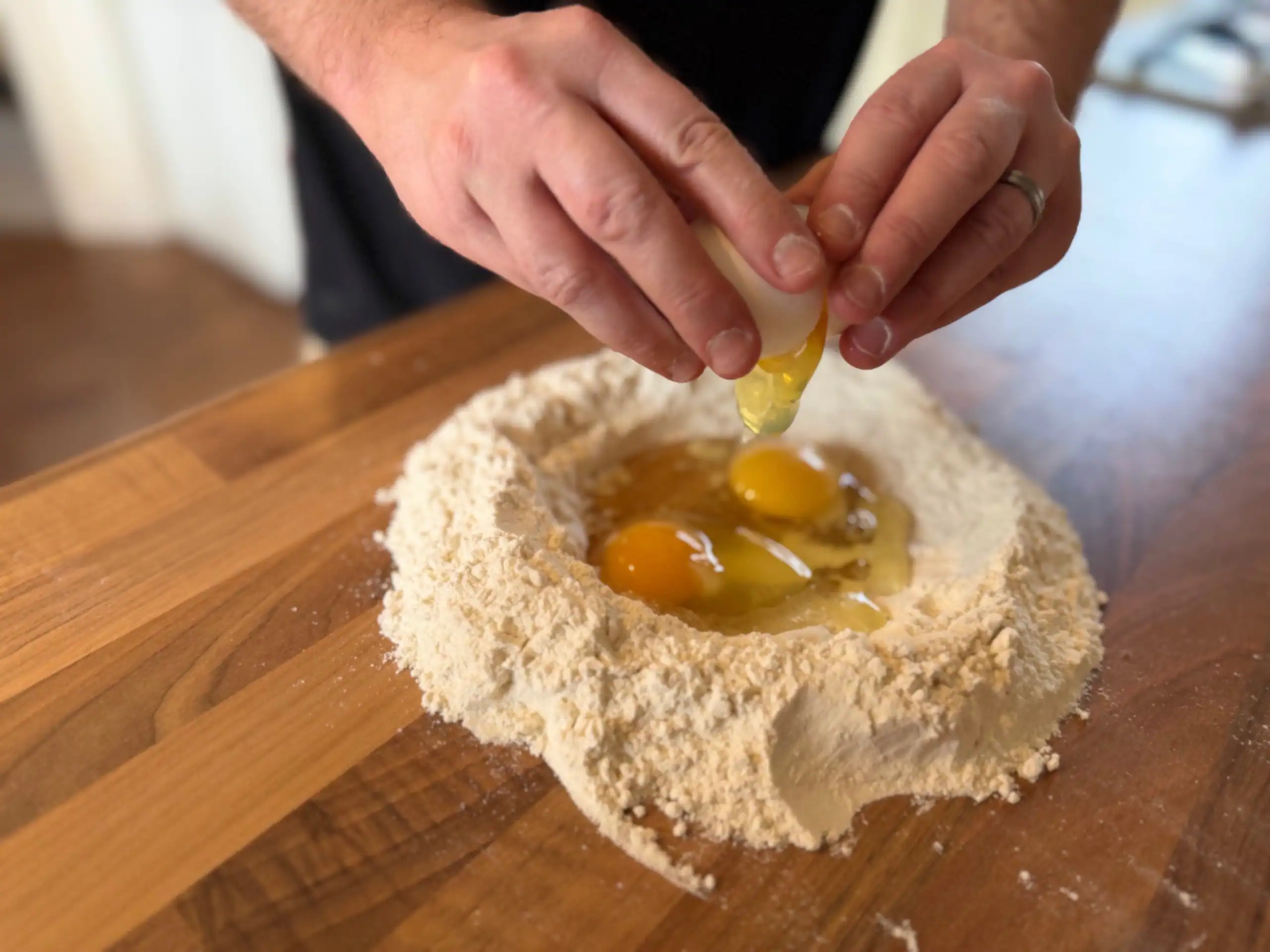
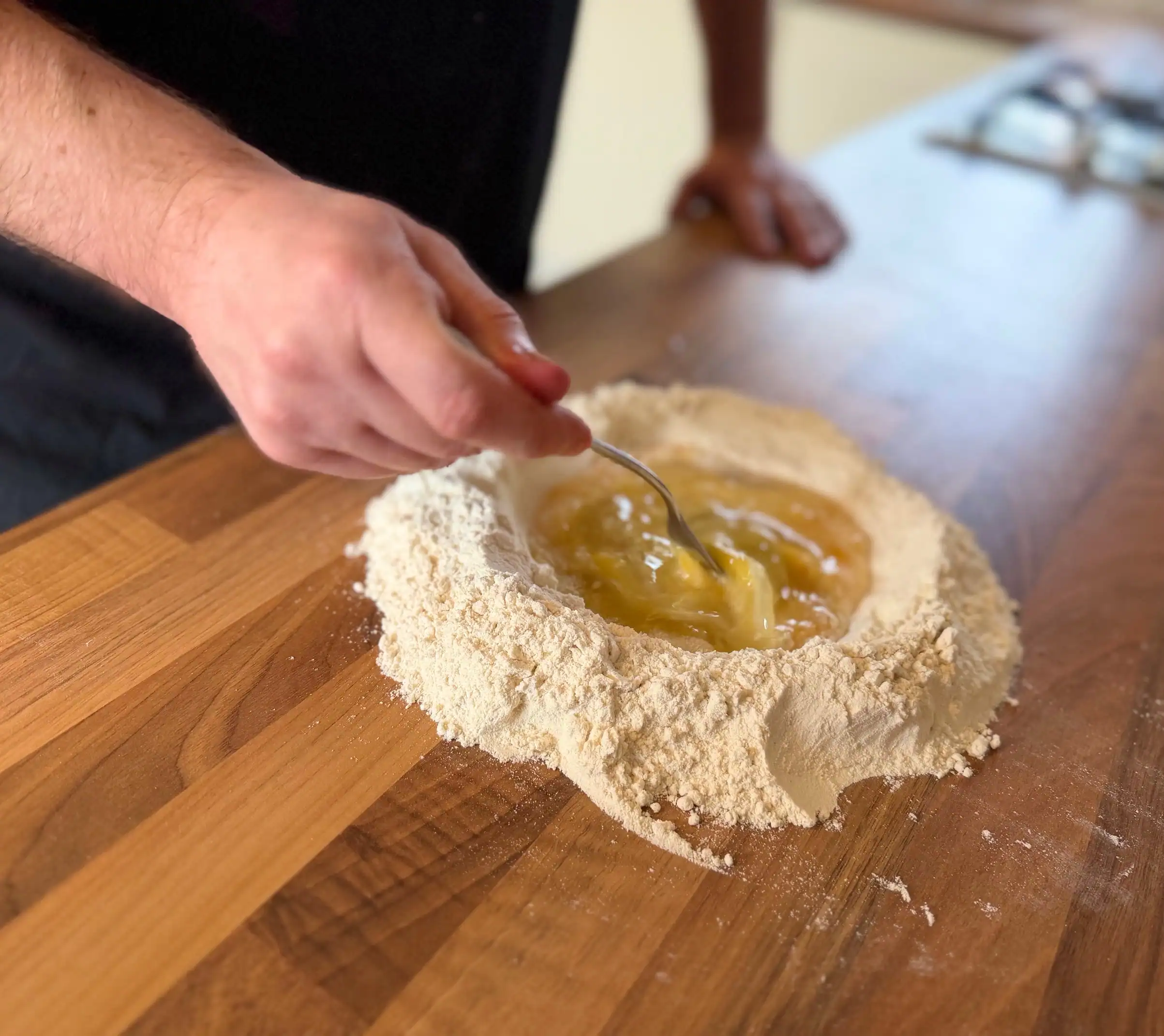
3: Slowly pull flour in from the edges and continue to combine with a fork
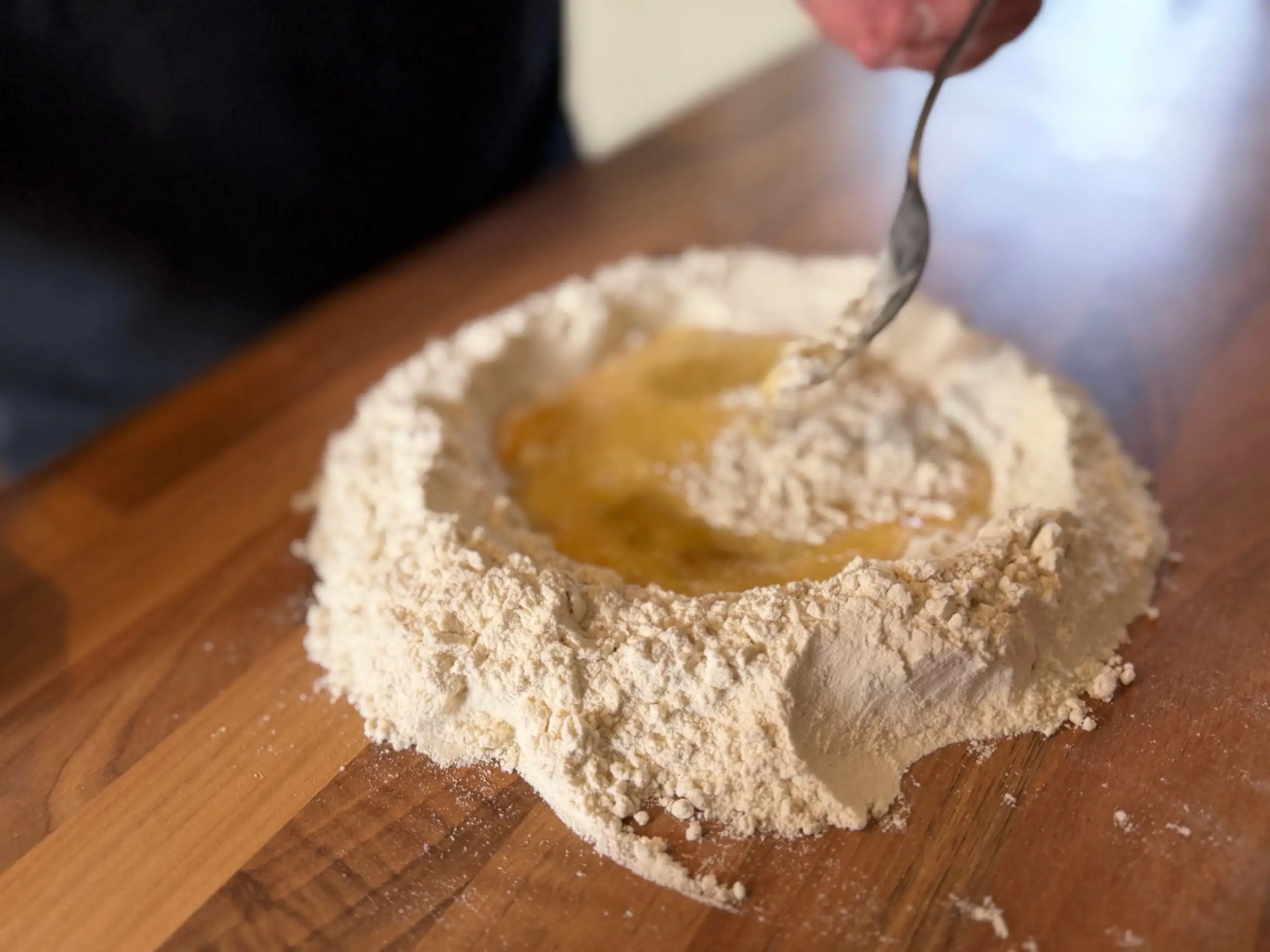
4: When the mixture becomes too thick to combine with a fork, switch to your hands and start bringing it together into a shaggy dough
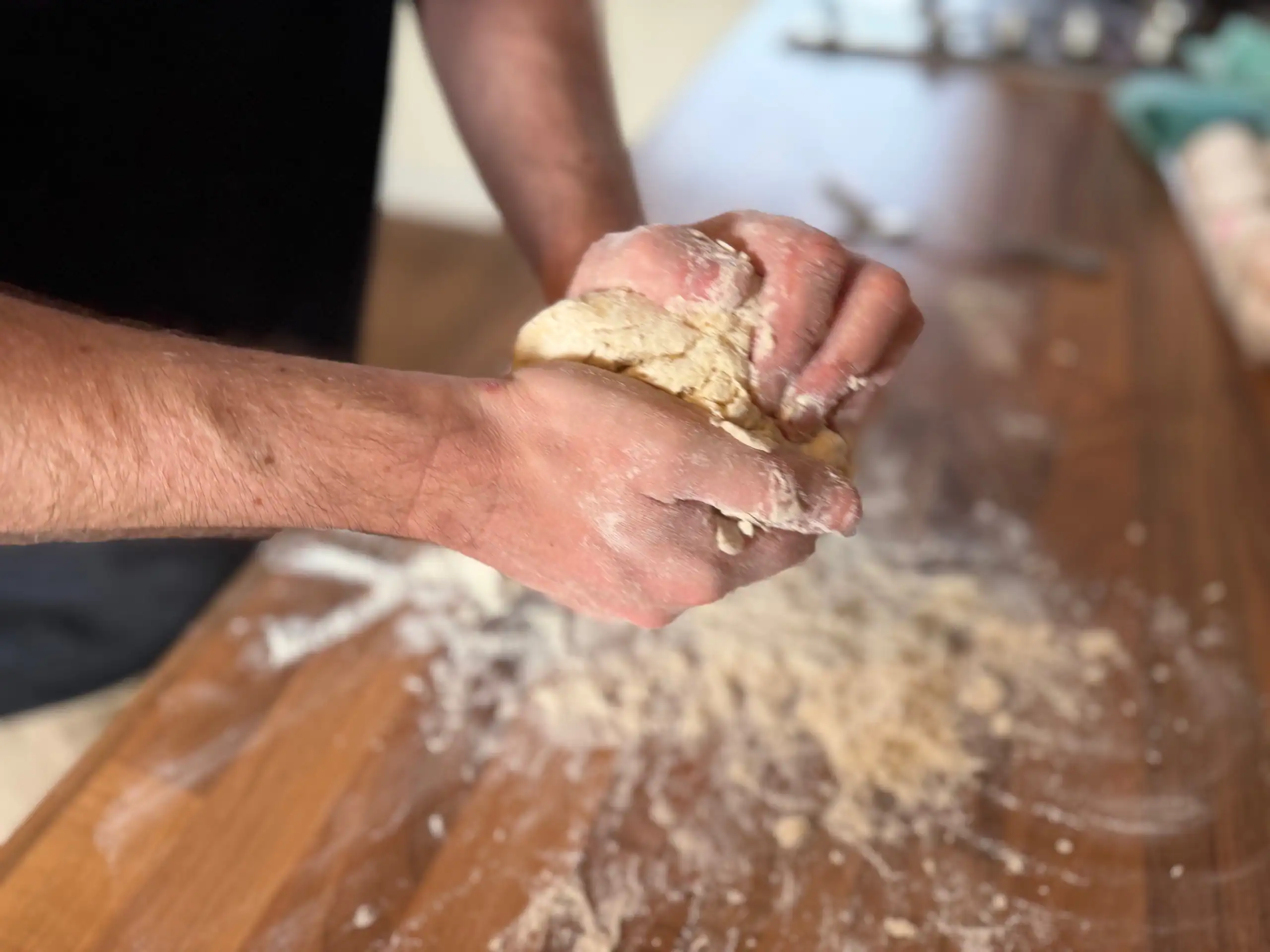
5: Knead the dough for 8-10 minutes until it becomes smooth, elastic, and slightly tacky but not sticky. Use the palm of one hand to push the dough away from you and use your other hand to turn the dough 90 degrees.
6: When the dough is smooth, shape into a rough ball, wrap tightly with cling film and rest for at least 30 minutes in the fridge. You can rest at this stage up to 24 hours.
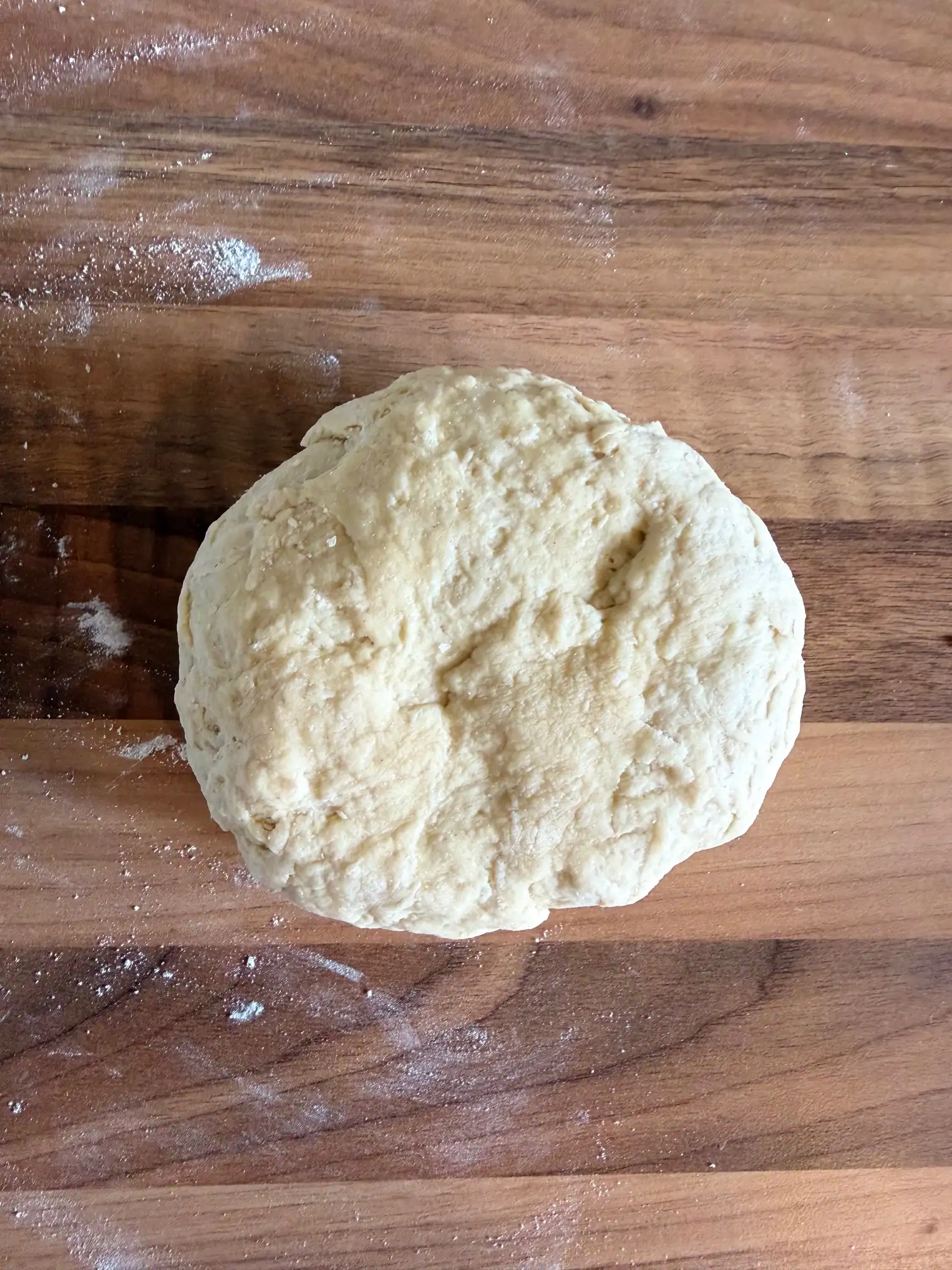
7: After a minimum of 30 minutes, get it out of the fridge and cut into 4 quarters. Working with one quarter at a time will be much easier. Leave the rest of dough wrapped in cling film or under a damp tea towel so it doesn’t dry out.
8: Prepare a baking tray lightly dusted with fine semolina ready for the pasta, or if you are going to be cooking the pasta right away you can use a pasta rack, but either is fine. You should allow your pasta to dry for at least 30 minutes before cooking. But if you are making it more than an hour ahead you can wrap the whole tray in cling film to prevent it drying out.
9: Flatten your quarter of dough with a rolling pin and guide it though the widest setting of your pasta machine twice (on my machine this is 0). Move to the next widest setting (1) and put it through twice. Now fold the dough from end to end and put it through the machine at its widest setting again (0). Click to the next widest setting (1) and roll it though again
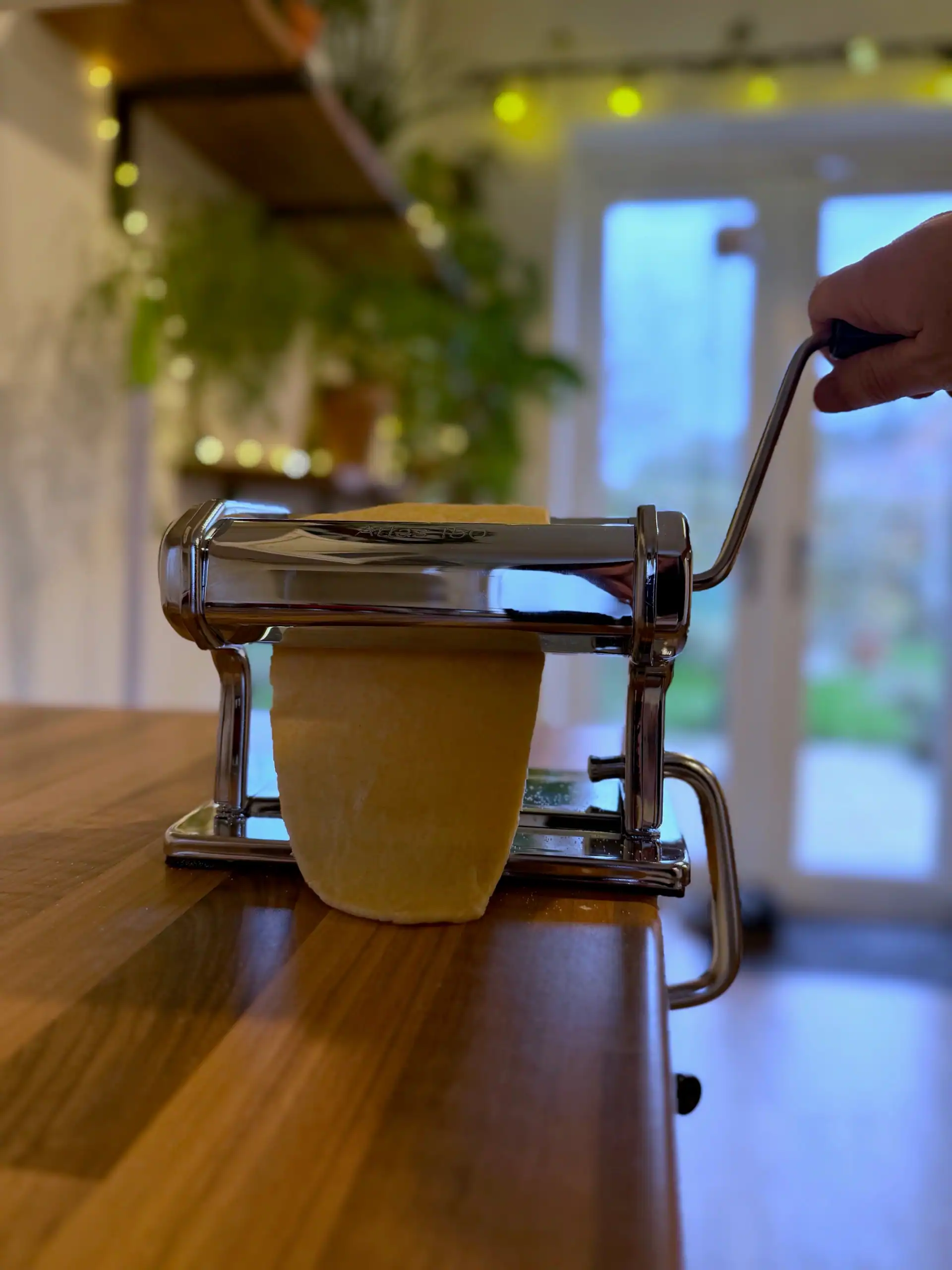
10: Continue to guide the dough through each setting from 0 to 7, put it through twice on each thickness setting. The dough should now be quite long! Get your kids involved, they just love turning the pasta machine handle and seeing the dough grow in length
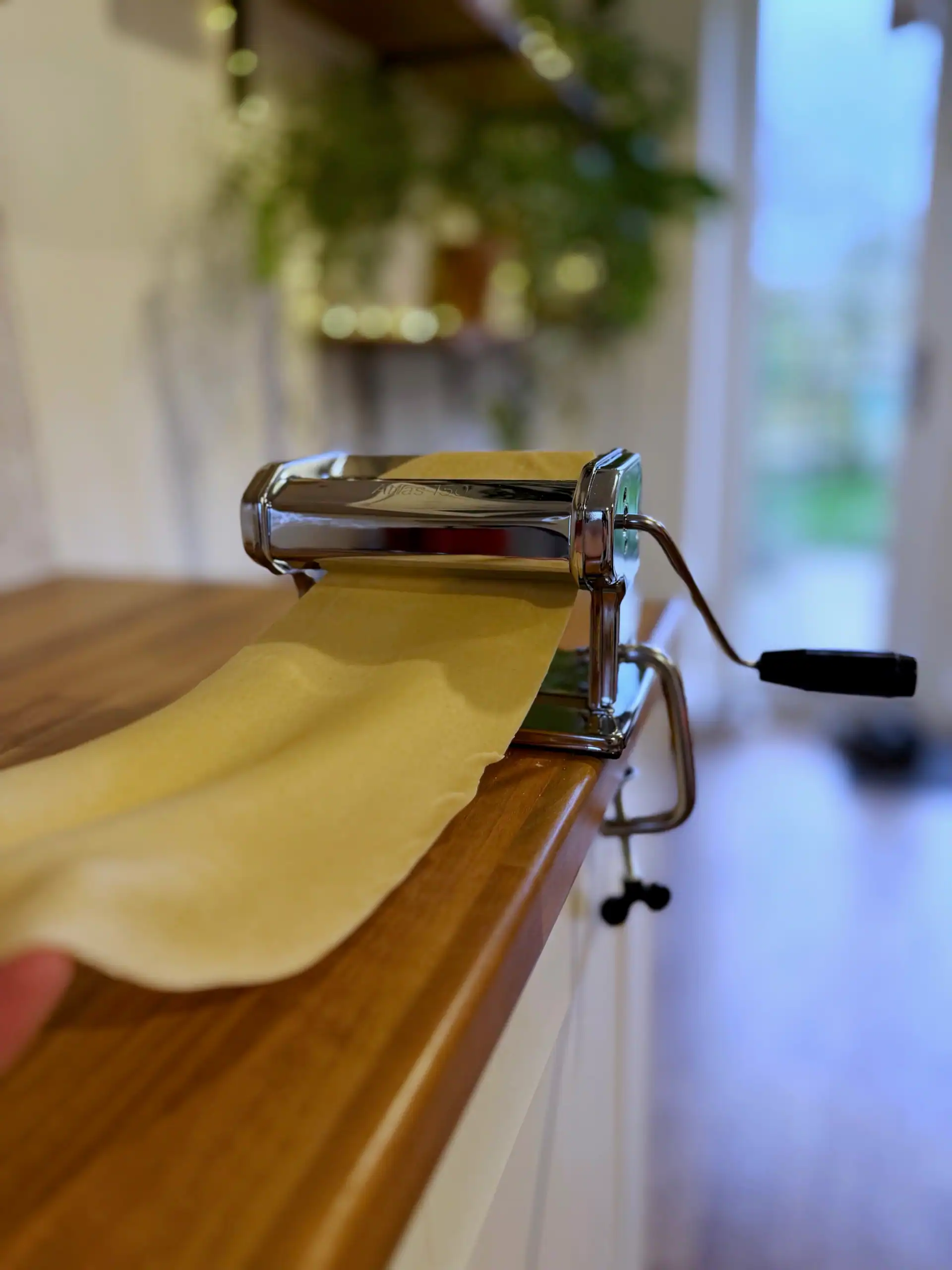
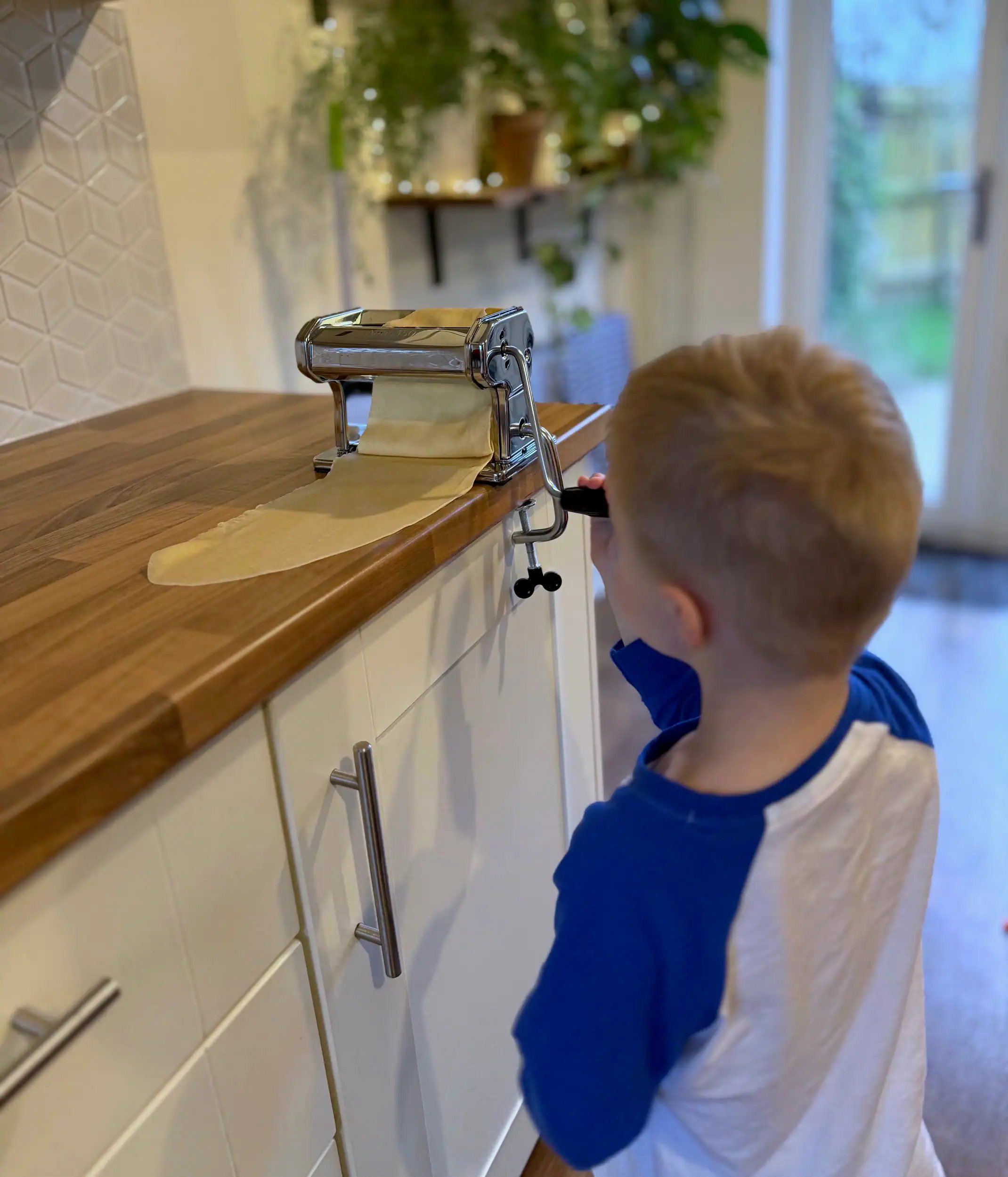
11: Attach the pasta cutter to the pasta machine. Dust your pasta sheet with fine semolina on each side to prevent sticking and run it through the cutter. (I prefer Tagliatelle)
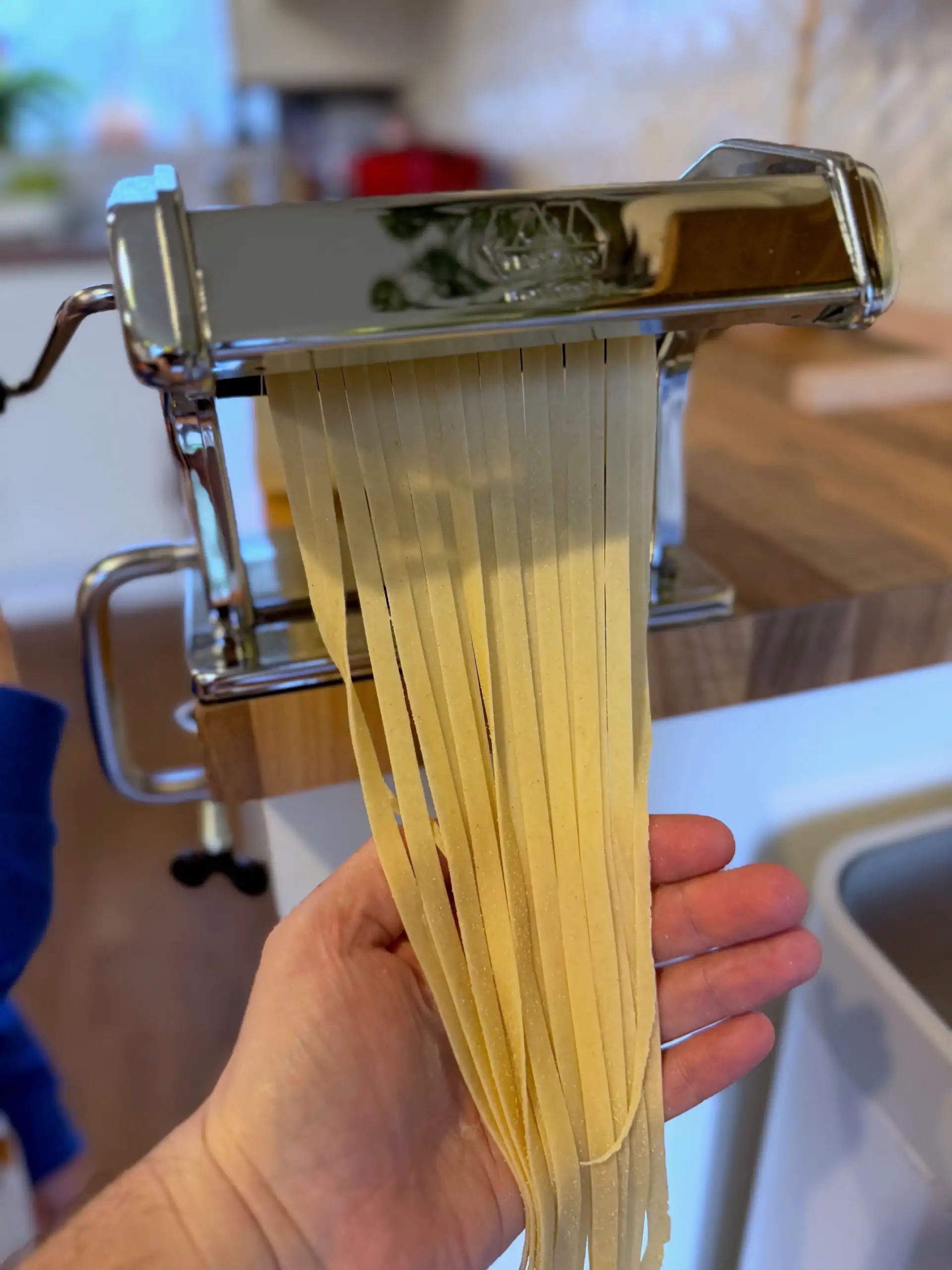
12: Curl the pasta into “nests” and put on the prepared tray and cover with cling film or use a pasta drying rack (if you are cooking in the next 30 minutes).
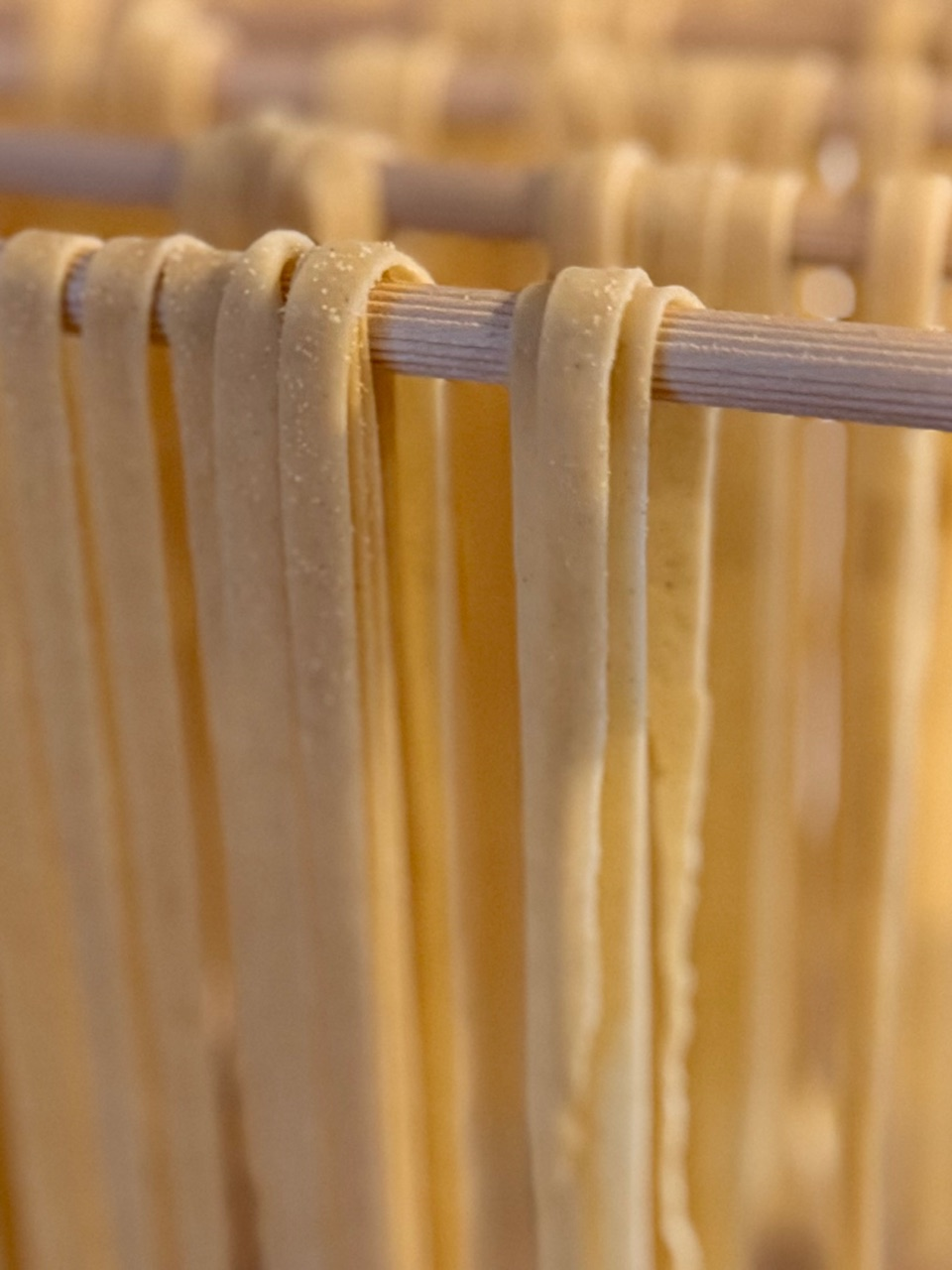
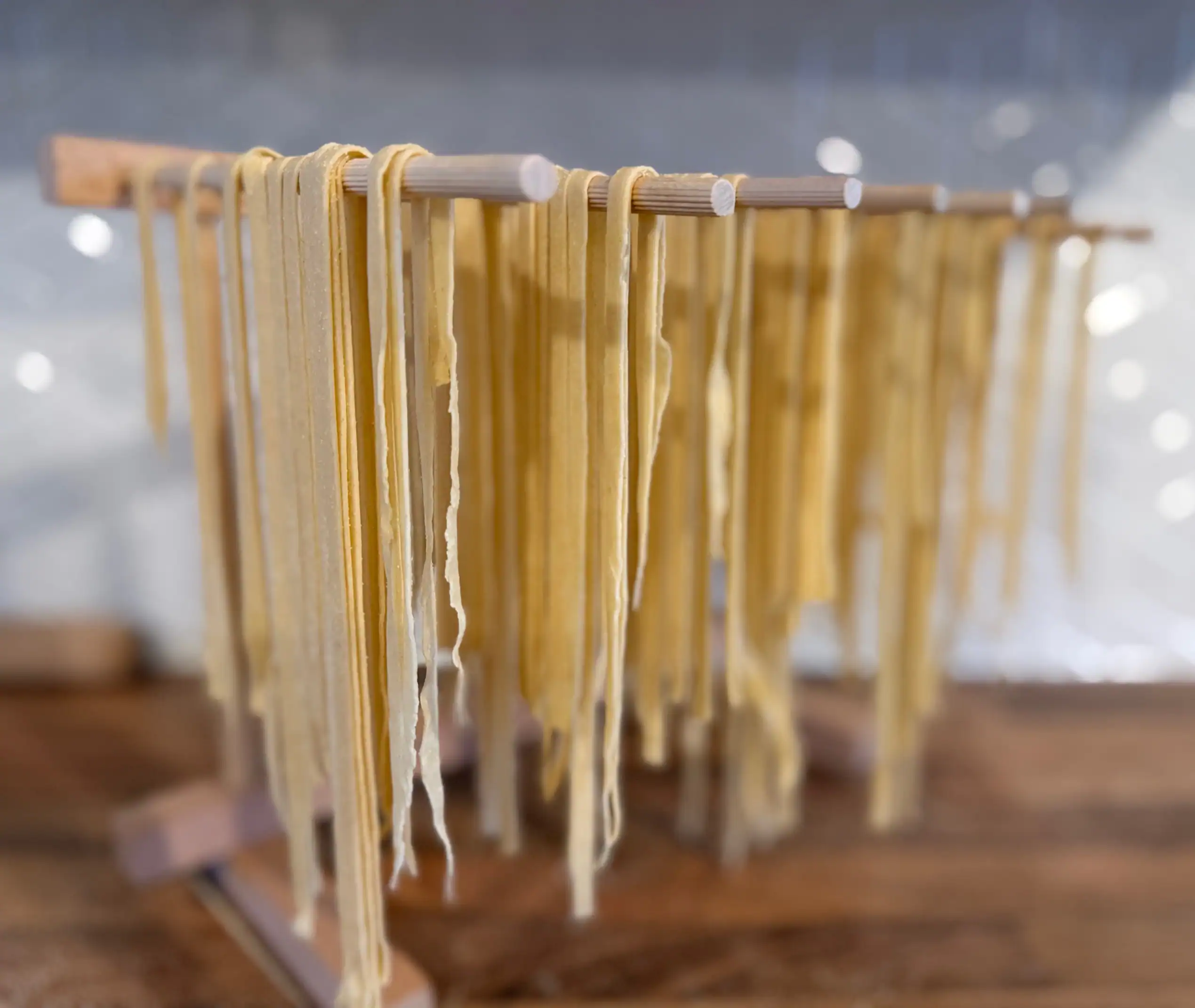
13: Continue to roll and cut the other three quarters of pasta. Cover the whole tray in cling film, ensuring it is airtight. Leave to dry for at least 30 minutes before cooking. You can leave the pasta for a maximum of 24 hours in the fridge before it will start to deteriorate.
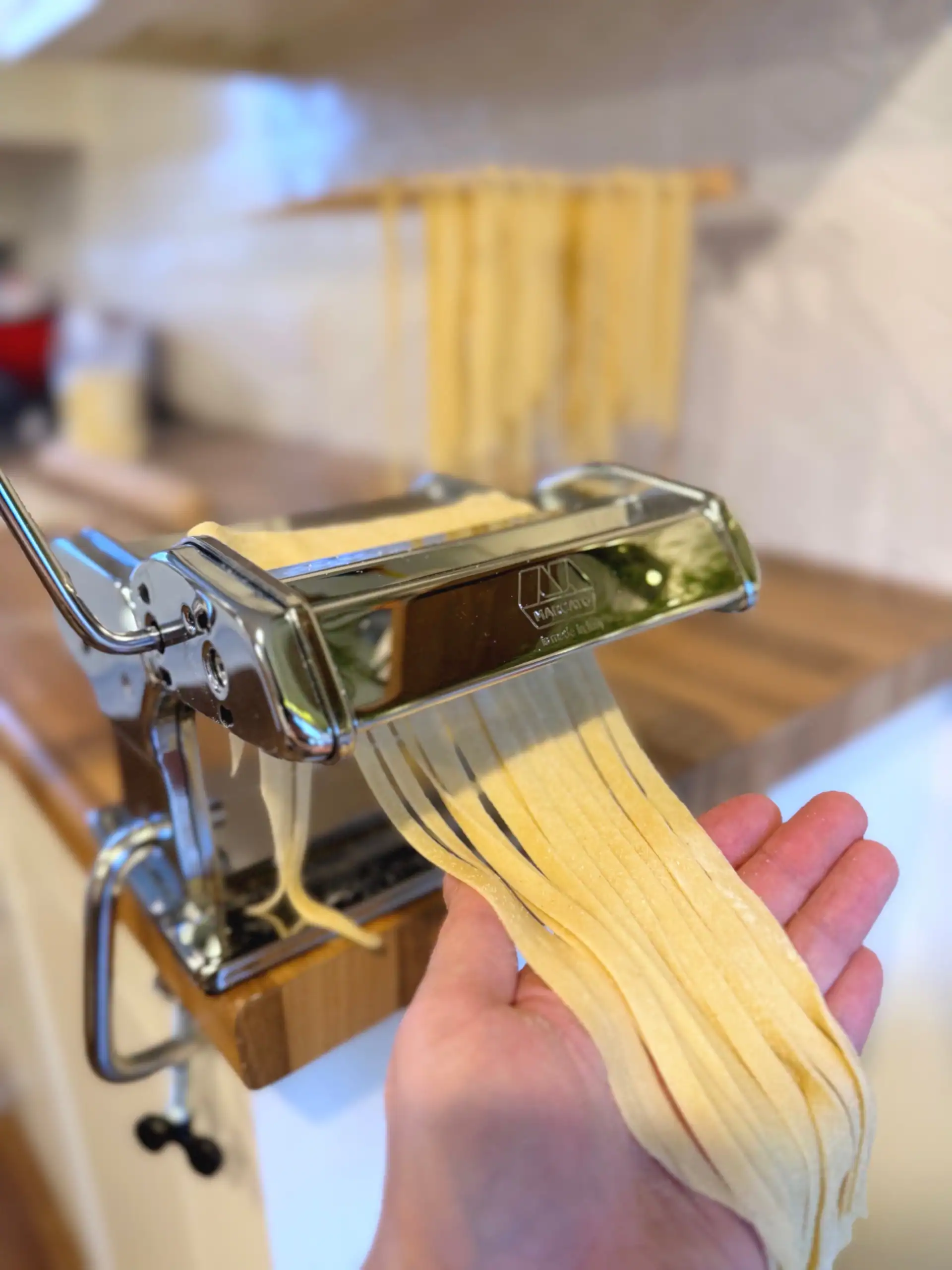
14: Bring a pan of water to the boil and add a pinch of salt, cook the pasta for 2-3 minutes or less if you prefer al dente. Drain and add to your favourite sauce .
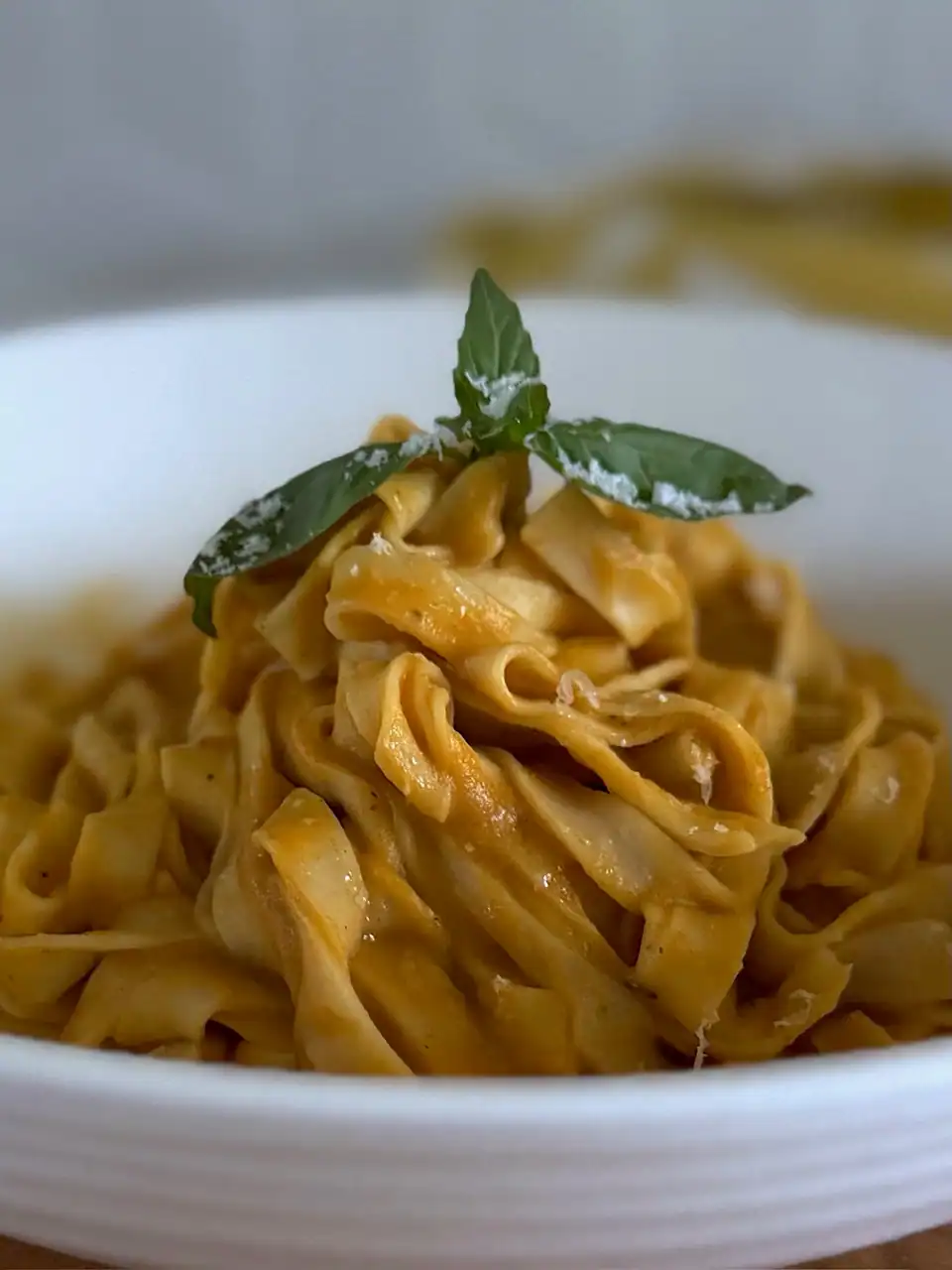
Serving suggestions for homemade fresh pasta
Fresh pasta is so versatile and always tastes like you've put in far more effort than you actually have. Because it's tender, silky, and naturally rich, it doesn't need much – just the right pairing to let it shine
- Lemon butter sauce – melted butter, lemon zest, a squeeze of juice, and a handful of parmesan.
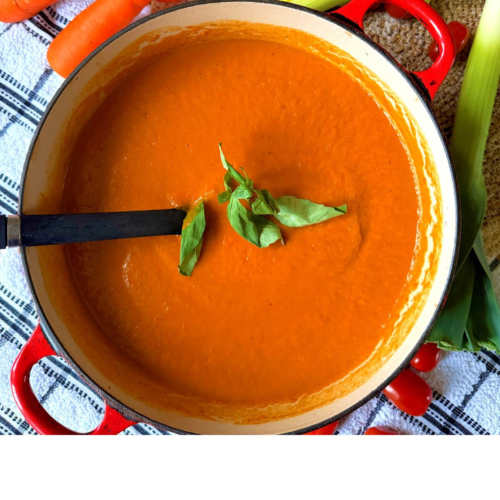
- Why not try my Hidden vegetable tomato sauce – this will go perfectly with homemade pasta and is great for the kids.
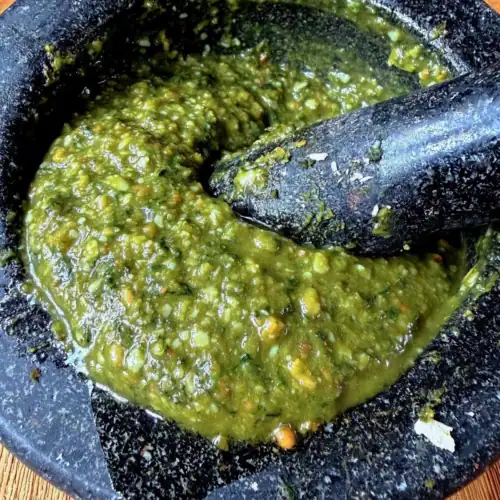
- Pesto – basil, rocket, or whatever green thing is threatening to wilt in the fridge.
- Garlic olive oil – warm olive oil with sliced garlic, chilli flakes, and parsley
- Tomato and basil – fresh, bright, and perfect for showing off silky noodles
- Spaghetti bolognaise – the weeknight hero that becomes a weekend treat when paired with fresh pasta.
- Carbonara – eggs, pecorino, pancetta, and black pepper (no cream-Italian nonnas are watching!)
- Mushroom cream sauce – earthy, savoury, and perfect with tagliatelle.
- Butter and parmesan – the universal peace‑keeping dinner with kids involved
- Mini meatballs & tomato sauce – fun, filling, and guaranteed clean plates with little ones!
- Cheesy pasta bake – mix cooked fresh pasta with sauce, top with cheese, bake until golden.
- serve with my creamy Tuscan chicken for a truly luxurious meal for the family.
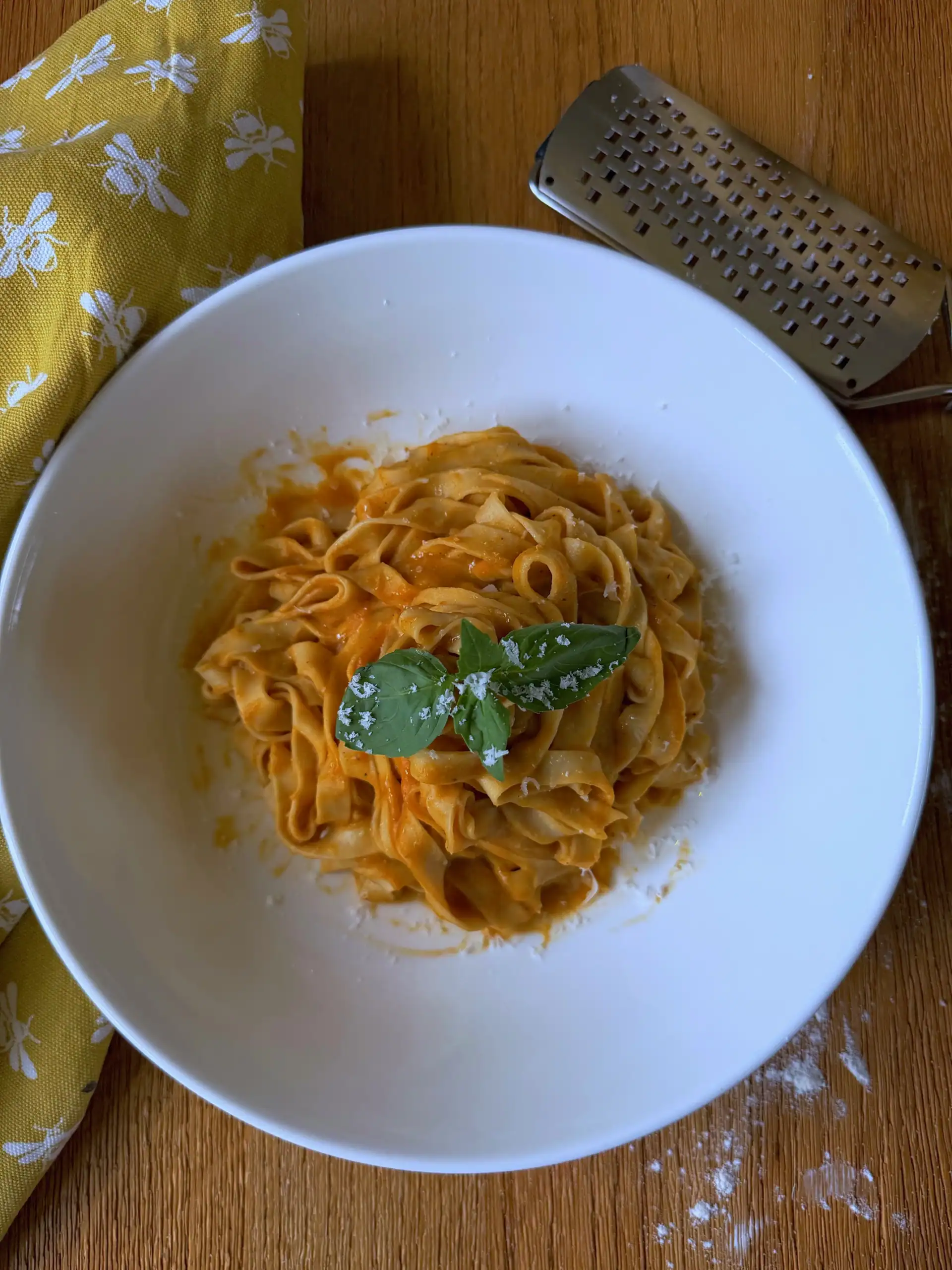
Variations of homemade fresh pasta
Storage and freezing
Storing fresh pasta:
- Fresh pasta can be refrigerated for short-term use, perfect when you've made it earlier in the day or want it ready for tomorrow's dinner.
- Lightly dust with fine semolina to stop sticking.
- Lay the pasta in loose nests or spread it out on a tray.
- Cover tightly with cling film or place in an airtight container.
- Use within 24 hours for the best texture and flavour.
Fresh pasta starts to oxidise and turn darker after a day or so, which is normal but not ideal for serving..
Storing pasta dough:
- If you've made the dough but aren't ready to roll it out yet:
- Wrap tightly in cling film.
- Refrigerate for up to 24 hours.
- Bring to room temperature before rolling so it's soft and workable.
For longer storage, freeze the dough ball (wrapped well) for up to 2 months, then thaw overnight in the fridge.
Freezing:
- Freezing is the best way to keep homemade pasta tasting fresh without any fuss. It holds its shape, cooks perfectly, and saves you from weeknight chaos when the kids are hungry right now.
- Dust generously with semolina so the pieces don't clump.
- Arrange in single layers on a baking tray and freeze for 20-30 minutes.
- Transfer to freezer bags or airtight containers once solid.
- Freeze for up to 2 months without losing quality.
The best part? Cook straight from frozen, no thawing needed. Just drop it into boiling salted water and add an extra minute or two to the cooking time.. This frozen pasta goes great with my for a quick, healthy meal for the kids.

- Rest the dough – don't rush it. Giving the dough 30 minutes minimum to relax makes it so much easier to roll.
- Dust with semolina, not flour – Semolina sits on the surface instead of absorbing in, which keeps your pasta from sticking or turning into wallpaper paste!. It's the secret to those perfect little nests.
- Roll thinner than you think – Fresh pasta puffs slightly when cooked, so go one notch thinner than your instincts tell you. Your sauces will cling better, and the texture is spot‑on
- Let the kids crank the pasta machine – It keeps them busy, gives them ownership, and somehow turns pasta‑making into an afternoon activity. Yes, it gets messy. Yes, it's worth it
- Don't overcook it – Fresh pasta cooks fast. Like, blink and it's done fast. Start checking after 2 minutes and pull it as soon as it floats and feels tender
- Save a mug of pasta water – This starchy liquid is liquid gold for loosening sauces, helping them cling, and making everything taste restaurant‑level without the restaurant prices.
FAQ
Why is my pasta dough too dry?
Homemade pasta dough can feel dry at first. Keep kneading - it often comes together with a bit of patience. If it still feels crumbly after a few minutes, add a teaspoon of water at a time until it forms a smooth ball.
Is your dough sticky?
Sticky dough usually means too much moisture. Dust your hands and the dough lightly with 00 flour or fine semolina and keep kneading until it smooths out
Do I need a pasta machine?
A pasta machine makes rolling easier and more consistent, but it's not essential. You can roll the dough with a rolling pin - just aim for thin, even sheets. Kids often love cranking the machine, so it's a great tool if you have one.
What flour is best for homemade pasta
00 flour gives the smoothest, silkiest texture. You can use all‑purpose flour in a pinch, but 00 flour is ideal for that classic Italian feel. Semolina is great for dusting and for sturdier shapes.
Can kids help make homemade pasta?
Absolutely - and they love it. Cracking eggs, mixing dough, and turning the pasta machine handle are perfect kid‑friendly jobs. Just expect a little extra flour on the floor
How do I stop my pasta from clumping?
Fresh pasta sticks easily if it's not dusted well. Toss cut pasta in fine semolina and let them dry slightly before cooking. Make sure your boiling water is well‑salted and at a rolling boil before adding the pasta.
Did you enjoy this recipe? have a question? It would mean so much to me if you please leave a comment and a rating below!
Homemade pasta
Equipment
- 1 pasta drying rack or a clothes airer will do!!
Ingredients
- 300 Grams 00 flour
- 3 Eggs
- 20 Grams Fine semolina
Instructions
- Tip the flour onto a clean work surface and make a wide well in the centre
- Crack 3 eggs into the well. Use a fork to gently whisk the eggs.
- Slowly pull flour in from the edges and continue to combine with a fork
- When the mixture becomes too thick to combine with a fork, switch to your hands and start bringing it together into a shaggy dough
- Knead the dough for 8-10 minutes until it becomes smooth, elastic, and slightly tacky but not sticky. Use the palm of one hand to push the dough away from you and use your other hand to turn the dough 90 degrees.
- When the dough is smooth, shape into a rough ball, wrap tightly with cling film and rest for at least 30 minutes in the fridge. You can rest at this stage up to 24 hours. Resting helps the dough become more smooth and pliable, making it easier to roll out.
- After a minimum of 30 minutes resting time, get it out of the fridge and cut into 4 quarters. Working with one quarter at a time will be much easier. Leave the rest of dough wrapped in cling film or under a damp tea towel so it doesn't dry out.
- Prepare a baking tray lightly dusted with fine semolina ready for the pasta, or if you are going to be cooking the pasta right away you can use a pasta rack, but either is fine. You should allow your pasta to dry for at least 30 minutes before cooking. But if you are making it more than an hour ahead you can wrap the whole tray in cling film to prevent it drying out.
- Flatten your quarter of dough with a rolling pin and guide it though the widest setting of your pasta machine twice (on my machine this is 0). Move to the next widest setting (1) and put it through twice. Now fold the dough from end to end and put it through the machine at its widest setting again. Click to the next widest setting (1) and roll it though again
- Continue to guide the dough through each setting from 0 to 7, put it through twice on each thickness setting. The dough should now be quite long!
- Attach the pasta cutter to the pasta machine. Dust your pasta sheet with fine semolina on each side to prevent sticking and run it through the cutter. (I prefer Tagliatelle)
- Curl the pasta into "nests" and put on the prepared tray and cover with cling film or use a pasta drying rack (if you are cooking in the next 30 minutes).Continue to roll and cut the other three quarters of pasta. Cover the whole tray in cling film, ensuring it is airtight. Leave to dry for at least 30 minutes before cooking. You can leave the pasta for a maximum of 24 hours in the fridge before it will start to deteriorate.
- Bring a pan of water to the boil and add a pinch of salt, cook the pasta for 2-3 minutes or less if you prefer al dente. Drain and add to your favourite sauce.
Notes
- Using 00 flour gives the dough that classic silky Italian feel, but the texture still depends on humidity and egg size. The dough should feel soft and elastic, never sticky. If it clings to your hands, dust lightly with flour; if it feels stiff, wet your fingertips and keep kneading.
- Egg size matters – Three large eggs usually hydrate 300g of flour perfectly, but medium eggs may leave the dough a little dry. Add moisture in tiny amounts only-just a few drops of water at a time.
- Resting is non‑negotiable – The 30‑minute rest lets the gluten relax, which makes rolling easier and prevents the dough from snapping back. Skip the rest and you'll fight the dough the whole way.
- Cooking fresh pasta – Fresh pasta cooks fast-usually 2-3 minutes. Keep an eye on it and taste early. Overcooking turns it mushy quickly.
- Storing and freezing – Fresh pasta can be refrigerated for up to 24 hours or frozen for up to 2 months. Freeze in loose nests on a tray first, then transfer to a bag. Cook straight from frozen.
- Sauce pairing – Fresh pasta shines with simple sauces-tomato, butter and sage, pesto, or a quick bolognaise. Because it absorbs sauce beautifully, keep things light and let the pasta be the star.
- Getting kids involved – Kids love pasta day. Let them help crack the eggs, mix the dough, turn the pasta‑machine handle, or cut fun shapes. It's messy, but it turns dinner into an activity - and they're far more excited to eat something they helped make.
Related
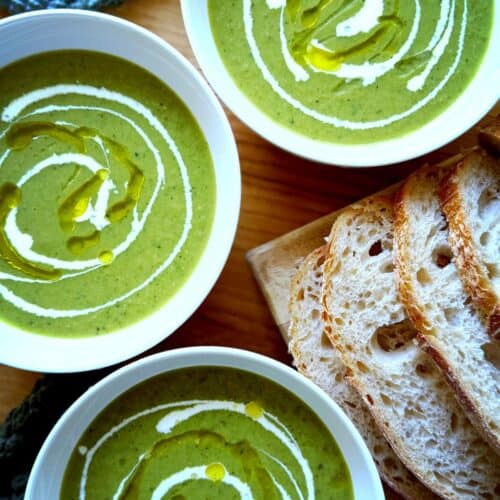

Pairing
These are my favorite dishes to serve with [this recipe]:


Becky says
This recipe is great. So simple. Thanks for making the instructions so easy to follow. This was the first time using my pasta machine and this recipe made it easy.