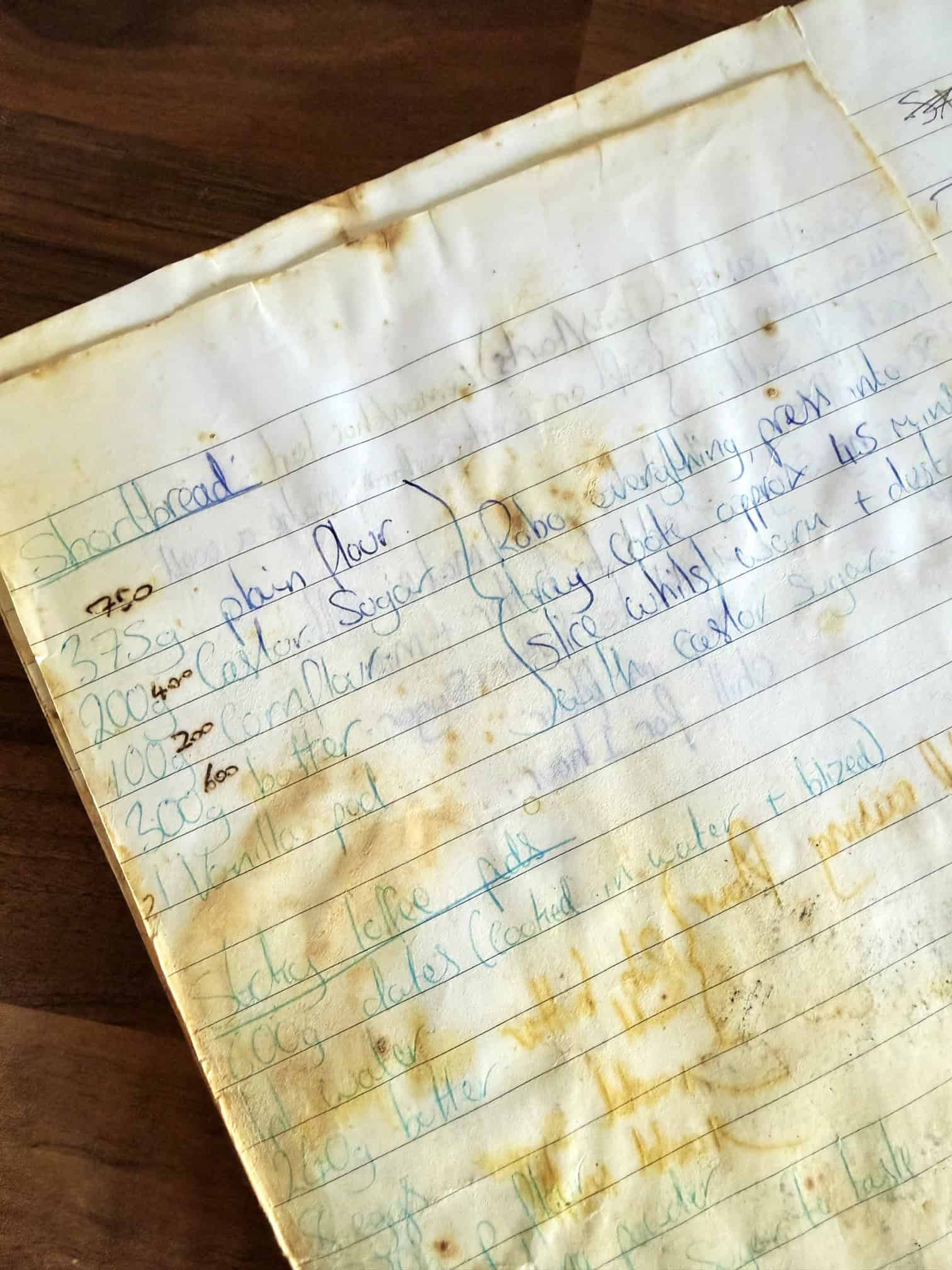
This classic simple shortbread is everything you want in a buttery biscuit, crisp edges, a melt‑in‑the‑mouth centre and just a handful of everyday ingredients for shortbread. It's a quick and easy shortbread recipe that's perfect for baking with kids, gifting to friends or making when you fancy the easiest shortbread cookie recipe without any fuss. I dug this recipe out of my recipe book I used when I was a chef over a decade ago. I used this recipe in multiple independent restaurants and usually paired the shortbread with other desserts. The restaurant customers loved it as much as my 5 year old son does now!
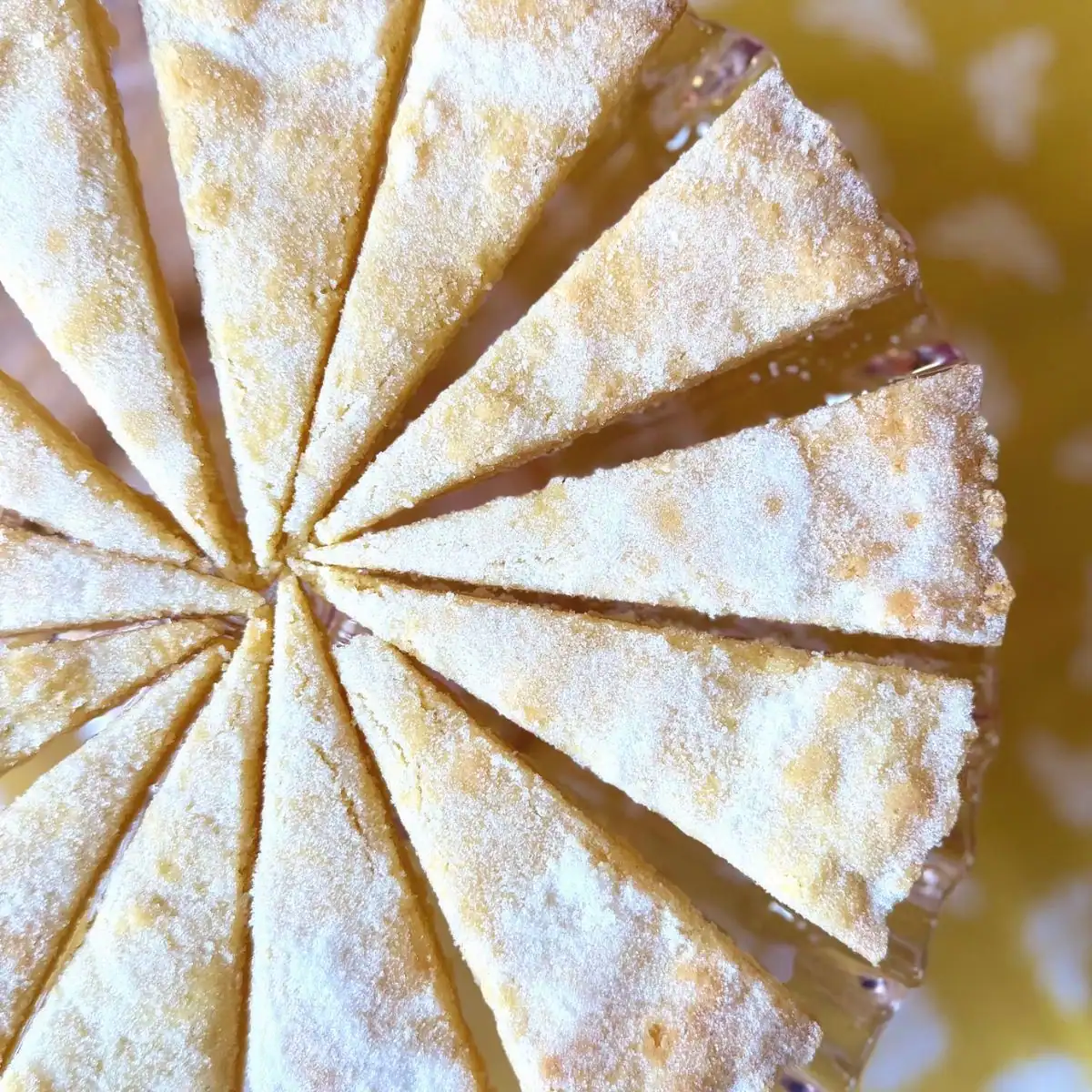
This shortbread cookie recipe is timeless. Shortbread biscuits are so simple and easy to make, with only a few ingredients and 35 minutes you can impress the whole family. I made this recipe for the first time since I was a chef, (over 10 years ago) and I can see it will definitely be one that fills the biscuit tin regularly! My 5 year old boy loved getting his hands in the bowl and helping press the dough into the tins and loved eating the shortbread even more! The shortbread is perfect for gifting, sharing, or nibbling straight from the cooling rack. Check out my original recipe below, written as a professional chef over 10 years ago
History and Origin of shortbread
Shortbread has its roots in Scotland, where it began as a medieval biscuit made from leftover bread dough enriched with butter. Over time, the yeast disappeared, the butter increased, and the crumbly, melt‑in‑the‑mouth texture we know today was born. By the 16th century, shortbread had become a treasured treat, even Mary, Queen of Scots was said to be a fan. Traditionally baked for celebrations like Hogmanay and weddings, Scottish shortbread has since become a classic around the world, loved for its simplicity, richness and that unmistakable buttery snap
If your family loves this shortbread recipe as much as mine does, you’re in good company - we’ve got plenty more sweet treat recipes. Here are a few more recipes that always go down well at our table:
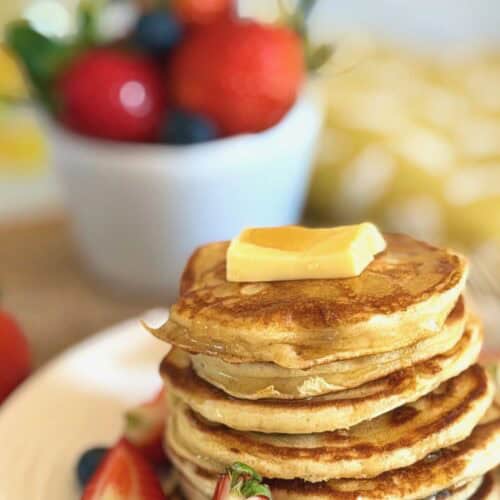
- Cottage cheese pancakes
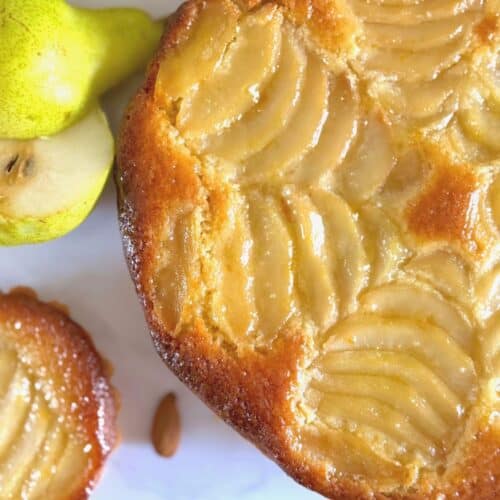
- Poached pear and frangipane tart
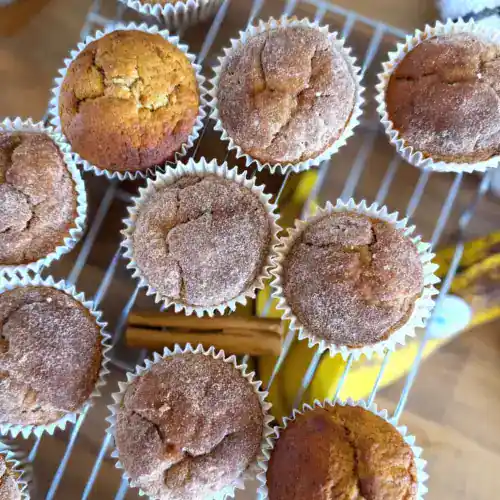
- Cinnamon and maple banana bread muffins
- Big fluffy scones
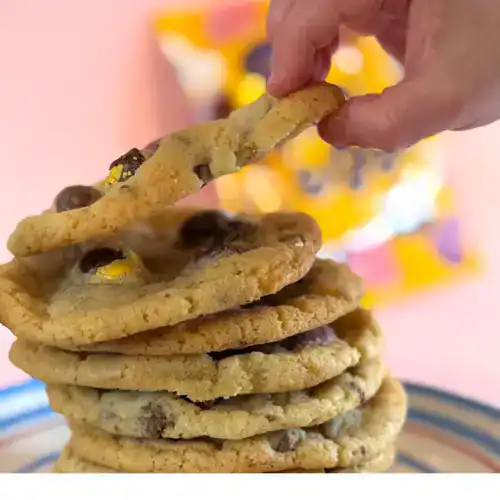
- Mini egg cookies
- Strawberry tarts
- Vanilla creme brulee
Jump to:
- History and Origin of shortbread
- Ingredients and substitutions for easy to make Shortbread biscuits:
- What equipment will you need to make easy shortbread cookies
- How do I make easy shortbread cookies?
- Serving suggestions for Traditional Scottish shortbread:
- Variations of easy shortbread recipe:
- How to store and freeze shortbread biscuits:
- FAQ
- How to make shortbread
- Related
- Pairing
Ingredients and substitutions for easy to make Shortbread biscuits:
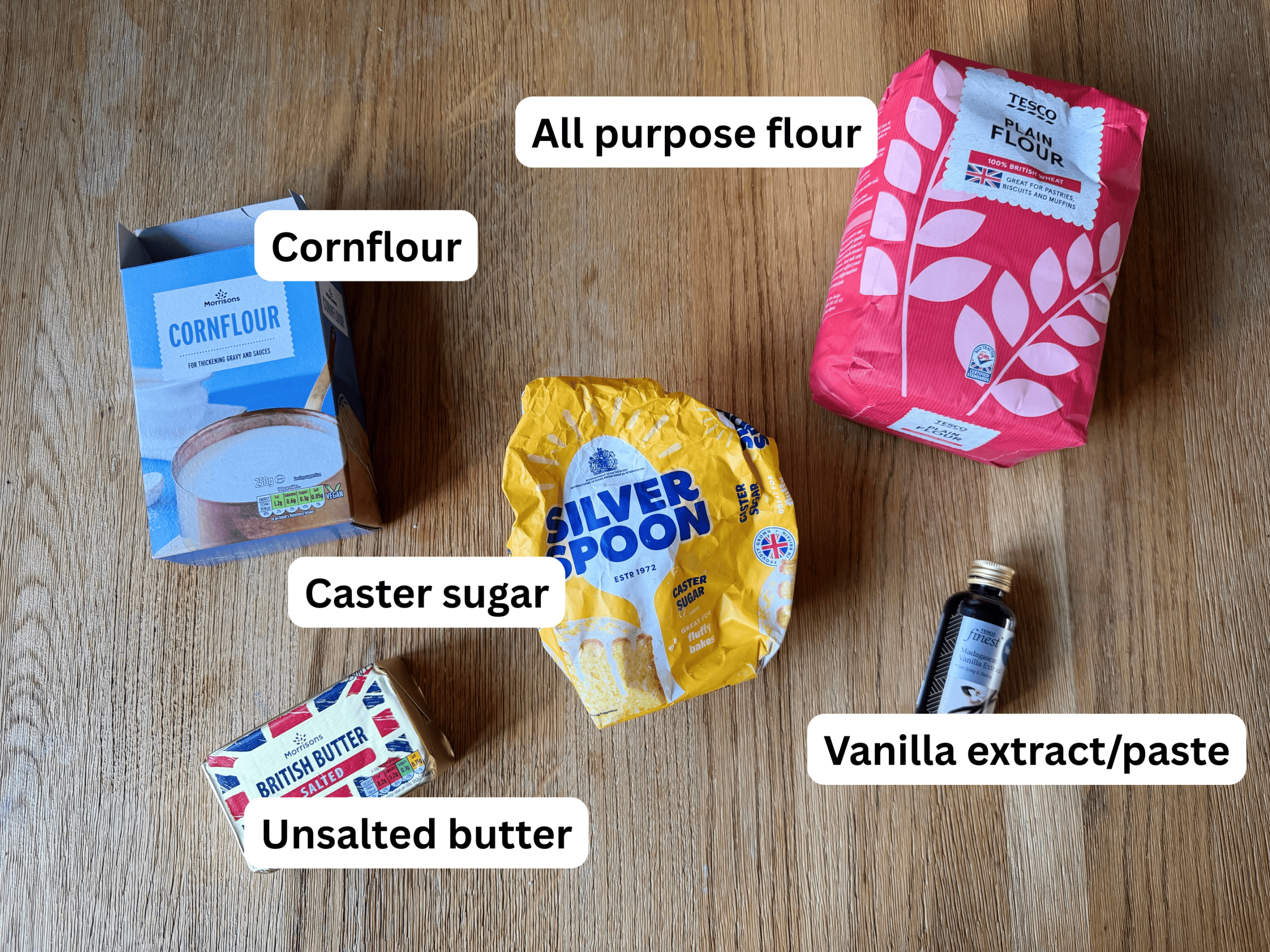
See recipe card for quantities.
- All‑purpose flour – This forms the base of your classic shortbread. You can swap for a good quality gluten‑free blend if needed; just expect a slightly more delicate crumb.
- Cornflour – Gives the shortbread its signature melt‑in‑the‑mouth texture. If you don't have any, replace it with the same amount of all‑purpose flour, though the biscuits will be a little firmer.
- Caster sugar – Fine sugar dissolves beautifully into the dough. Granulated sugar works in a pinch but will give a slightly crunchier texture. Golden caster sugar adds a lovely hint of caramel.
- Butter -The star of the show. Use good‑quality unsalted butter for the best flavour. Salted butter works too.
- Vanilla pod – Adds that depth of flavour. You can swap for 1 teaspoon vanilla extract or vanilla bean paste.
What equipment will you need to make easy shortbread cookies
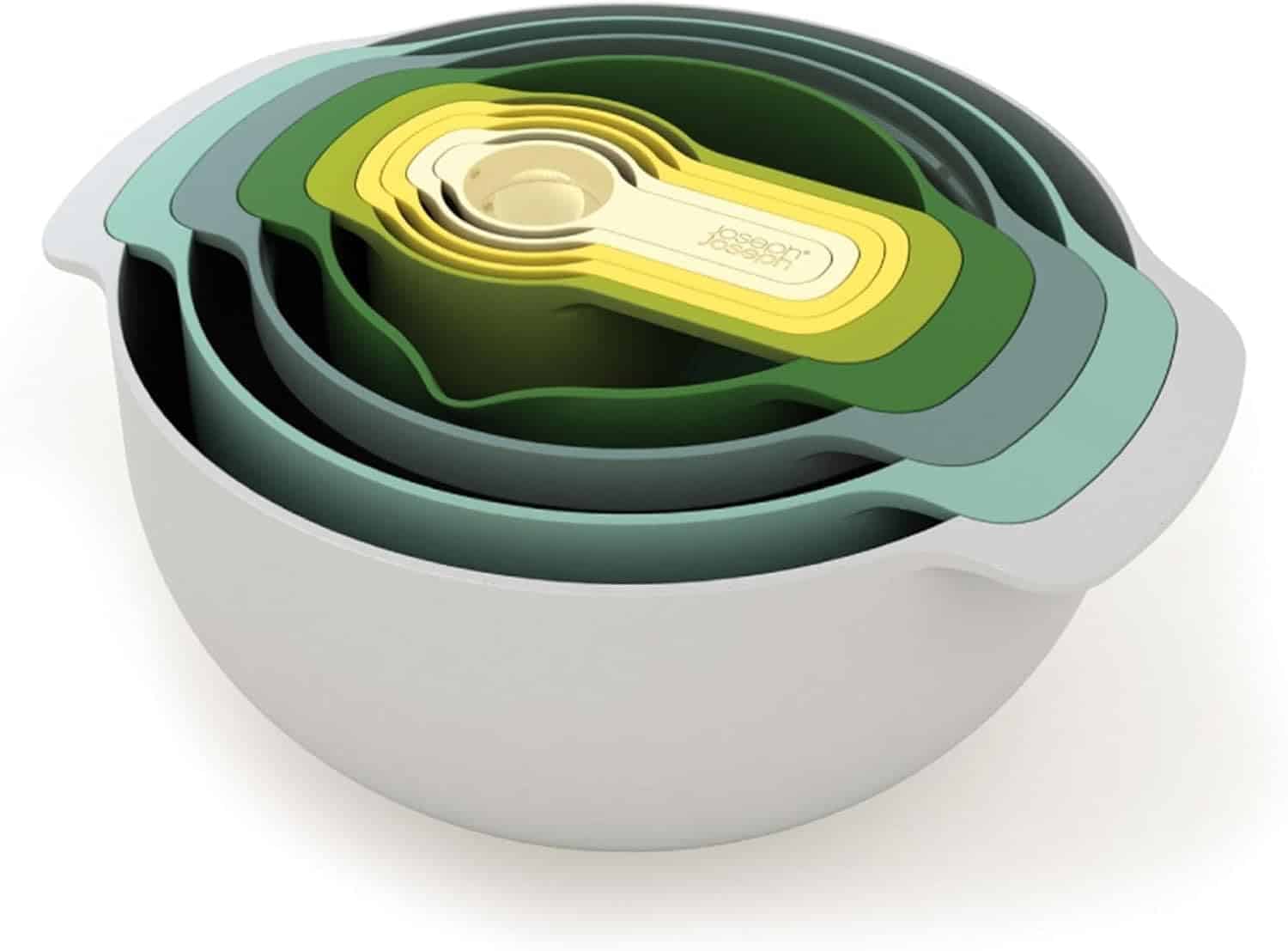
- Mixing bowl – Every kitchen needs a good mixing bowl, This is a great set that I have been using for years without any issues.
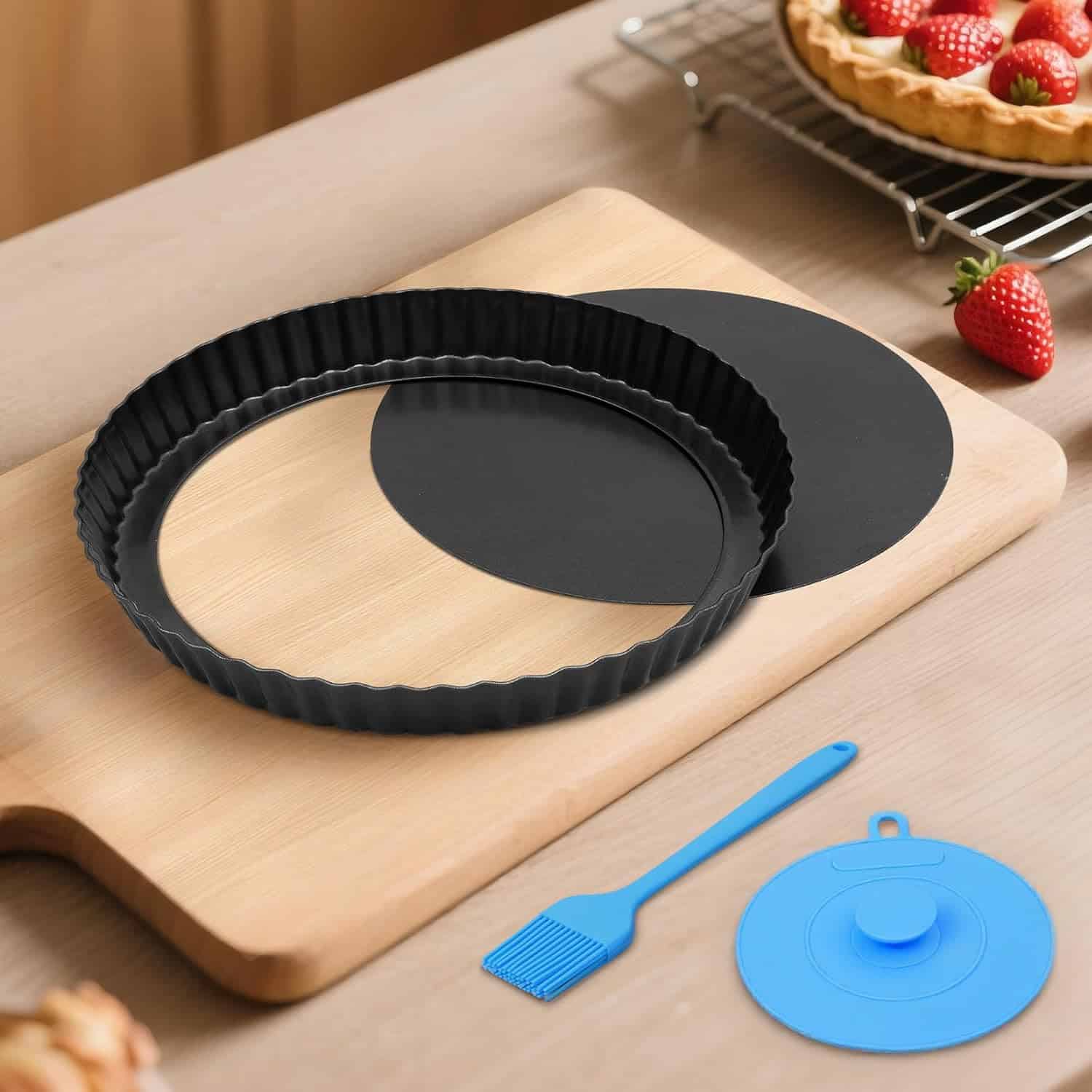
- Fluted tart case – Not essential for this recipe but makes a great shape. These tins are also really useful in making other sweet treats or savoury tarts etc…
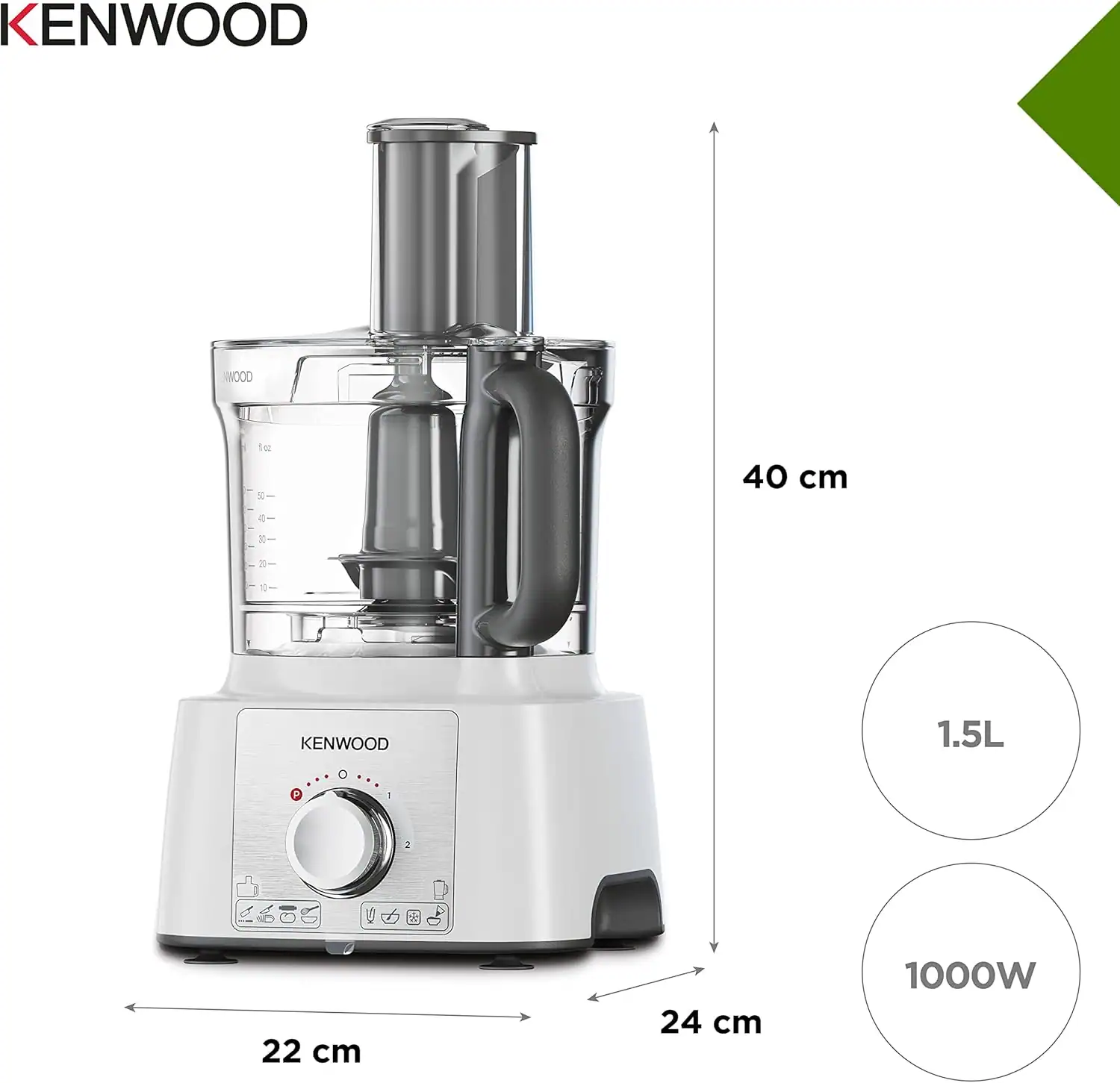
- Food processor – Again, not essential but makes everything much faster and with less fuss. Having a good food processor in the kitchen can be a life saver for time and effort. I can’t link the exact food processor that I use as they don’t make ti any more!! (It has lasted that long) but it is a Kenwood.
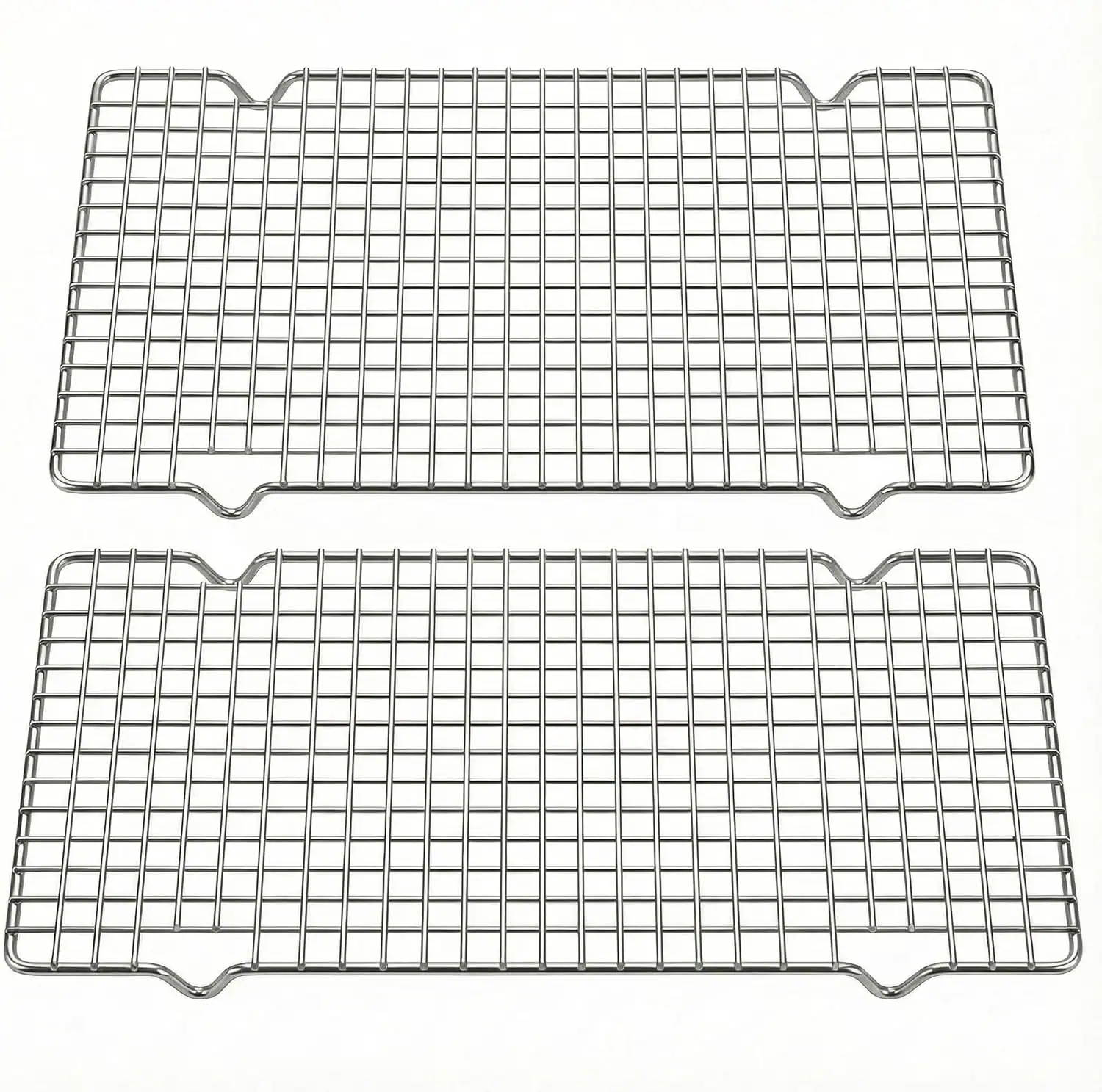
- Cooling rack – Simple but essential if you plan on doing any baking
How do I make easy shortbread cookies?
To make shortbread cookies all it takes is a few simple steps and everyday ingredients and you will have beautifully buttery shortbread. Let's get started….
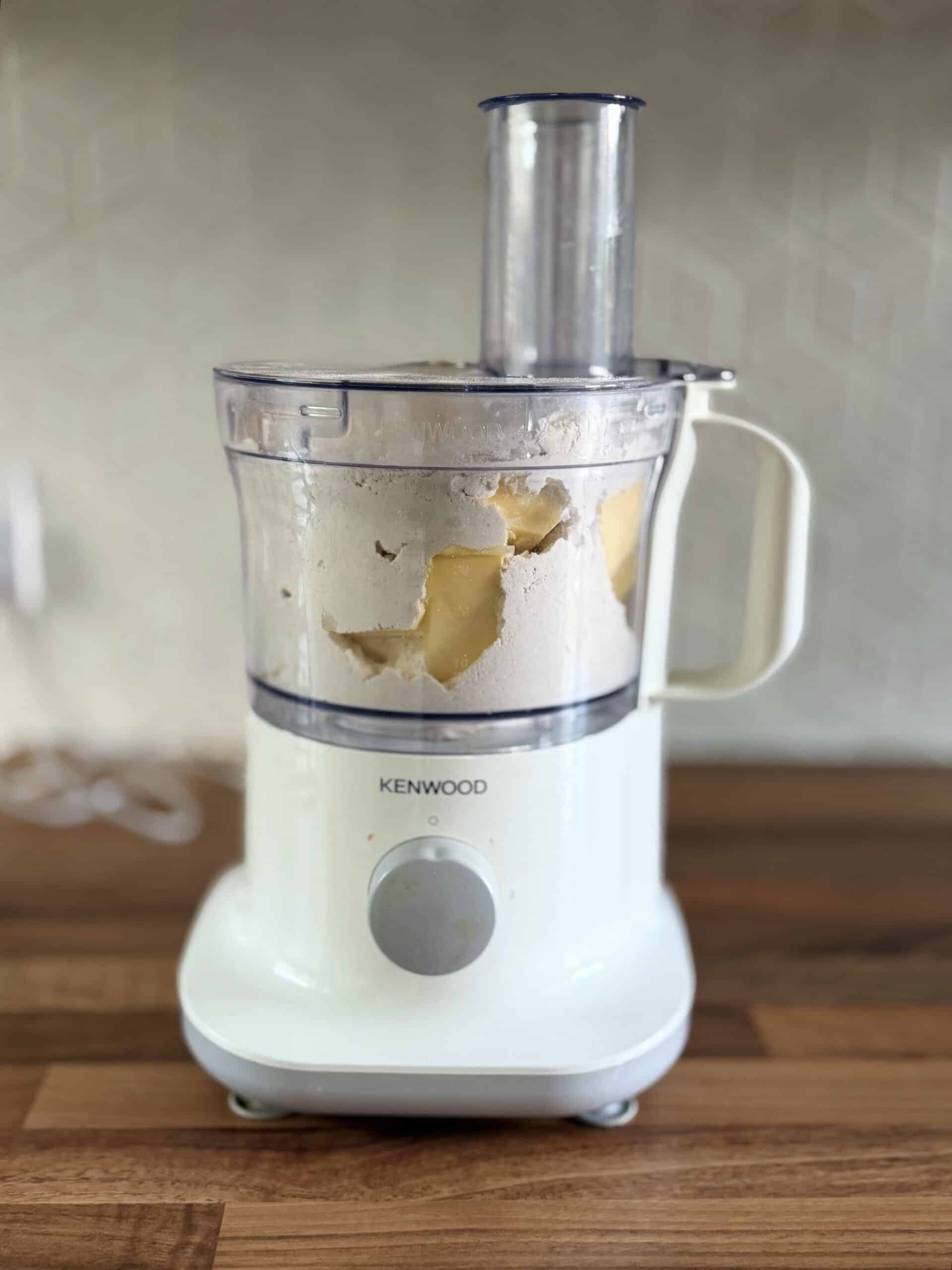
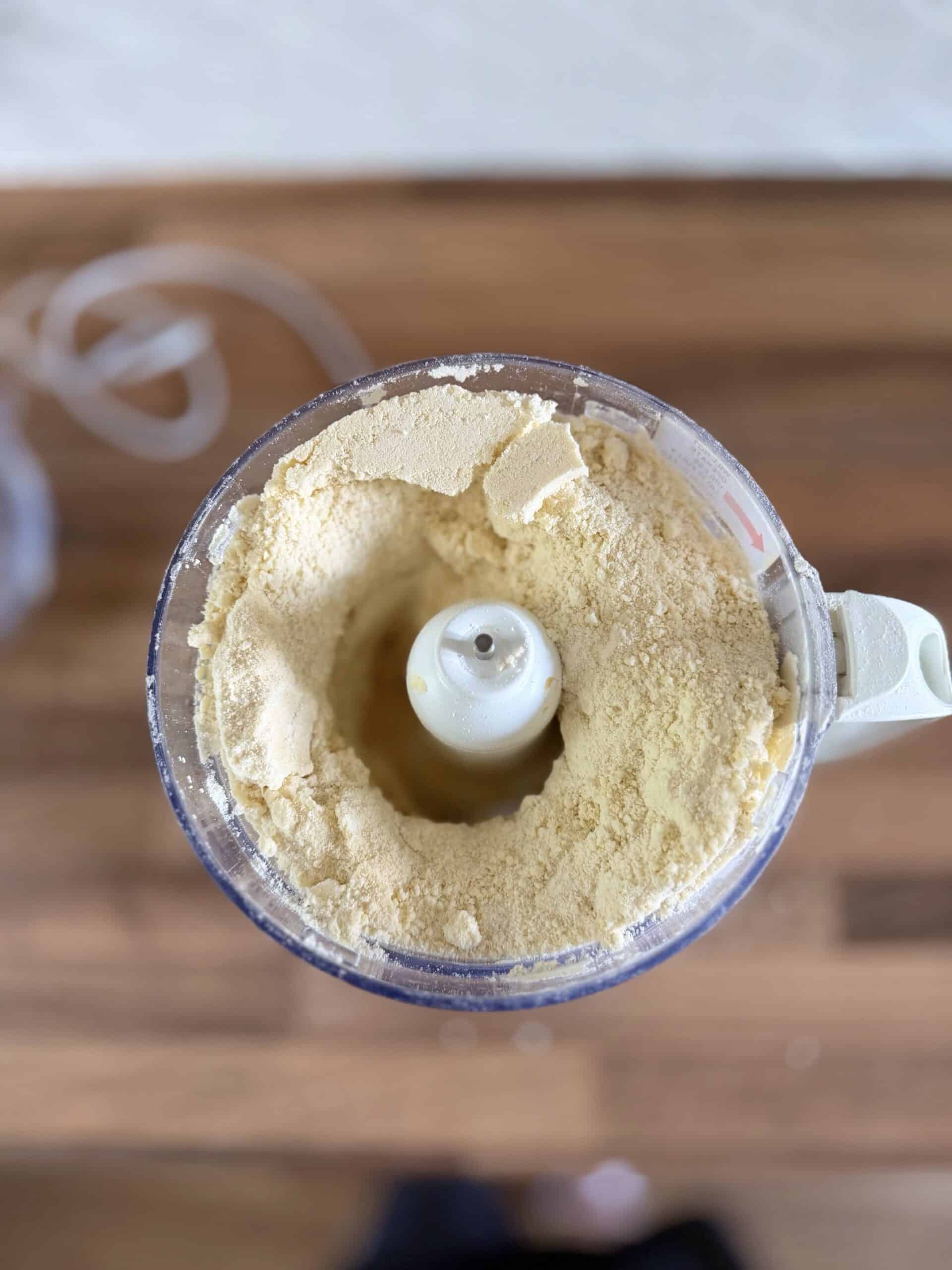
1: Blitz the dough: Add the butter, sugar, flour, cornflour and vanilla to a food processor and blitz until the mixture looks dry and sandy, almost like breadcrumbs.
If you've got little helpers, this is the moment they'll ask to press the buttons!!
Alternatively, if you don’t have a food processor you can use your hands to rub all of he ingredients together in a mixing bowl. A little more time and effort will get you the same result.
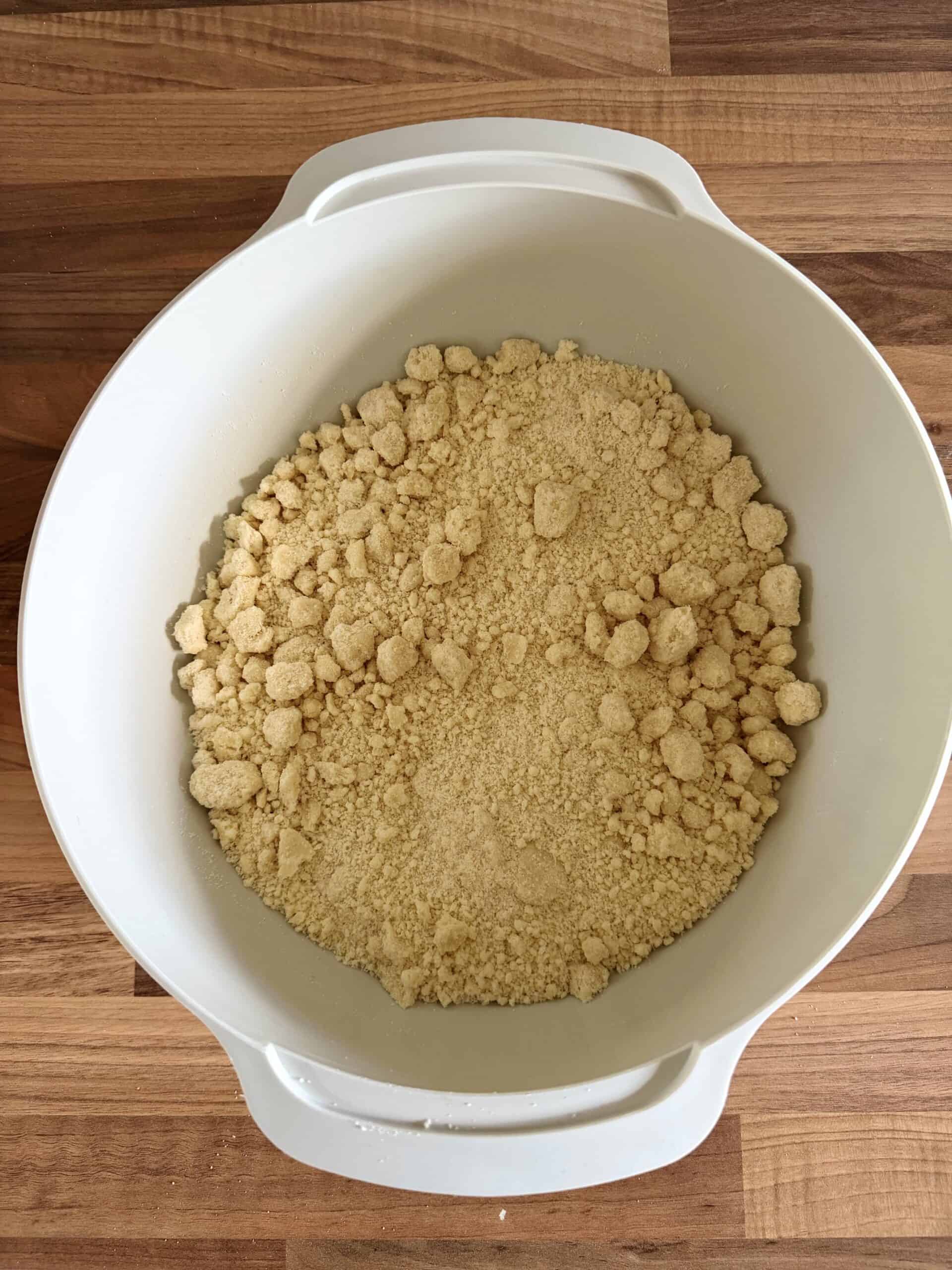
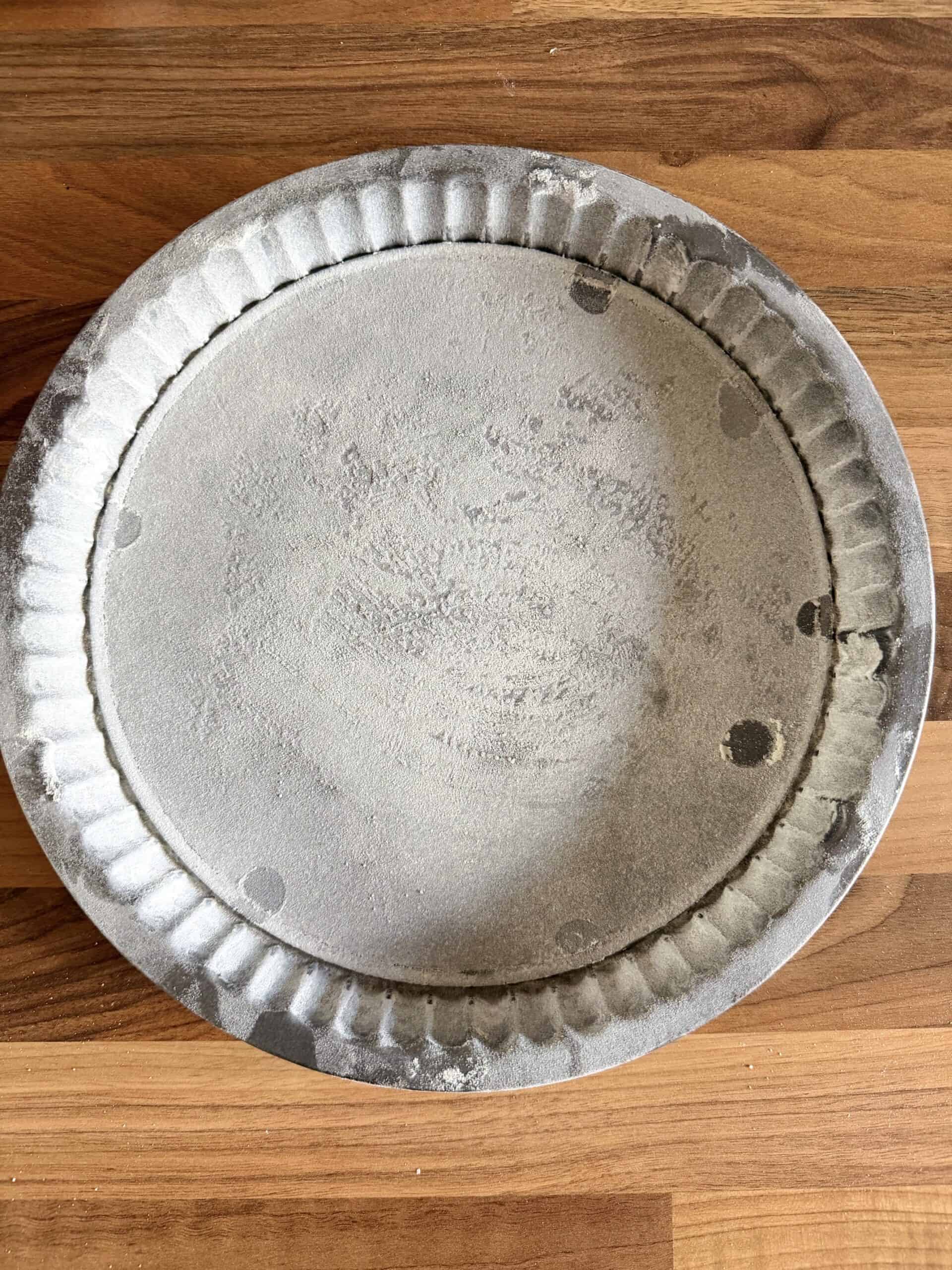
3: Prepare the tins: Lightly oil and flour two fluted tart tins (any shape works). This stops the shortbread sticking and gives you that lovely defined edge .
4: Press into the tins: Divide the mixture between the tins and press it down firmly with your fingers and palms. Make sure to push it right into the corners.
Small fingers are surprisingly good at getting into those awkward edges, a perfect job for your mini sous‑chef.
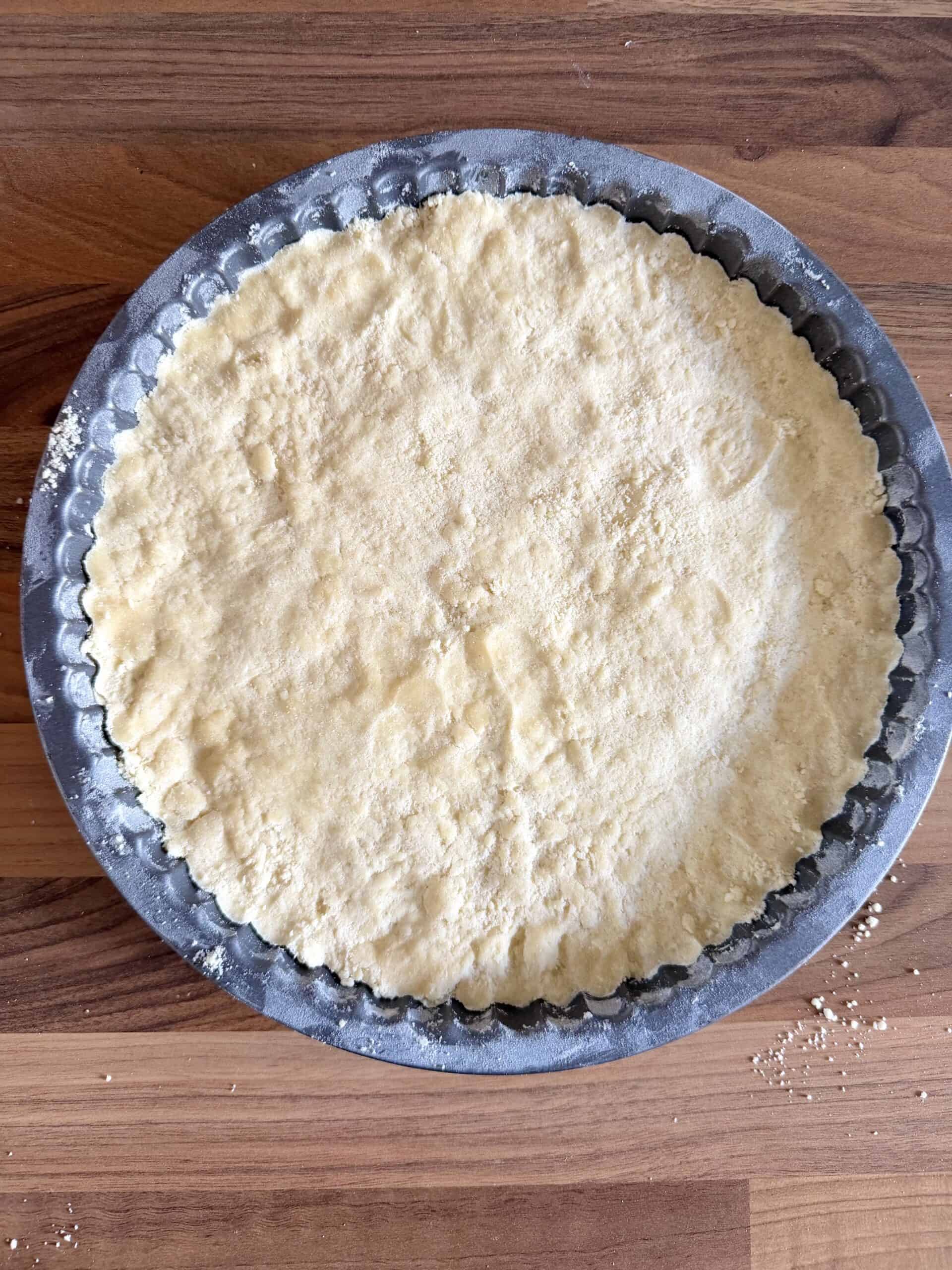
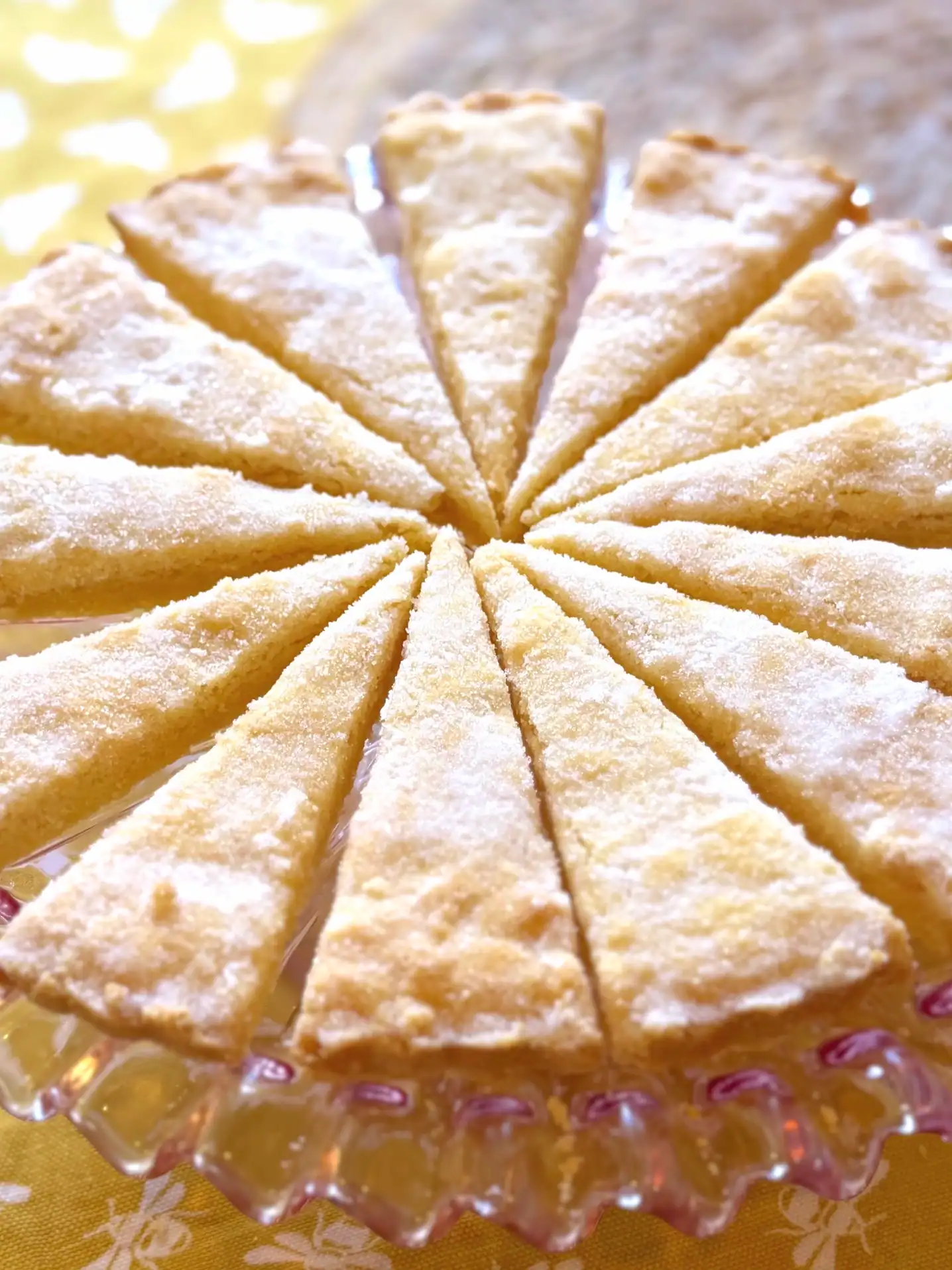
5: Bake: Bake at 160°C for 30 minutes, until pale golden and set. Sprinkle with caster sugar as soon as it comes out of the oven, then cut into wedges or fingers while still warm
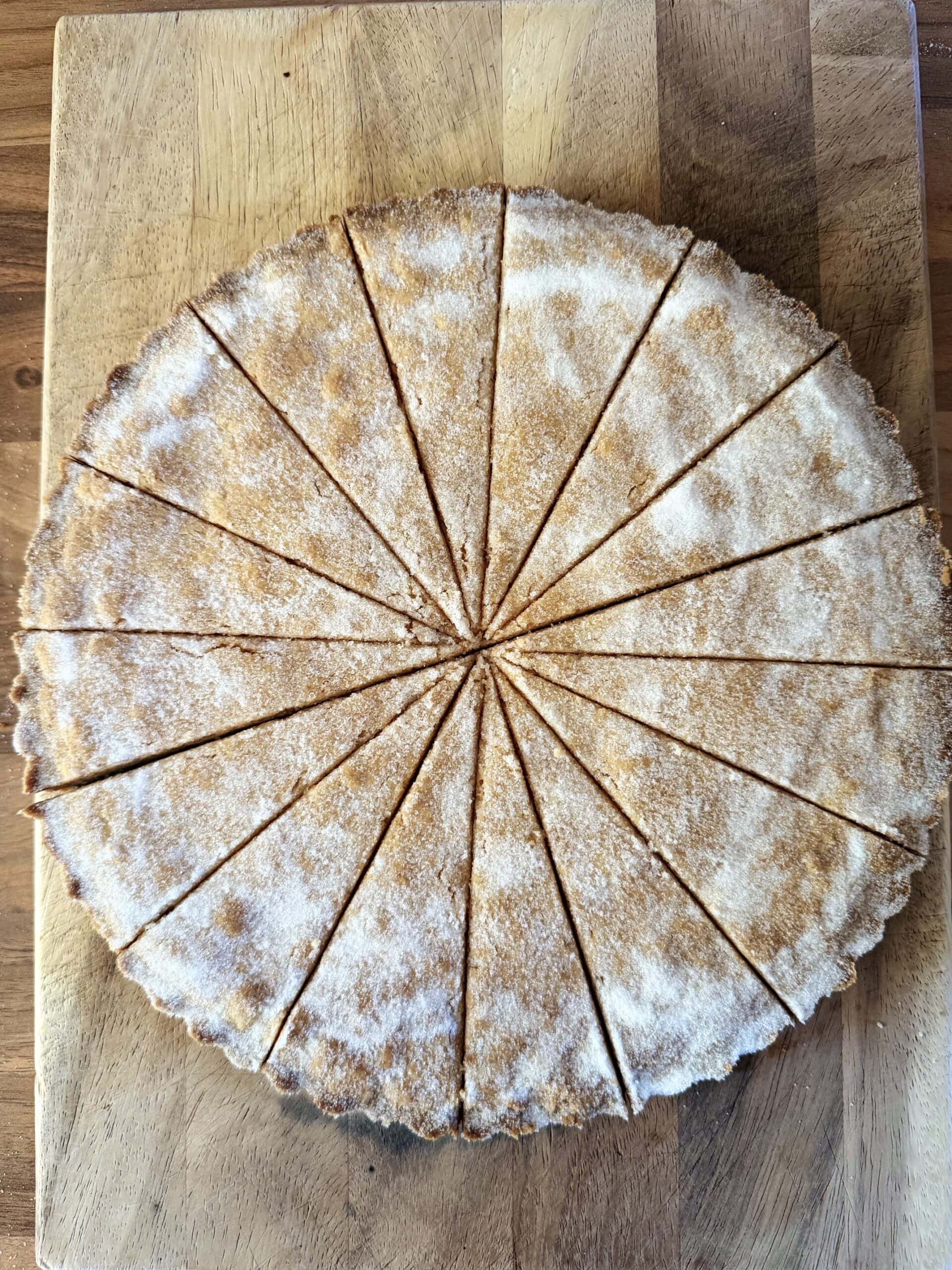
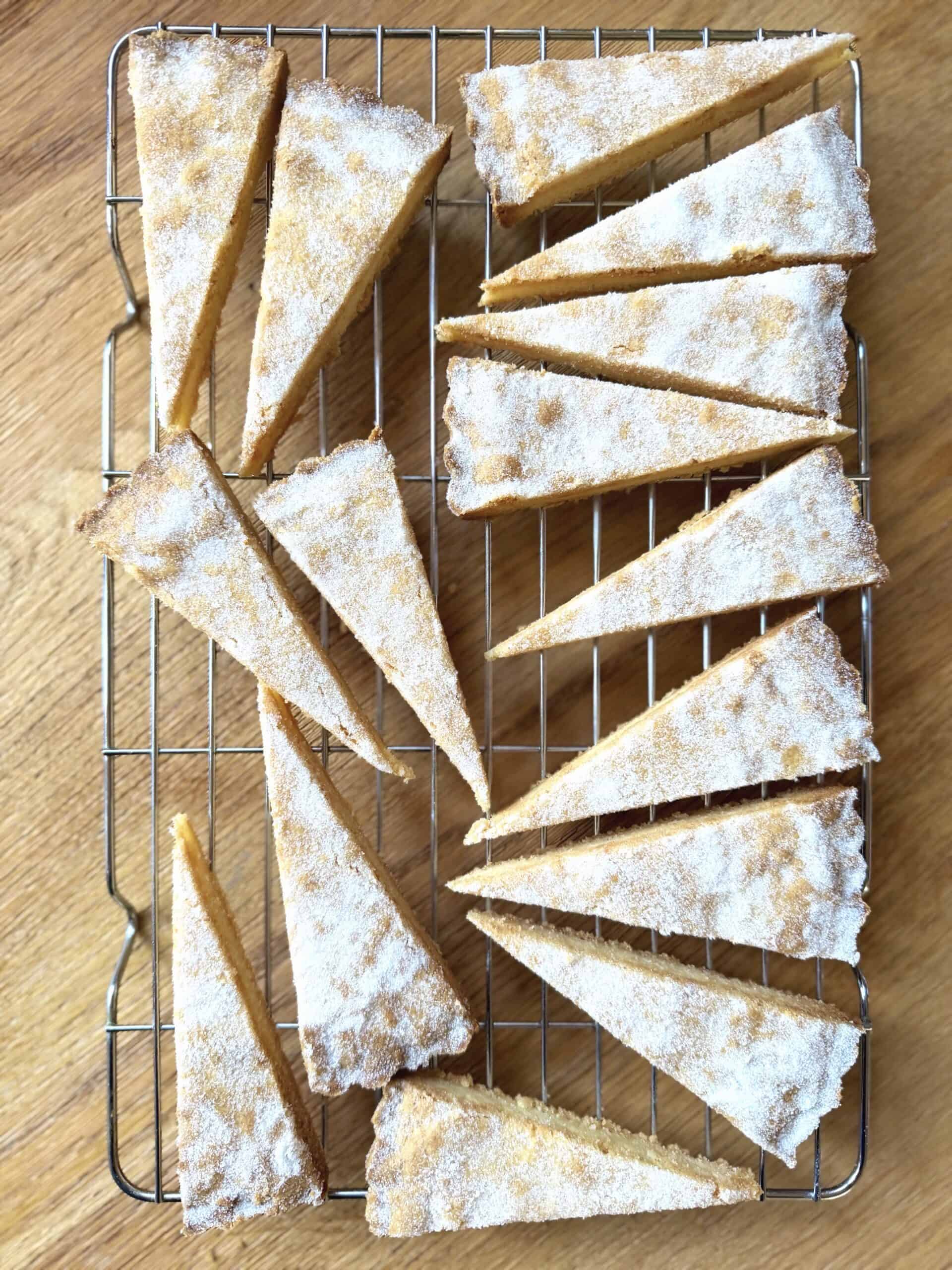
6: Cool: Leave the shortbread to cool in the tins for about 10 minutes so it firms up, then transfer to a wire rack to cool completely .
Serving suggestions for Traditional Scottish shortbread:
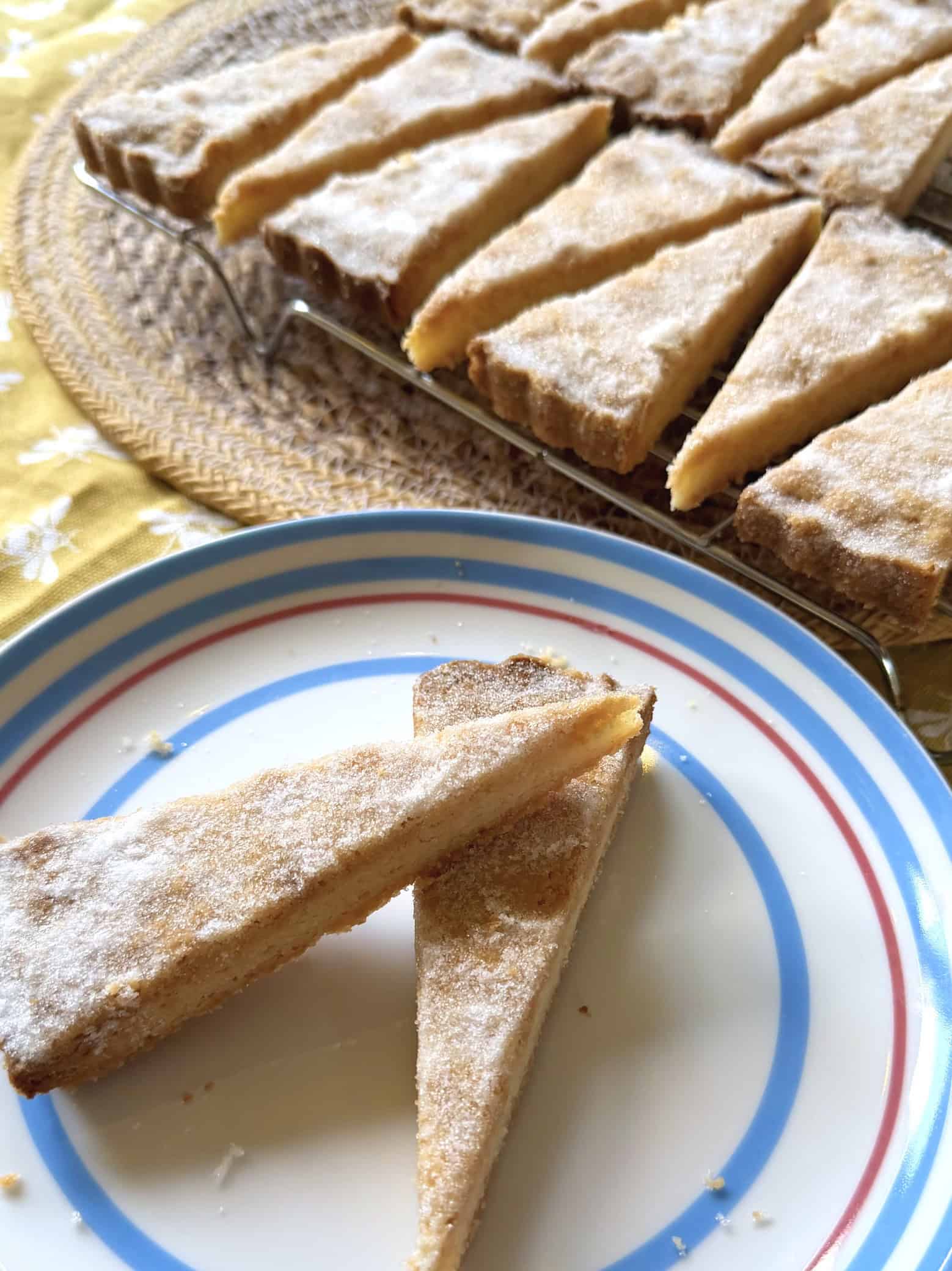
- Shortbread is perfect with a cup of tea or coffee, especially when it's still slightly warm and extra buttery.
- Pair it with fresh berries or a spoonful of homemade jam for a simple but elegant treat.
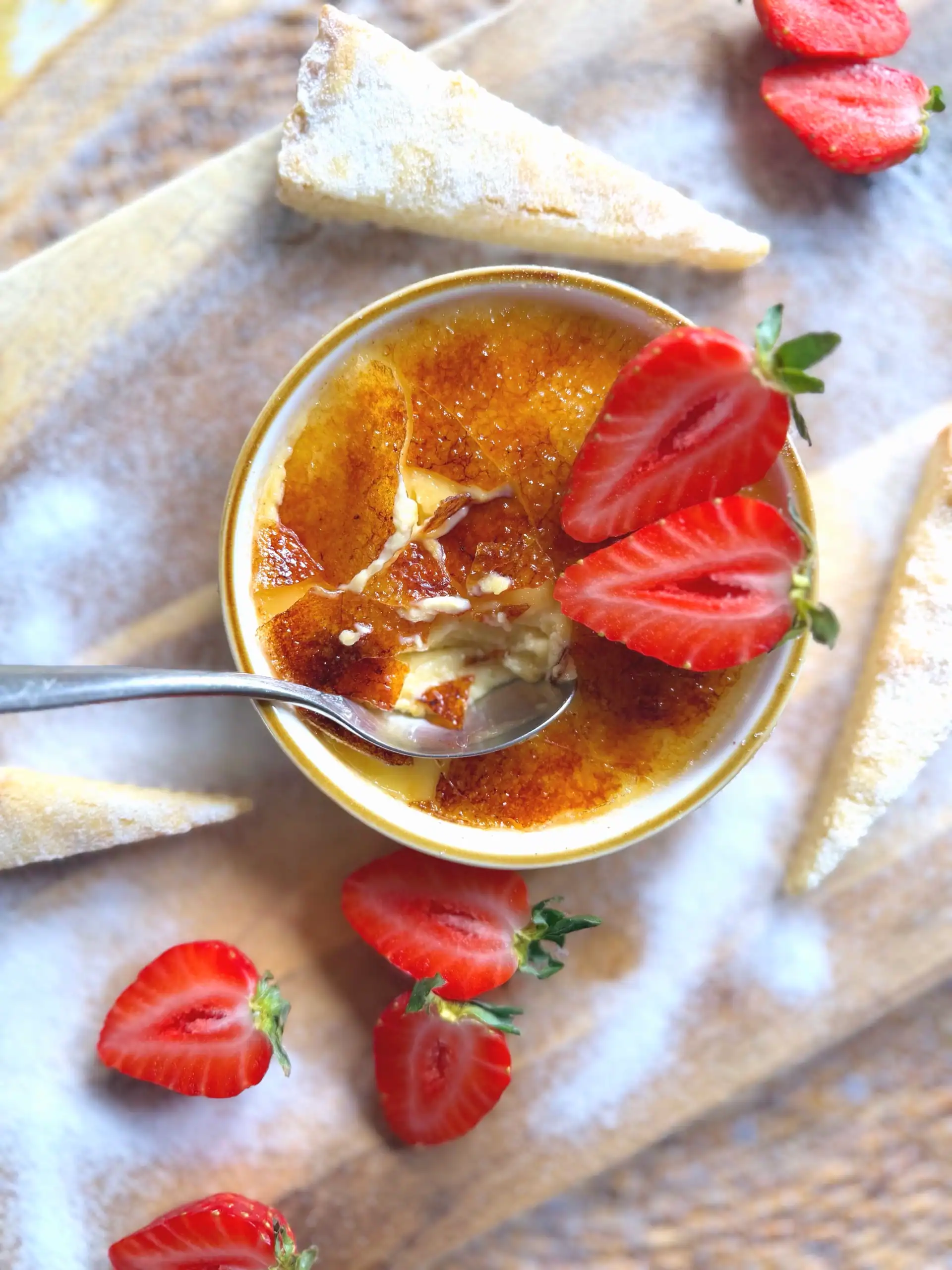
- For something a little more special, serve alongside my homemade crème brûlée. It's a combination I used to serve as a professional chef, and the contrast of crisp shortbread with silky custard is awesome!
- Crumble leftover pieces over ice cream, yoghurt or fruit compote for an easy dessert upgrade.
- Wrap a few biscuits in parchment and string for a thoughtful edible gift.
Variations of easy shortbread recipe:
How to store and freeze shortbread biscuits:
Storage:
Once fully cooled, store your shortbread in an airtight tin or container for up to 1 week. The flavour actually improves after the first day as the butter settles, so it's a great make‑ahead bake.
Freezing:
Shortbread freezes beautifully. Place the cooled biscuits in a freezer‑safe container or bag, separating layers with baking paper, and freeze for up to 3 months. Defrost at room temperature, then enjoy as is or give them a quick 2-3 minute warm‑through in a low oven to refresh the texture

- Keep the butter cool – Cold butter gives you that classic crumbly shortbread texture. If it starts to soften too much, pop the bowl in the fridge for 5 minutes.
- Don't panic if it looks dry – Shortbread dough should look like breadcrumbs. It comes together when you press it into the tin…trust the process.
- Use your hands as the final mixer – Even the best food processors miss a few bits stuck to the sides. A quick mix with your hand makes sure everything is evenly combined.
- Press firmly, but don't compact it too much – You want it pressed enough to hold together, but not so tight that it loses its delicate crumb.
- Cut while warm for clean slices – Shortbread tends to crumble if you wait until it's fully cooled. Slice it warm, then let it finish firming up on the rack.
- Sugar sprinkle – A dusting of caster sugar while warm gives that classic sparkle and crunch. Don't skip it.
FAQ
What’s the difference between Scottish shortbread and regular shortbread?
Scottish shortbread is traditionally richer and more buttery, with a higher fat‑to‑flour ratio that gives it that classic crumbly, melt‑in‑the‑mouth texture. "Regular" shortbread or butter cookies often include eggs or rising agents, making them softer or more cookie‑like rather than crisp and sandy.
How to make proper Scottish shortbread?
Proper Scottish shortbread keeps things simple: good butter, sugar and flour – nothing else. The dough should look dry and crumbly, and it's pressed (not rolled) into a tin before baking low and slow. The key is not overworking the dough so you keep that delicate, traditional crumb.
what is the 321 rule for shortbread?
The 3‑2‑1 rule refers to the classic ratio: 3 parts flour, 2 parts butter, 1 part sugar. It's the foundation of traditional shortbread and helps guarantee the perfect texture every time.
what is the secret to making good shortbread?
Cold butter, minimal handling and a gentle bake. Shortbread should stay pale, not golden. Press the dough into the tin rather than kneading it, cut it while warm, and always finish with a sprinkle of sugar. Quality butter also makes a huge difference
Why is my shortbread dough so crumbly?
Shortbread dough is meant to be crumbly, it shouldn't form a smooth ball like cookie dough. If it's extremely dry and won't hold together when pressed into the tin, your butter may have been too cold or slightly under‑measured. A gentle squeeze with warm hands usually brings it together. It should look like sandy breadcrumbs.
Can I make shortbread without a food processor?
Absolutely. Traditional Scottish shortbread was always made by hand. Just rub the butter into the dry ingredients with your fingertips until it looks like breadcrumbs, then press it into the tin. It takes a little longer, but it's a great kid‑friendly job and gives the same delicious result.
Did you enjoy this recipe? have a question? It would mean so much to me if you please leave a comment and a rating below!
How to make shortbread
Equipment
Ingredients
- 375 Grams Plain/All purpose flour
- 200 Grams Caster sugar
- 100 Grams Cornflour/Cornstarch
- 300 Grams Butter
- 1 Vanilla pod or 1 teaspoon Vanilla paste/extract
Instructions
- Blitz the dough: Add the butter, sugar, flour, cornflour and vanilla to a food processor and blitz until the mixture looks dry and sandy, almost like breadcrumbs.If you’ve got little helpers, this is the moment they’ll ask to press the buttons! supervised button‑pressing makes making this shortbread so fun for the little ones.
- Mix by hand: Tip everything into a large mixing bowl and use your hand to give it a quick mix. This helps catch any sneaky bits that like to cling to the sides of the processor.Kids love this part, it's messy, sensory and feels like "real baking".
- Prepare the tins: Lightly oil and flour two fluted tart tins (any shape works). This stops the shortbread sticking and gives you that lovely defined edge
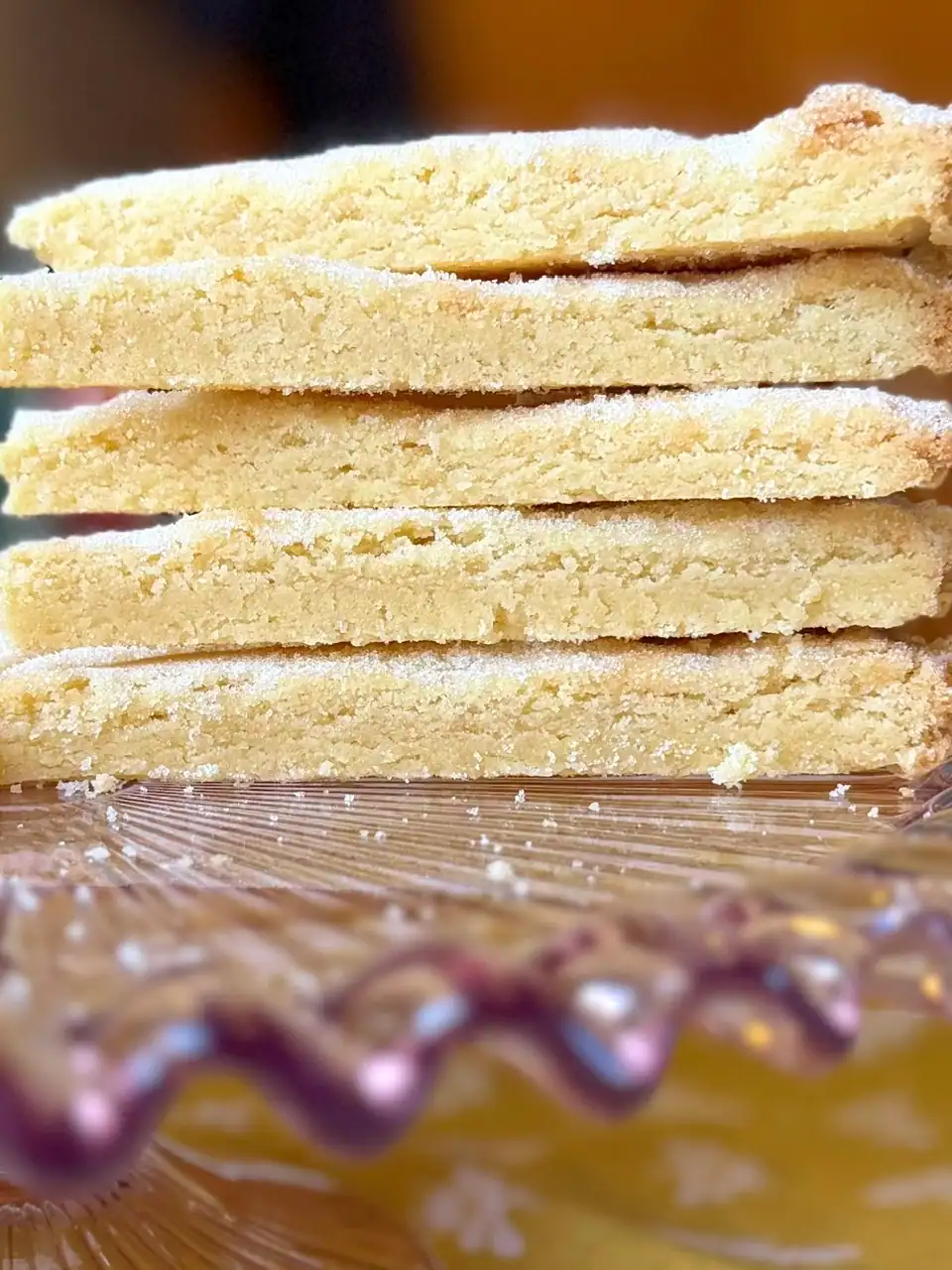
- Press into the tins: Divide the mixture between the tins and press it down firmly with your fingers and palms. Make sure to push it right into the corners. It should be about 1 Lego brick thickSmall fingers are surprisingly good at getting into those awkward edges, a perfect job for your mini sous‑chef.
- Bake: Bake at 160°C for 30 minutes, until pale golden and set. Sprinkle with caster sugar as soon as it comes out of the oven, then cut into wedges or fingers while still warm
- Cool: Leave the shortbread to cool in the tins for about 10 minutes so it firms up, then transfer to a wire rack to cool completely.
Notes
Related


Pairing
These are my favorite dishes to serve with [this recipe]: