The classic crème brûlée is a special dessert. Creme brulee is silky smooth vanilla custard underneath a perfectly crunchy caramelised topping, finished with the satisfying crack of a spoon!! The crack is the best bit by far!! This is the same easy crème brûlée recipe I used throughout my years as a chef, and it became a firm favourite in several independent restaurants where customers would order it again and again. If you've ever wondered how to make crème brûlée at home, or wanted a simple, step‑by‑step brulee recipe that beginners can master, this one delivers every time.
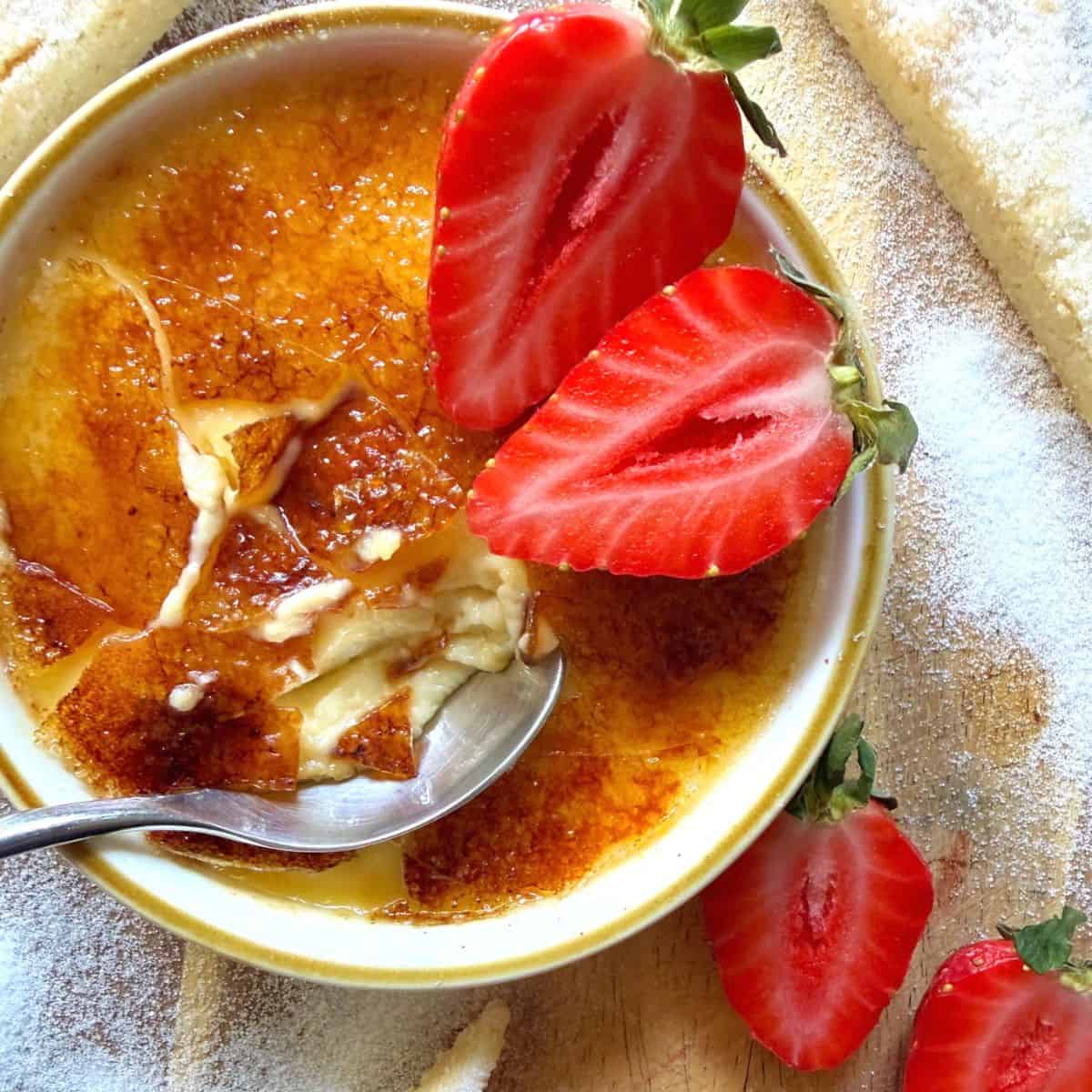
There's a real nostalgia to this easy crème brûlée recipe. I recently dug out the old, battered cookbook I used during my chef days, it is covered in decade old food stains and memories. Tucked inside was this exact recipe. It was a best‑seller in several of the independent restaurants I worked in, and cooking it again after all these years reminded me why. The creamy vanilla custard, the crisp caramelised sugar… it's simple, elegant and always a crowd‑pleaser. Vanilla is the classic but the Baileys crème brûlée always went down well at Christmas!
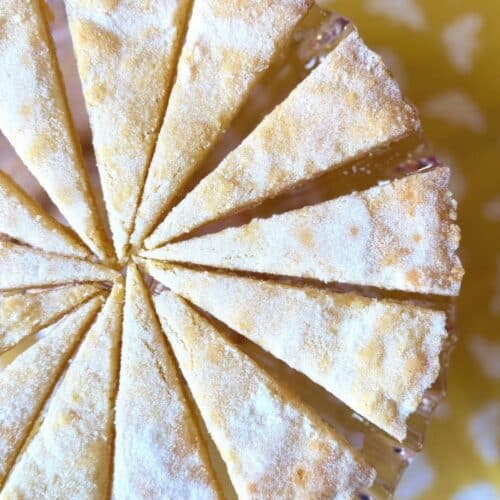
My 5‑year‑old absolutely loves the theatre of it, watching the sugar melt under the blowtorch and then proudly smashing through the crunchy caramelised sugar before diving in. My wife was just as happy to help with the taste‑testing. And if you want to make it even more special, serve it with my homemade shortbread on the side, the buttery crunch is the perfect accompaniment to the silky custard. And don’t forget, you can use the left over egg whites for delicious meringues.
History and Origin of crème brûlée
Crème brûlée has one of those wonderfully tangled origin stories where France, England and even Spain all put their hands up and claim it as their own.
The first written recipe appears in France in 1691, in François Massialot's cookbook, where he describes a custard topped with sugar and burnt to a crisp. But Cambridge also claims it: Trinity College famously served "Trinity Cream" from 1879, branding the top with a hot iron. And even earlier, Spain had crema catalana, a similar custard with a caramelised sugar crust.
So who invented it?
France documented it first, Cambridge popularised it, and Spain had a similar version Which is why the true origin is still happily disputed.
If your family loves “Vanilla creme brulee” as much as mine does, you’re in good company - we’ve got plenty more delicious sweet treats for you to try. Here are a few more recipes that always go down well at our table:
- Homemade shortbread
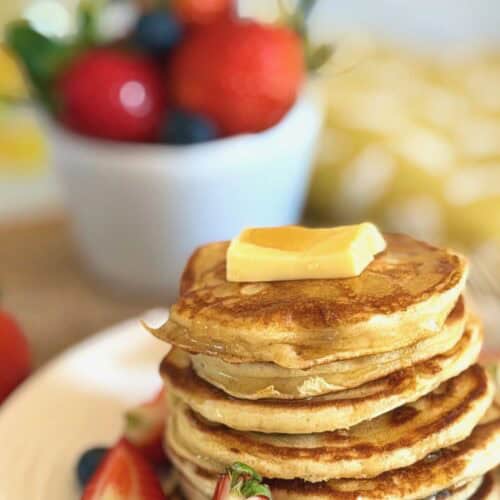
- Cottage cheese pancakes
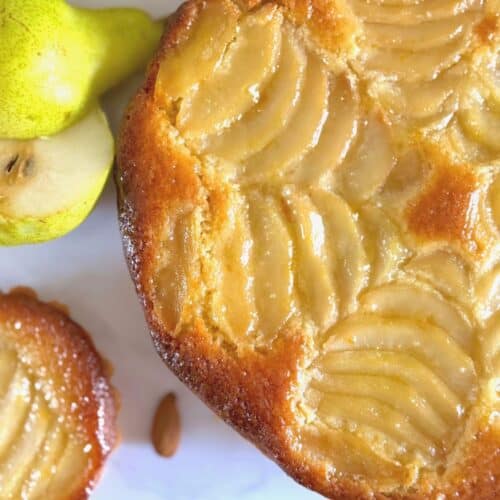
- Poached pear and frangipane tart
- Cinnamon and maple banana bread muffins
- Big fluffy scones
- Mini egg cookies
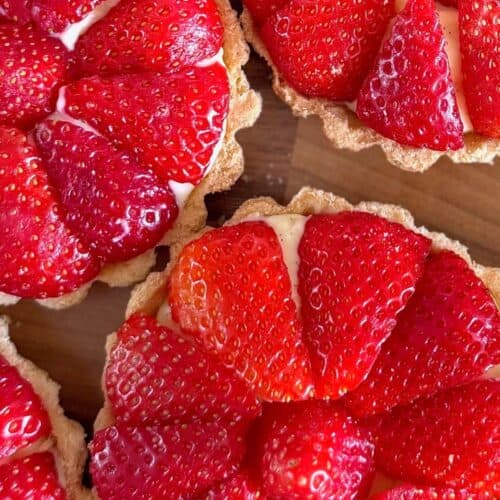
- Strawberry tarts
- Meringue kisses
Jump to:
- History and Origin of crème brûlée
- Ingredients and substitutions for easy crème brûlée:
- What equipment will you need to Creme Brulee?
- How do I make Creme brulee?:
- Serving suggestions for Creme brulee:
- Variations of easy Vanilla creme brulee:
- How to store Creme brulees:
- FAQ
- Easy Crème Brûlée recipe at Home: A Simple Step‑by‑Step Recipe for Beginners
- Related
- Pairing
Ingredients and substitutions for easy crème brûlée:
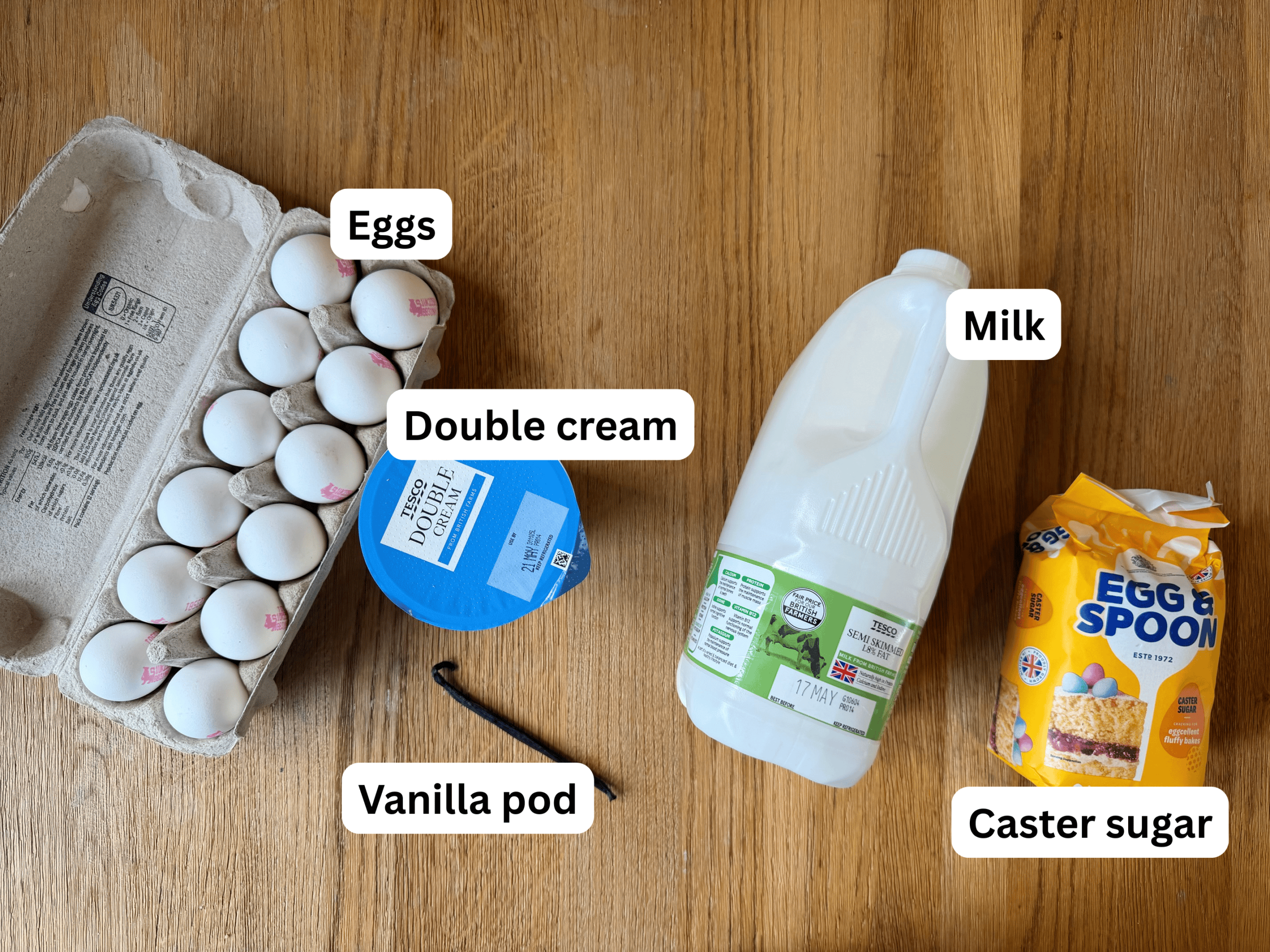
See recipe card for quantities.
Jump to Recipe- Vanilla Pod – Using a whole vanilla pod gives the custard its beautiful, natural flavour and those little black specks everyone loves. Vanilla pods are expensive so If you don't have one, swap for 1-2 teaspoon vanilla bean paste (closest match). Try not to use vanilla extract (I’m not snobby about much but vanilla extract wont work well for this recipe)
- Egg Yolks – These create the rich, silky texture of the custard. Large eggs work best. If you're short on yolks…go and buy some more!
- Egg White – A small amount of egg white helps the custard set gently without becoming too firm. If you don't want to separate extra eggs, you can leave it out…..but your brulee’s wont be as awesome as mine! and remember you can use any left over egg white to make meringue…it’s so easy and delicious.
- Milk – Semi‑skimmed milk works great for this recipe, but avoid skimmed as it makes the custard thin.
- Double Cream (Heavy cream in US) – Essential for that classic, velvety crème brûlée texture. There is no substitute for this. If you need a substitute, use heavy cream (US) or a mix of single cream + a little extra yolk, but double cream gives the best result.
- Caster Sugar – Essential for sweetening the custard and creating that classic caramelised topping. You can swap for granulated sugar if needed, but it may take slightly longer to melt. Avoid brown sugar, it won't caramelise cleanly.
What equipment will you need to Creme Brulee?
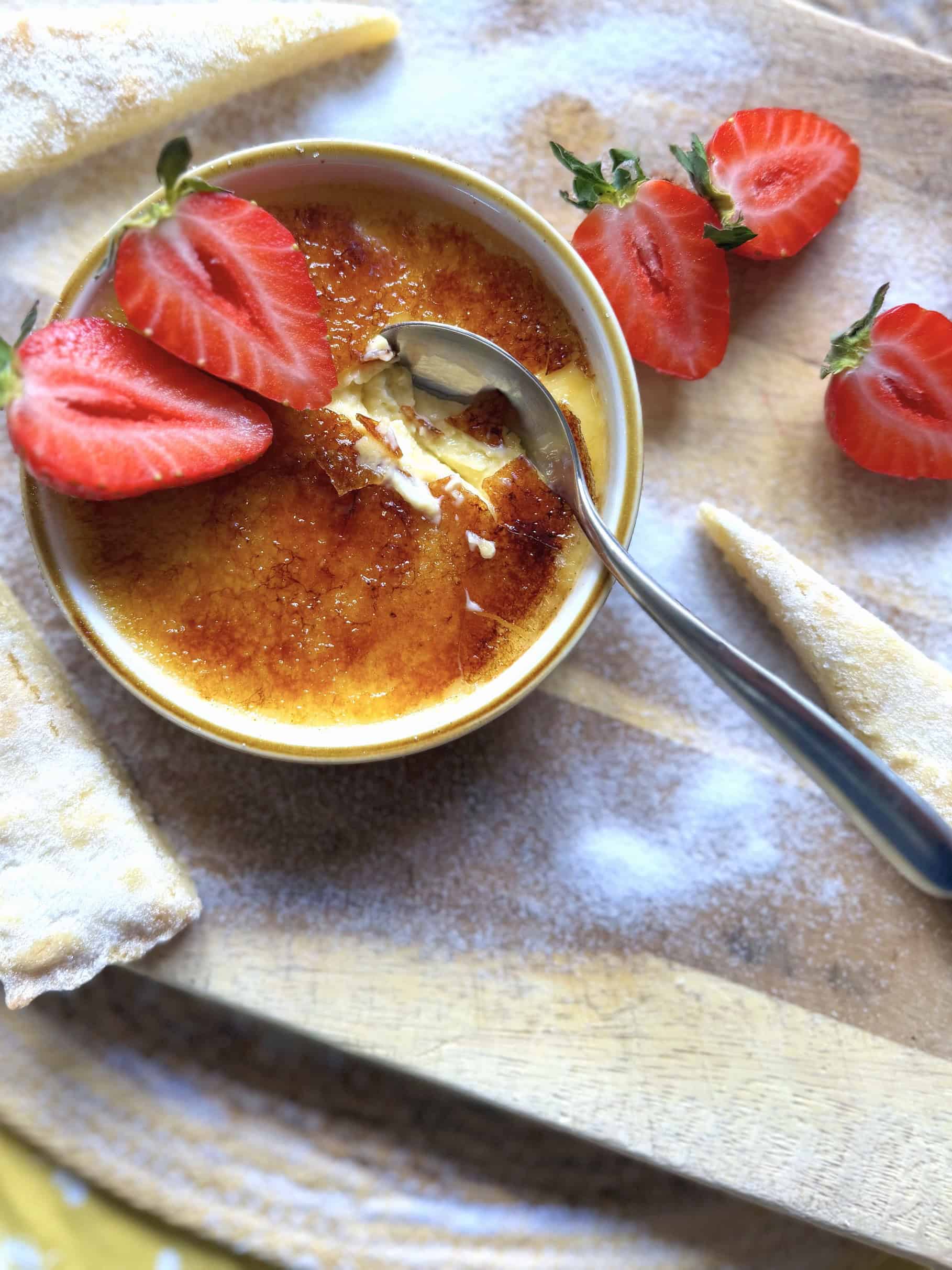
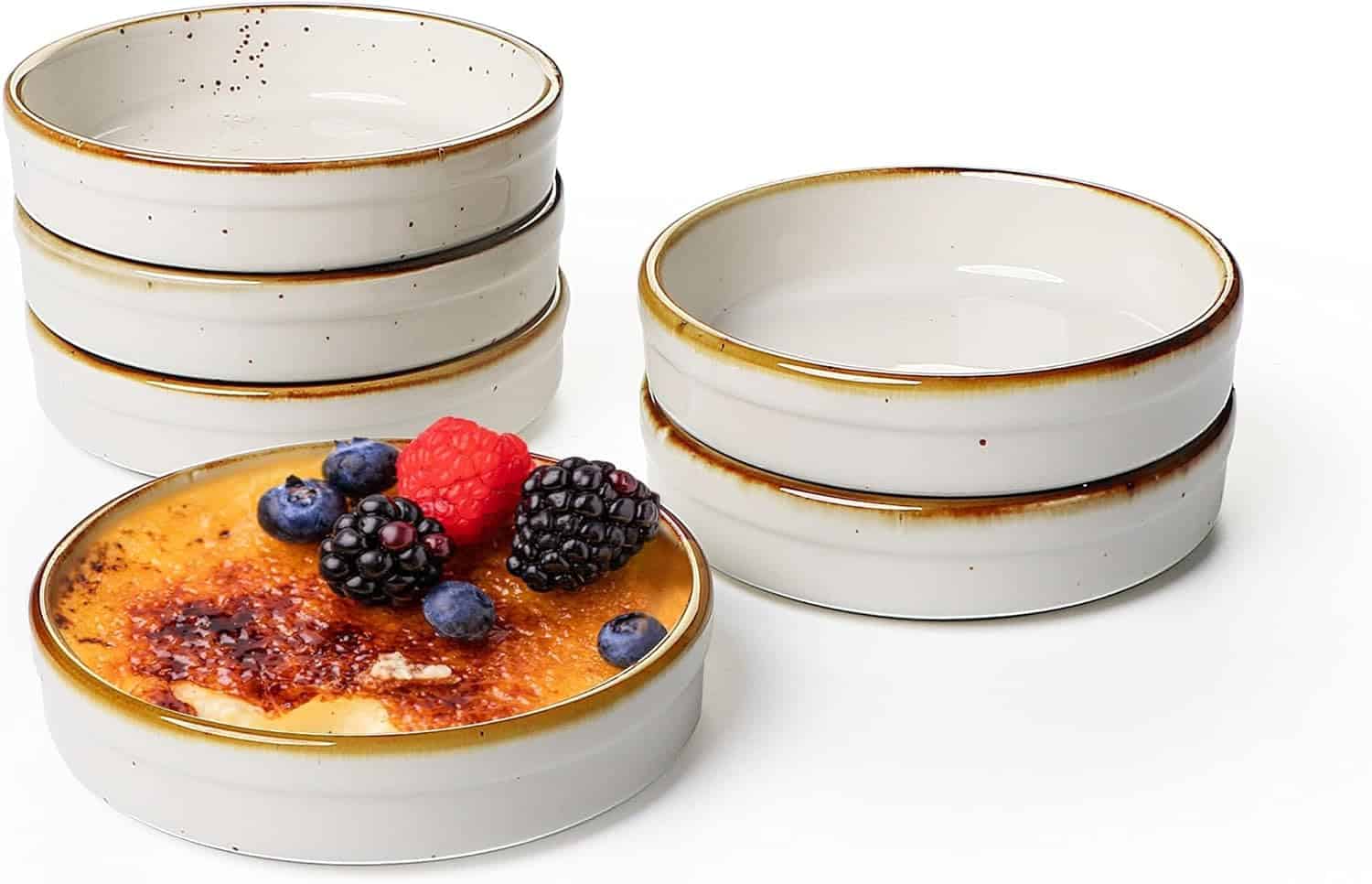
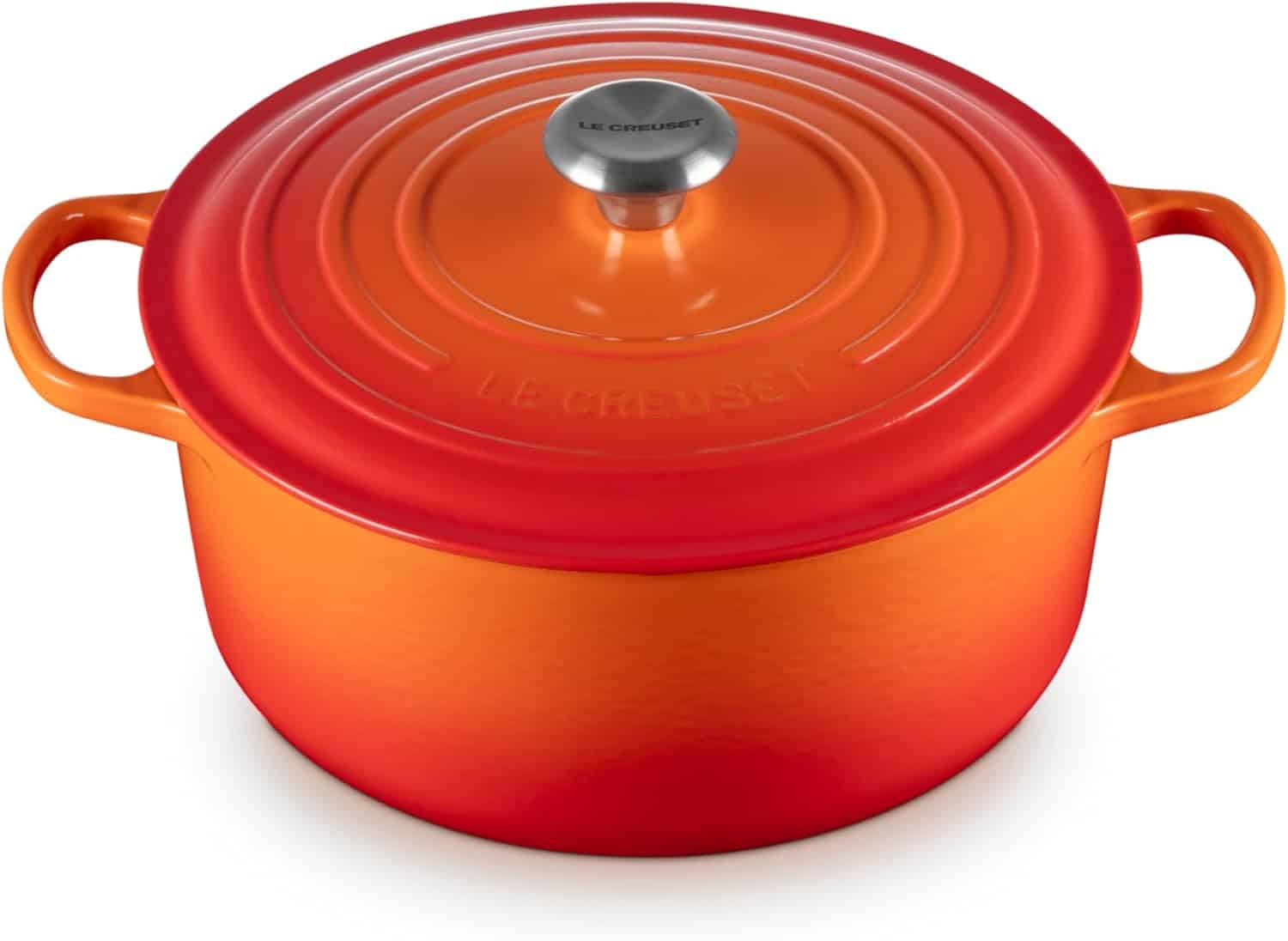
- Creme Brulee ramekins – These are the exact ramekins I bought to make this recipe and they are the perfect shape and size.
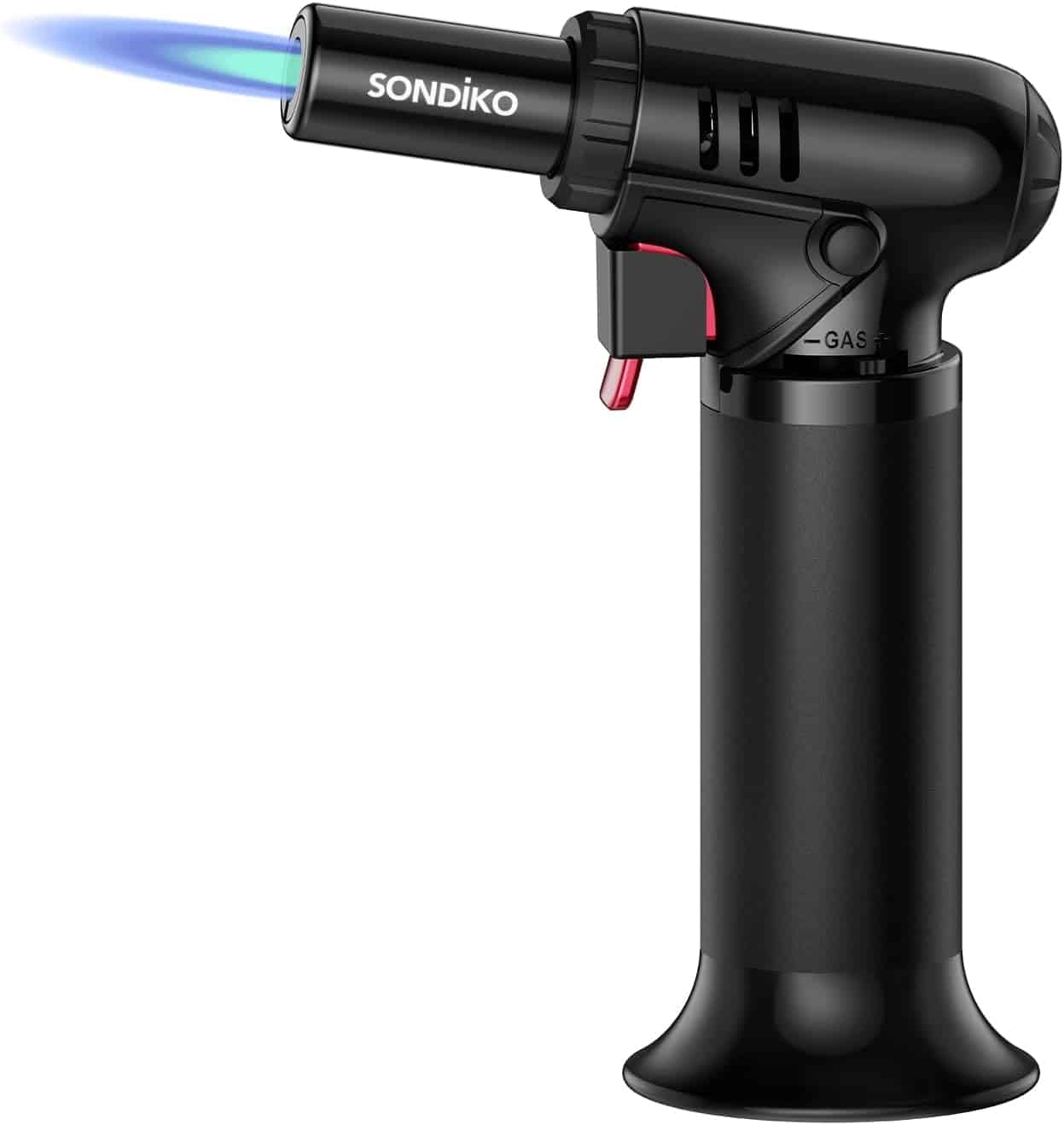
- Blow torch – You can use a grill to caramelise the sugar but this is tricky to melt the sugar evenly. Using a blowtorch gives you control and allows for that even caramelised sugar topping and it adds the theatre!
- Heavy Bottomed pan – Any pan will do but a good heavy bottomed pan is best as it will prevent the milk and cream from burning.
- Electric whisk – An electric whisk makes whisking the sugar and eggs much easier and is always useful for many other recipes.

How do I make Creme brulee?:
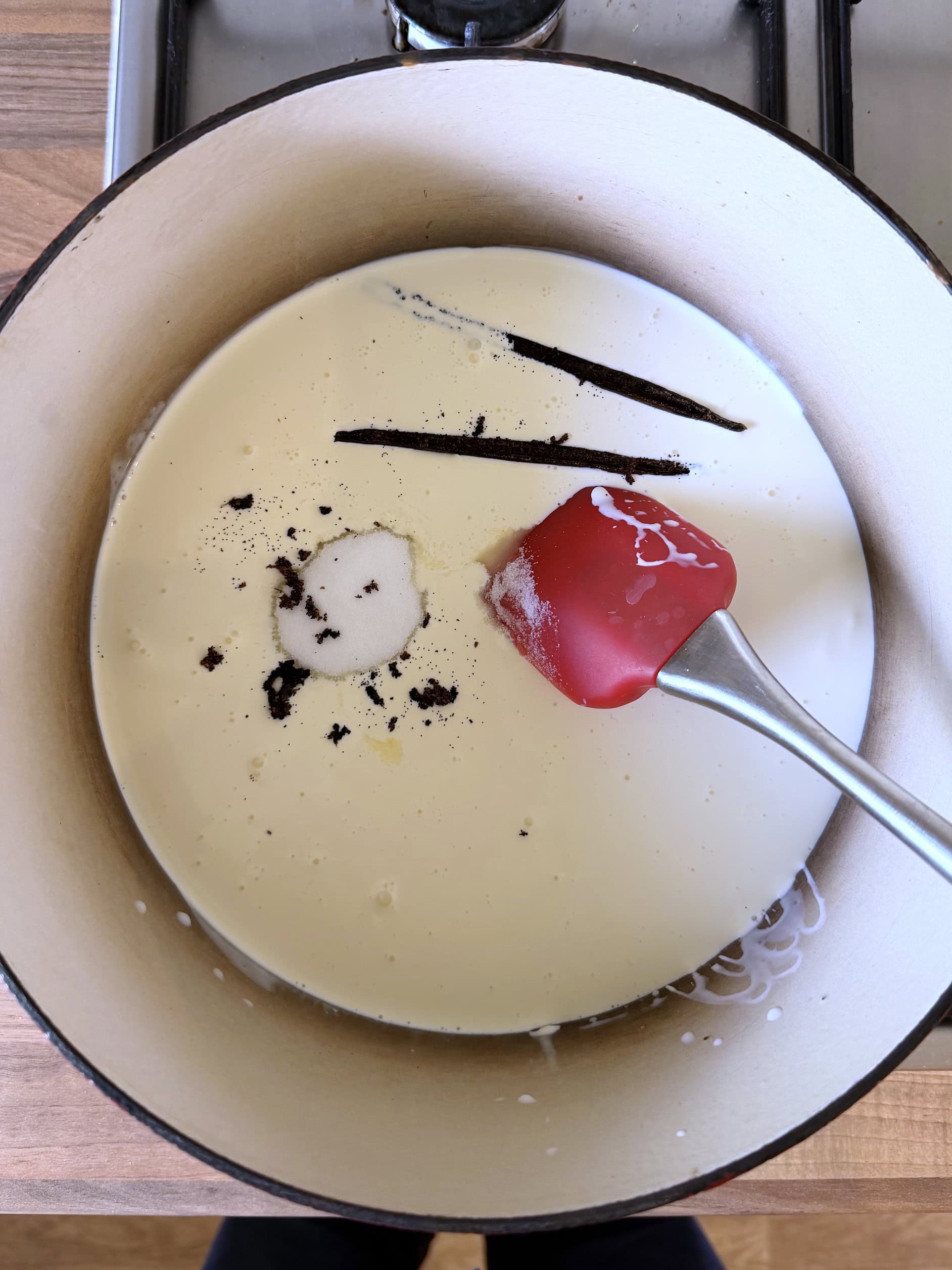
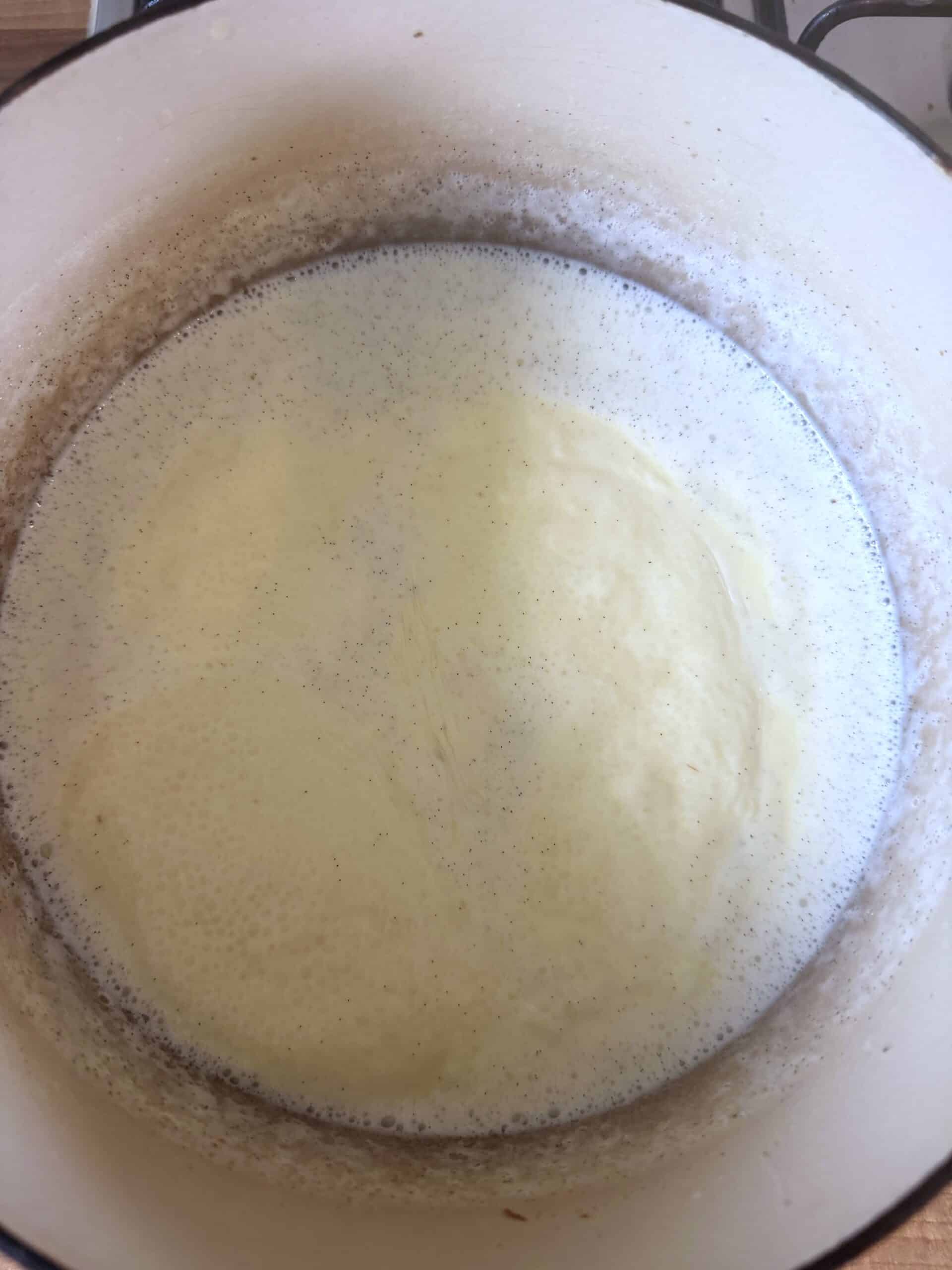
1: Heat the cream and milk – Add the cream, milk and 60g of the sugar to a heavy‑bottomed pan. Split the vanilla pod, scrape out the seeds and add both the seeds and the pod to the pan. Warm gently over a medium‑low heat until hot but not boiling.
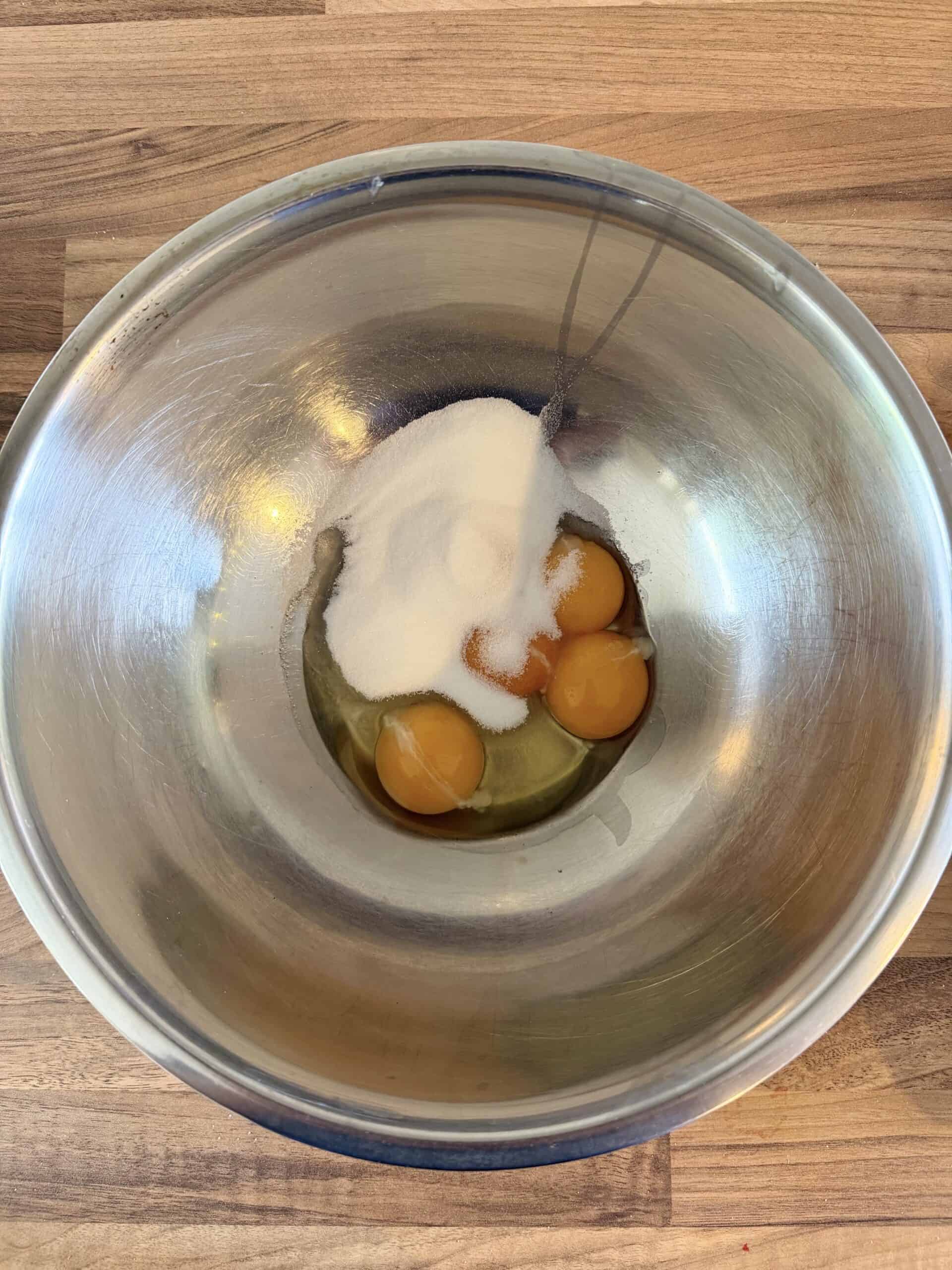
2: Whisk the eggs and sugar – In a mixing bowl, whisk the egg yolks, egg white and remaining 60g sugar until pale, thick and creamy .Using an electric whisk takes he effort out of this task! Or of you fancy a workout feel free to use a good hand whisk
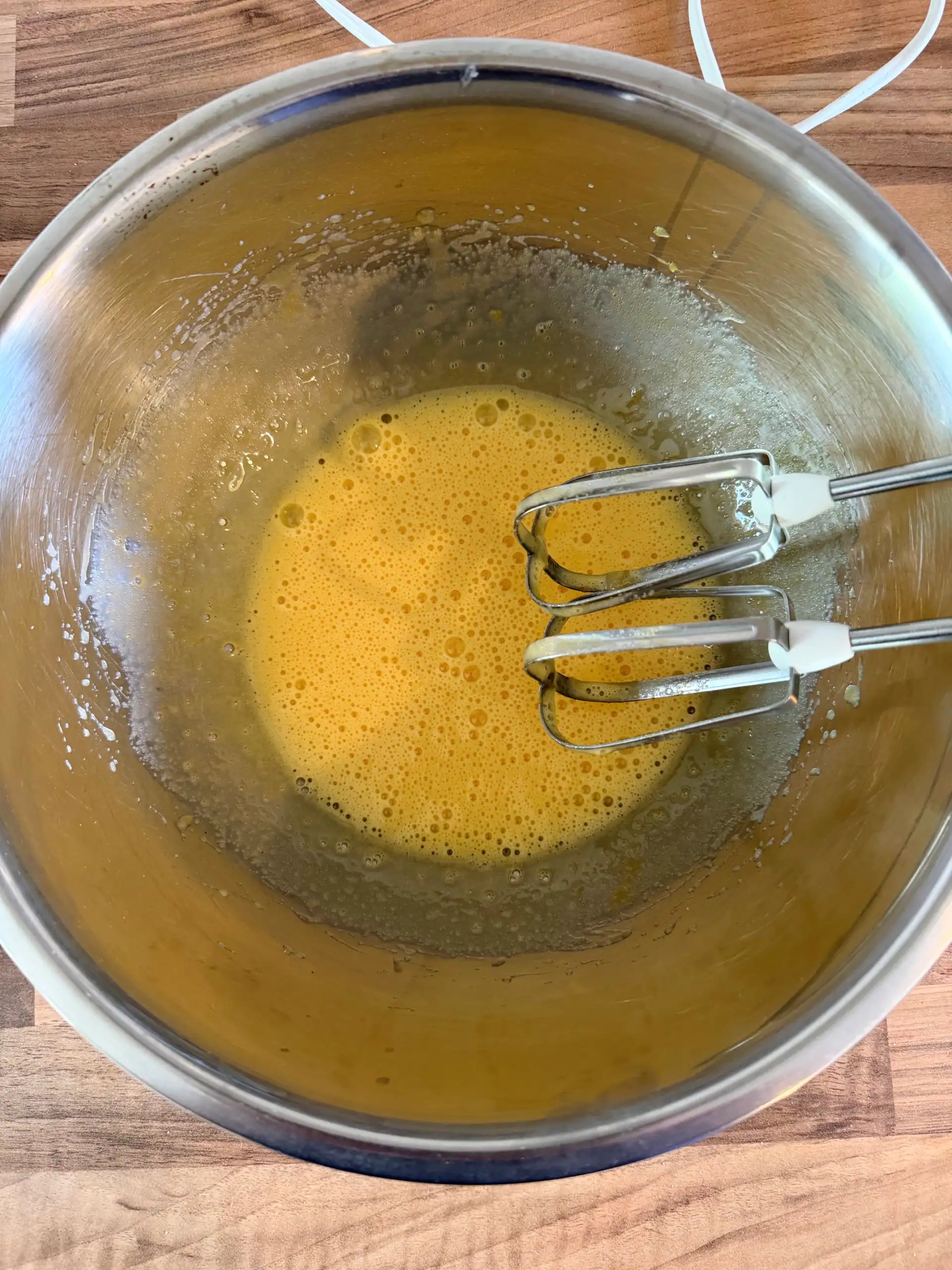
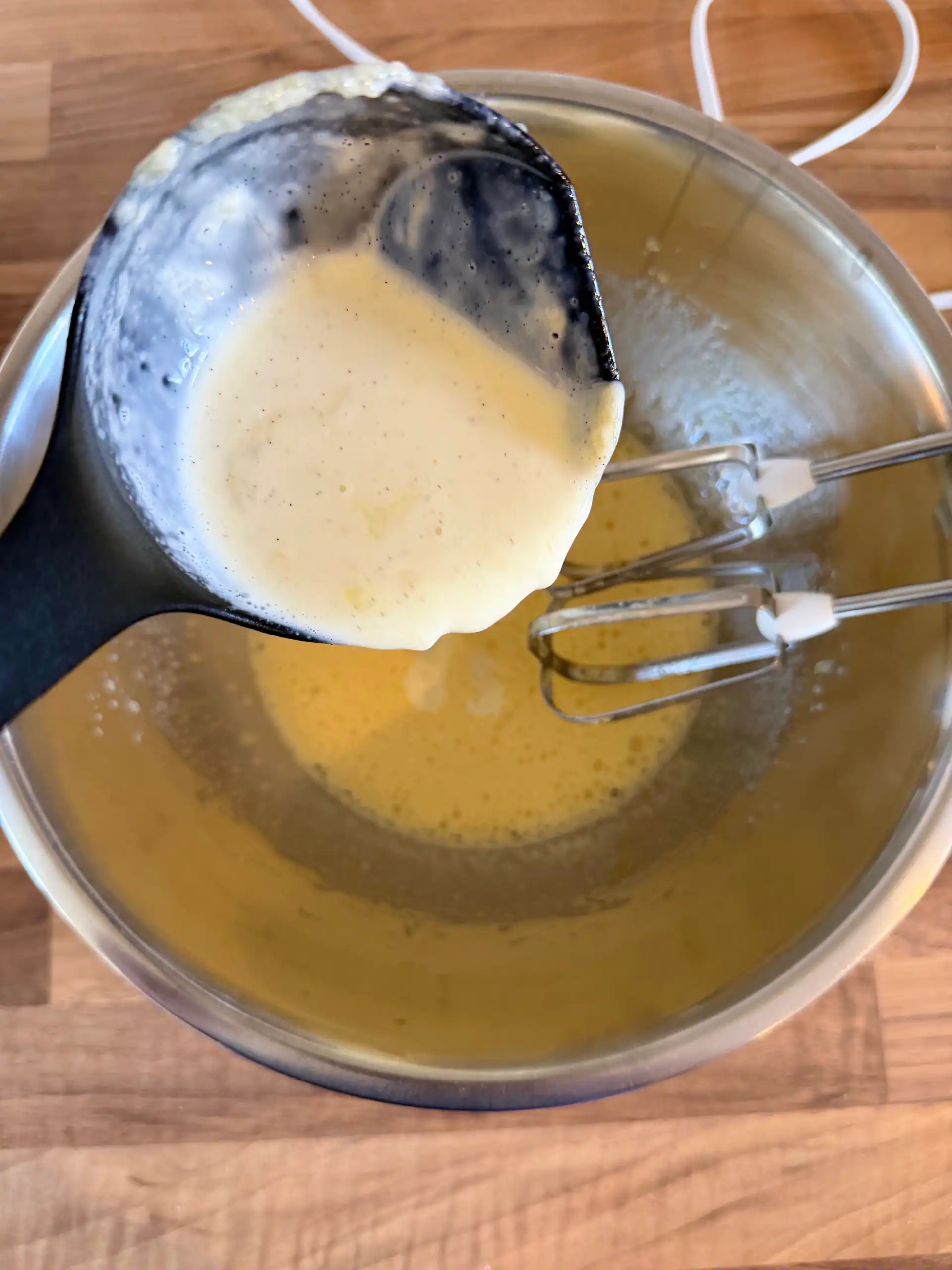
3: Temper the eggs – Slowly pour the hot cream mixture into the egg mixture, whisking constantly so the eggs don't scramble.
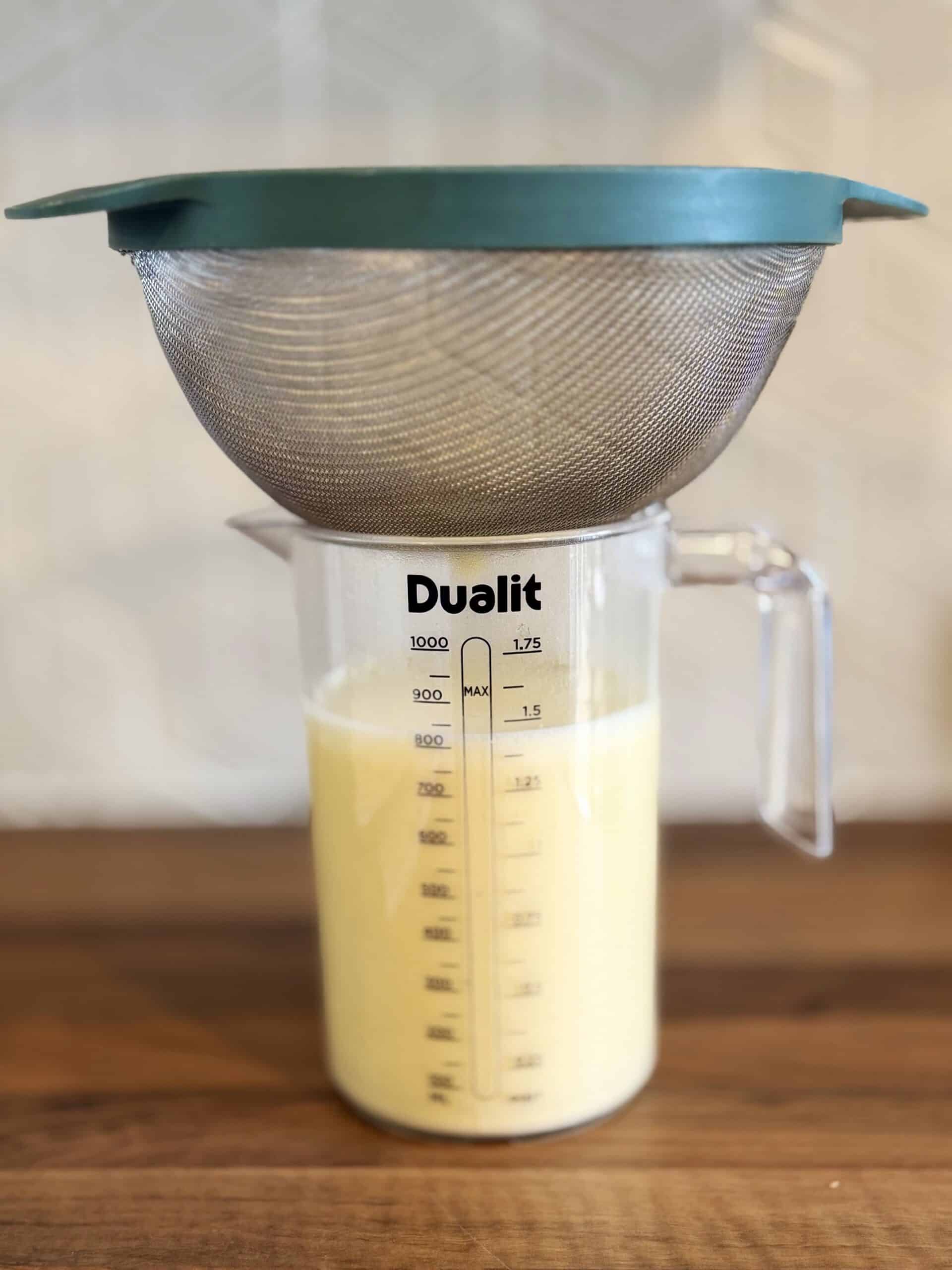
4: Strain the custard – Pass the mixture through a sieve into a jug to remove any lumps and the vanilla pod.This will making filling the ramekins easier.
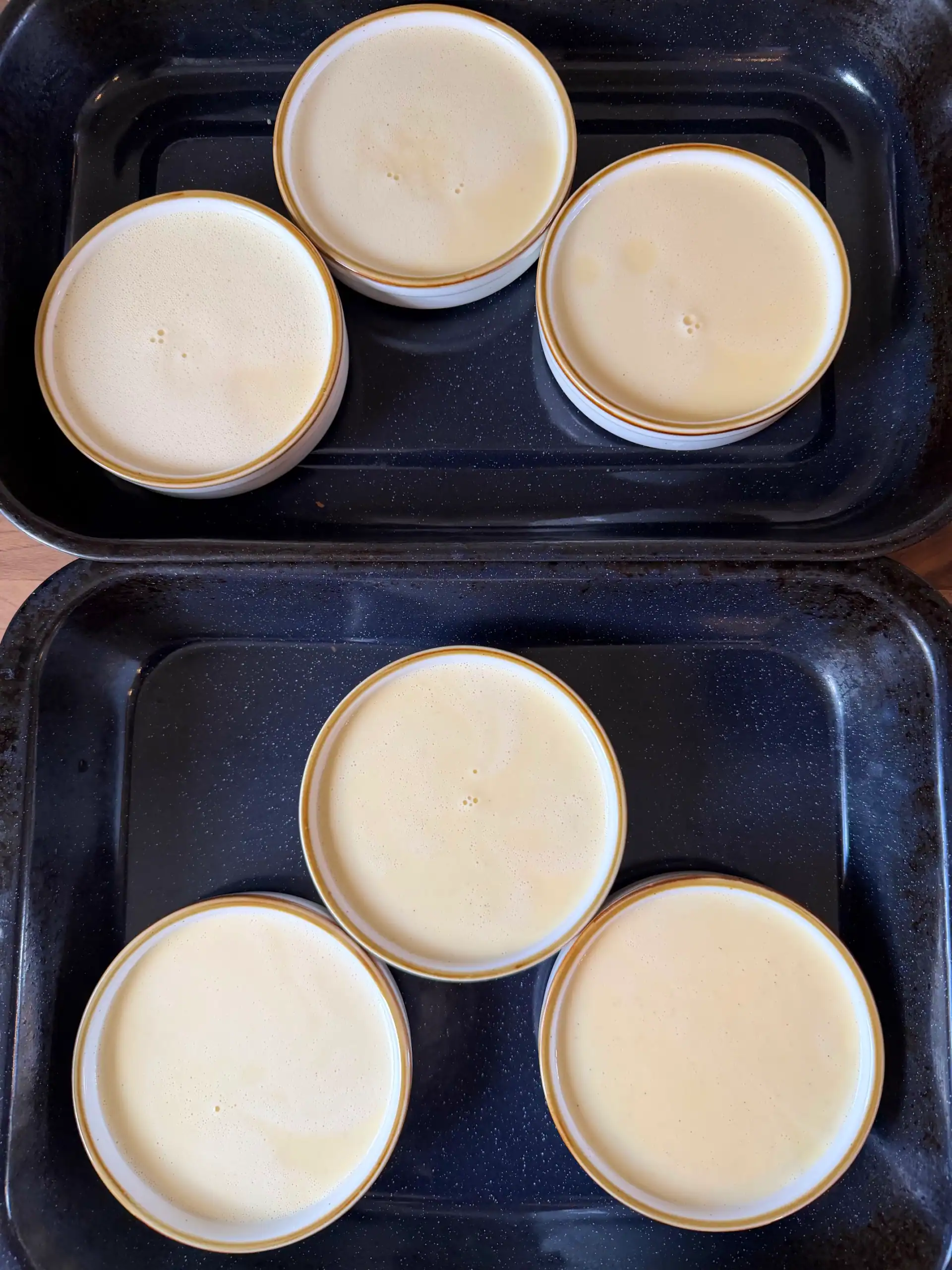
5: Prepare the bain‑marie – Divide the custard between your ramekins and place them into deep‑sided baking trays. Boil the kettle and pour hot water into the trays until it reaches about two‑thirds of the way up the sides of the ramekins. Be careful not to overfill the tray.
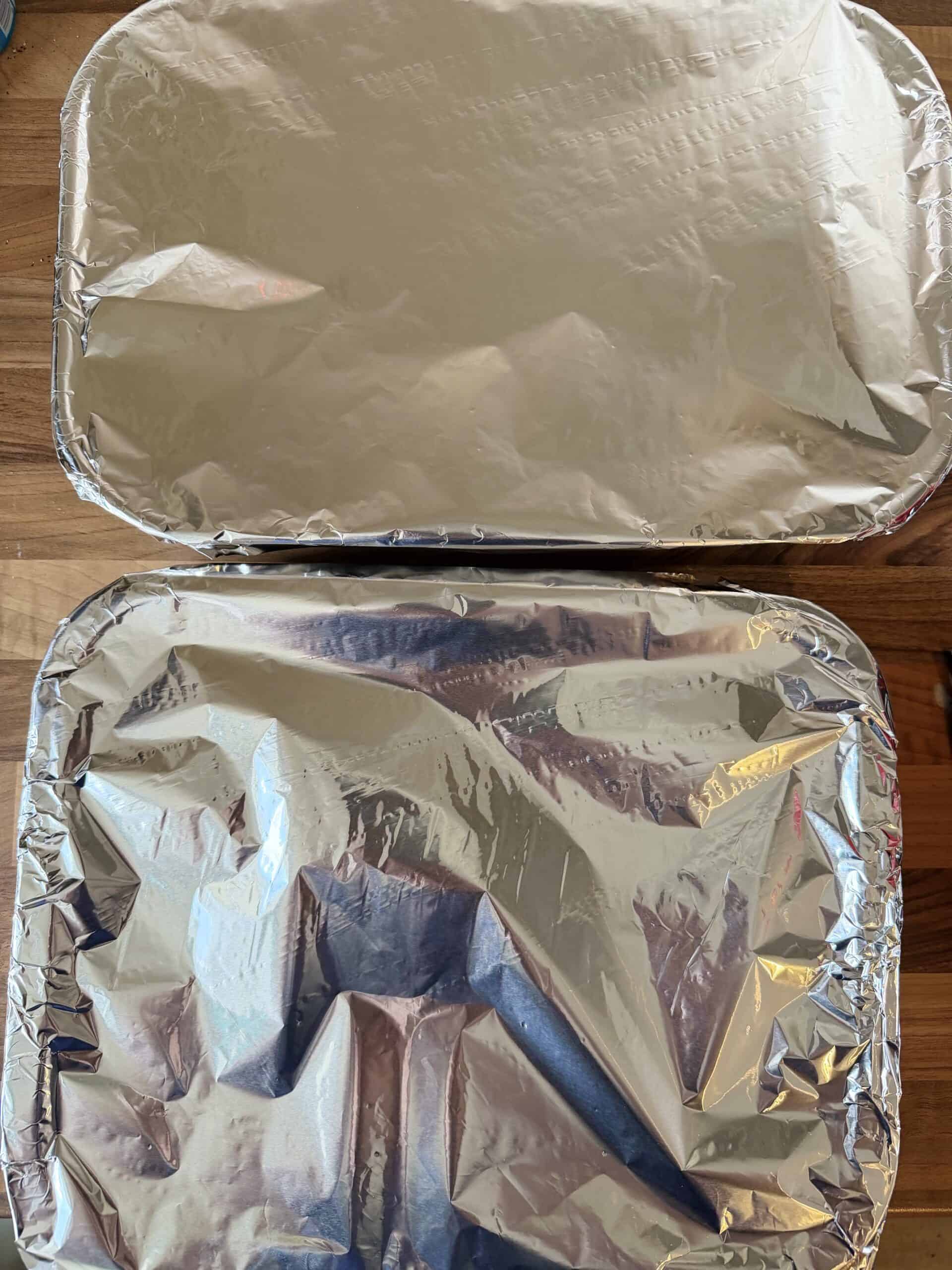
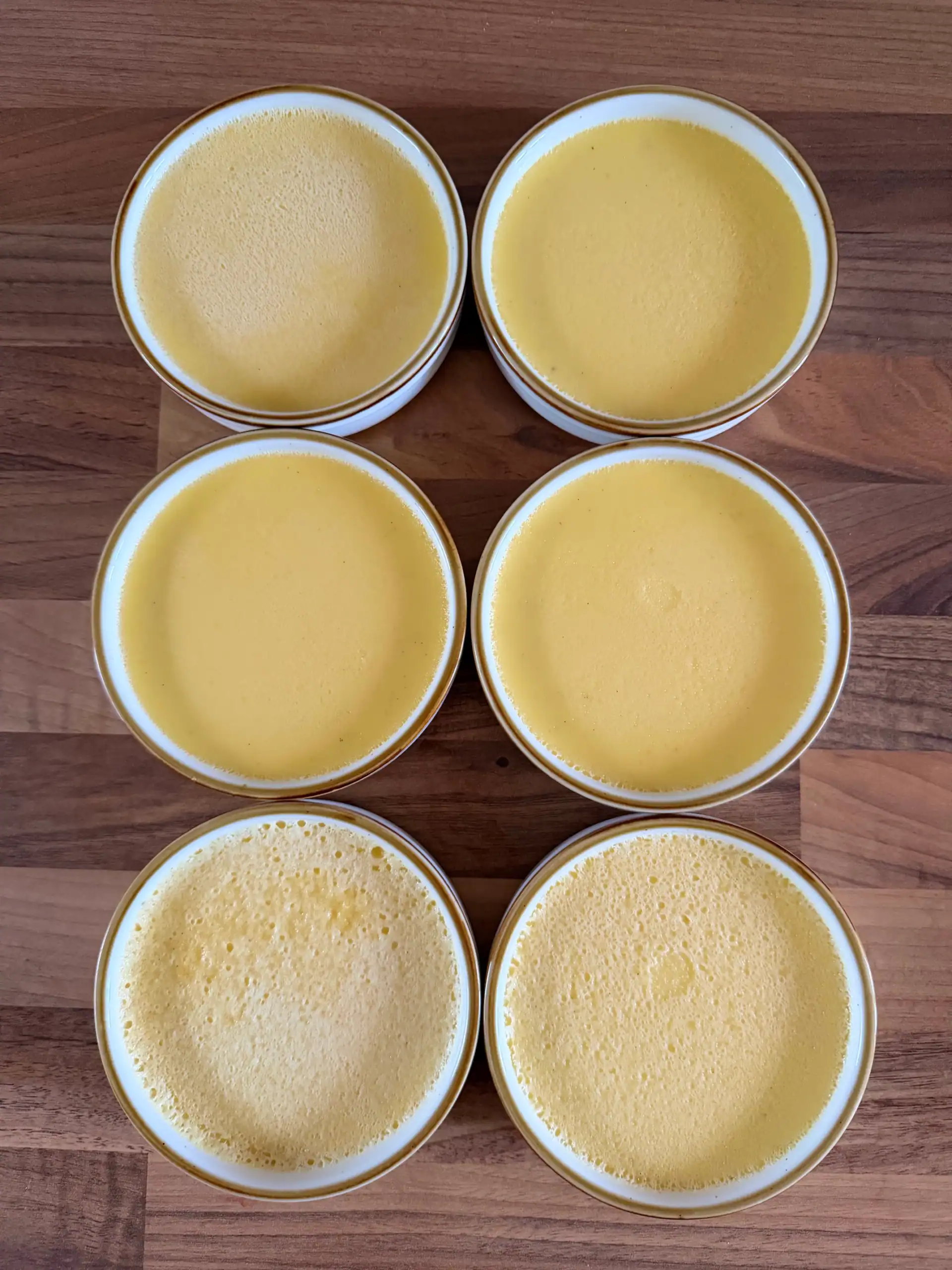
6: Bake gently – Cover the trays with foil and carefully transfer to the oven. Bake at 150°C for 30-35 minutes, until the custards are set with no colour. Remove from the water bath, cool to room temperature, then cover and refrigerate until completely cold.
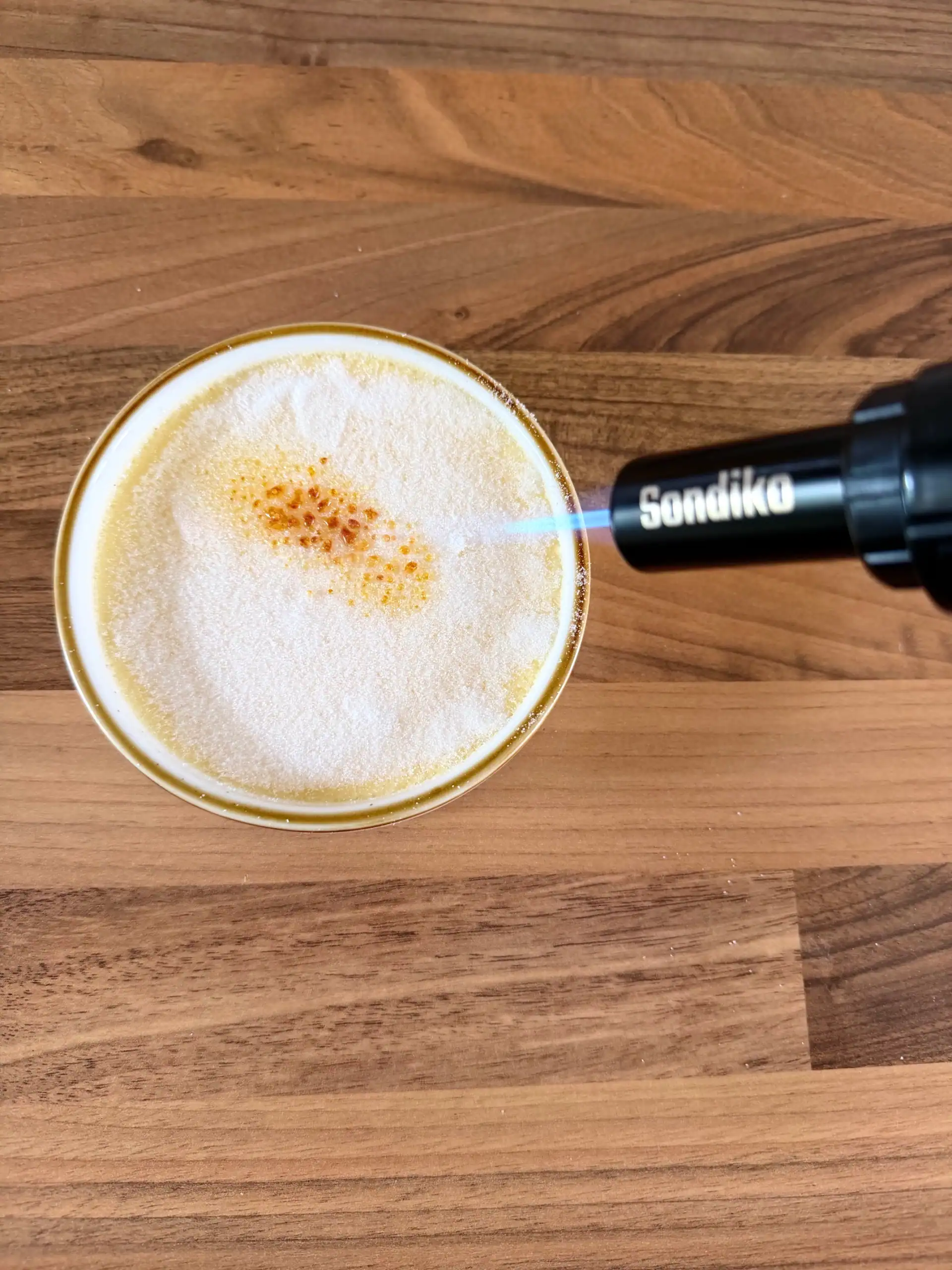
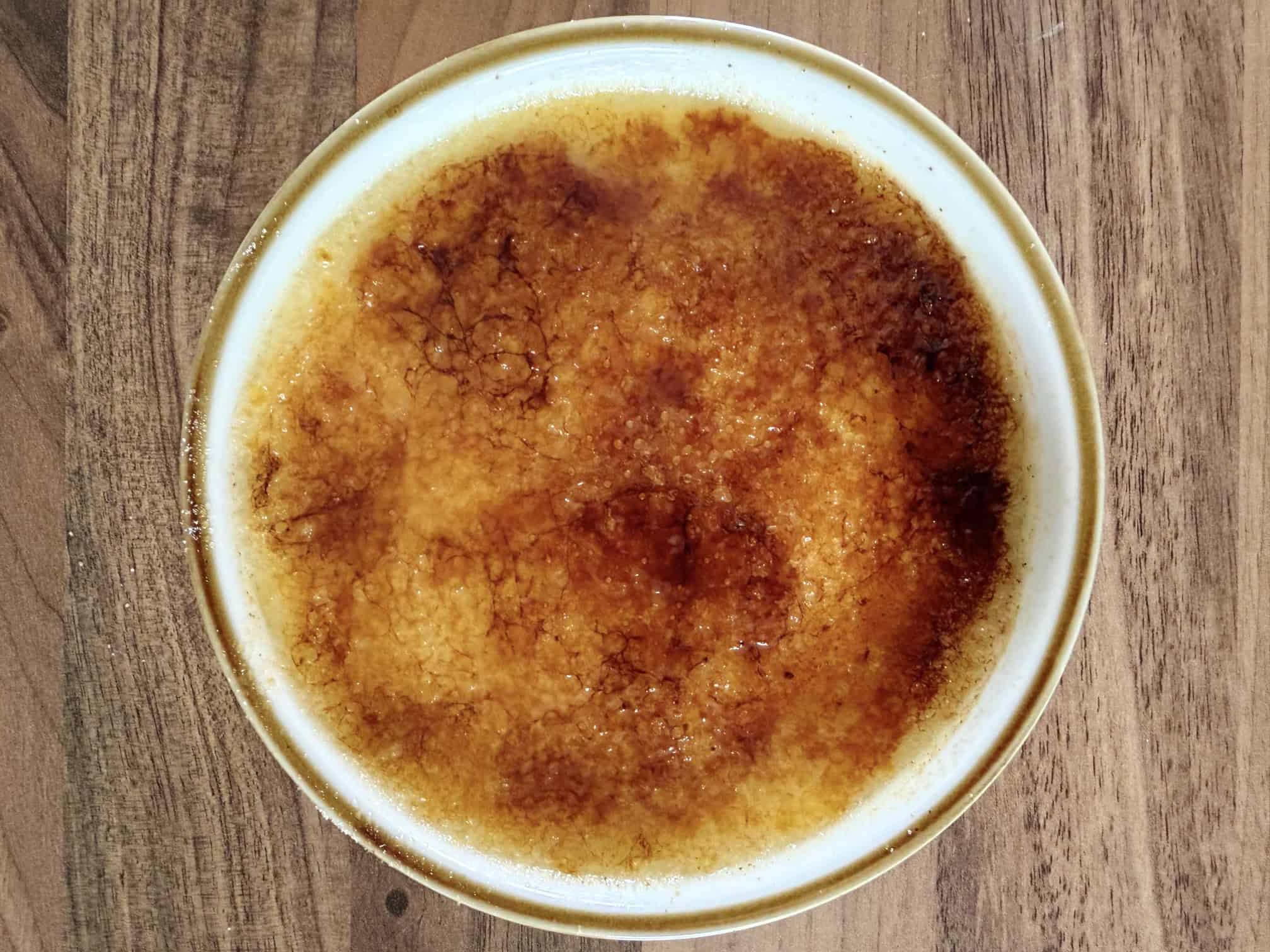
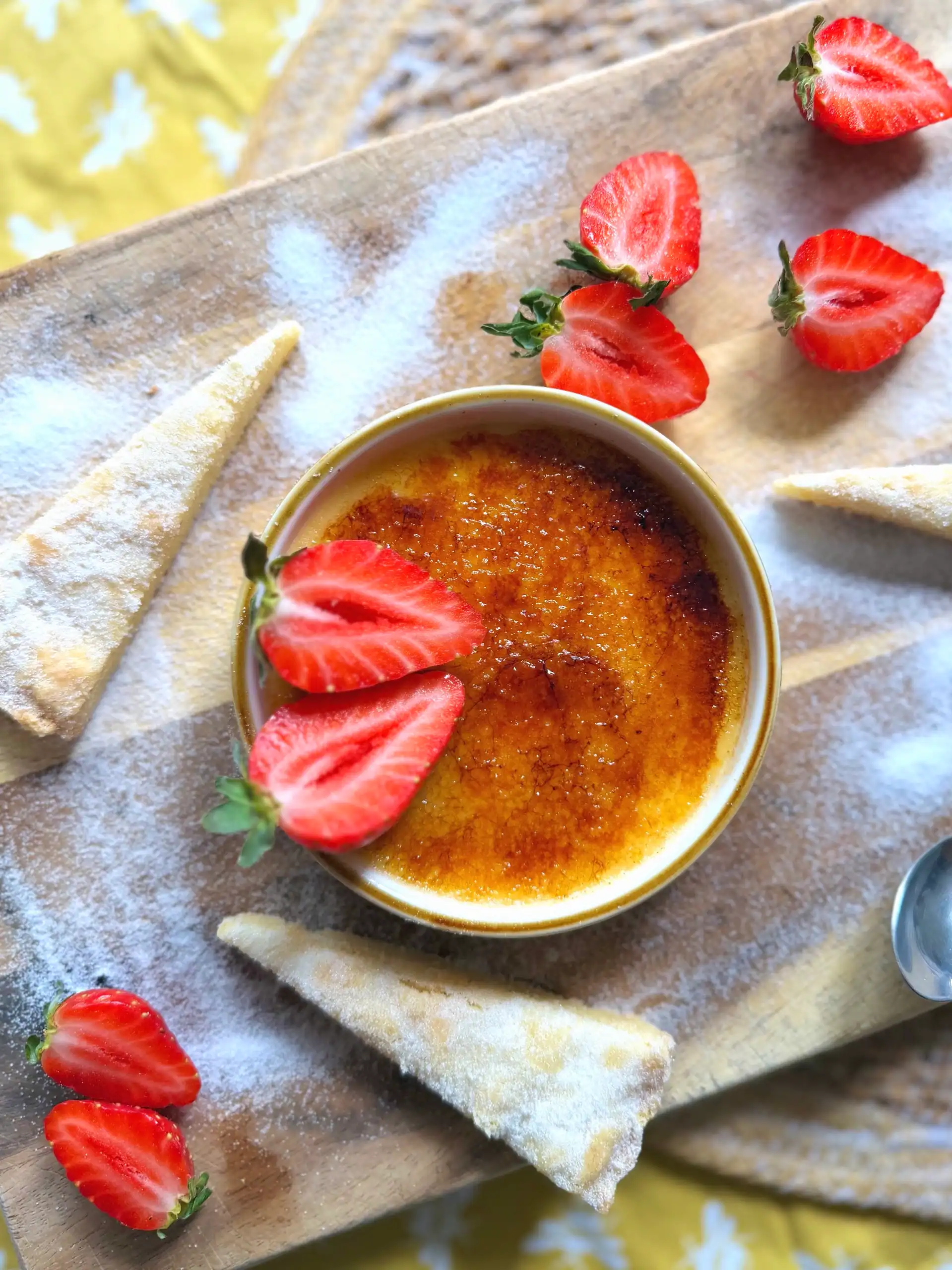
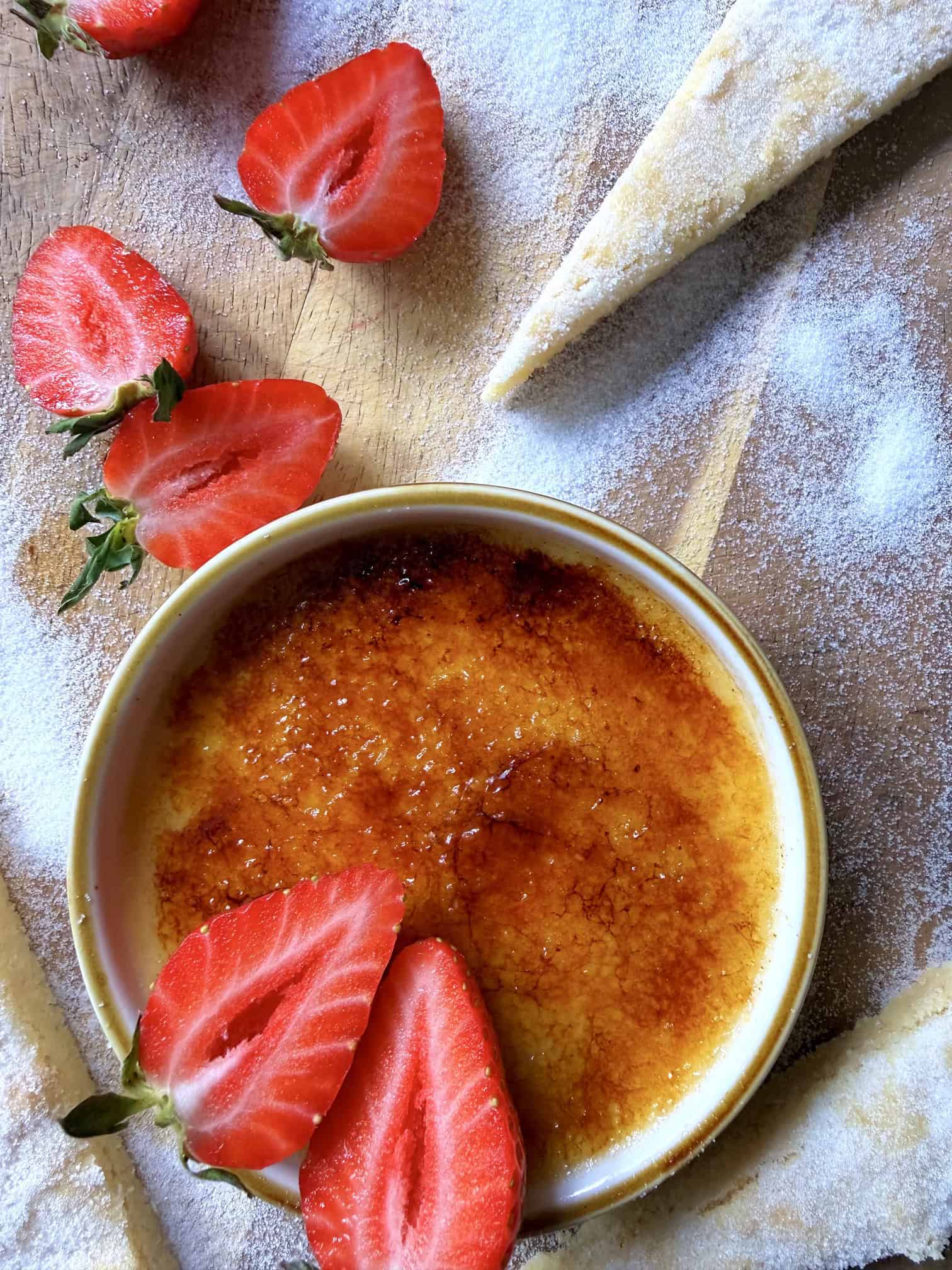
7: Caramelise the tops – When ready to serve, sprinkle a thin, even layer of caster sugar over each custard. Hold the ramekin in one hand and use a blowtorch in the other, melting and turning the sugar until it forms a crisp, even caramelised topping.
Serving suggestions for Creme brulee:
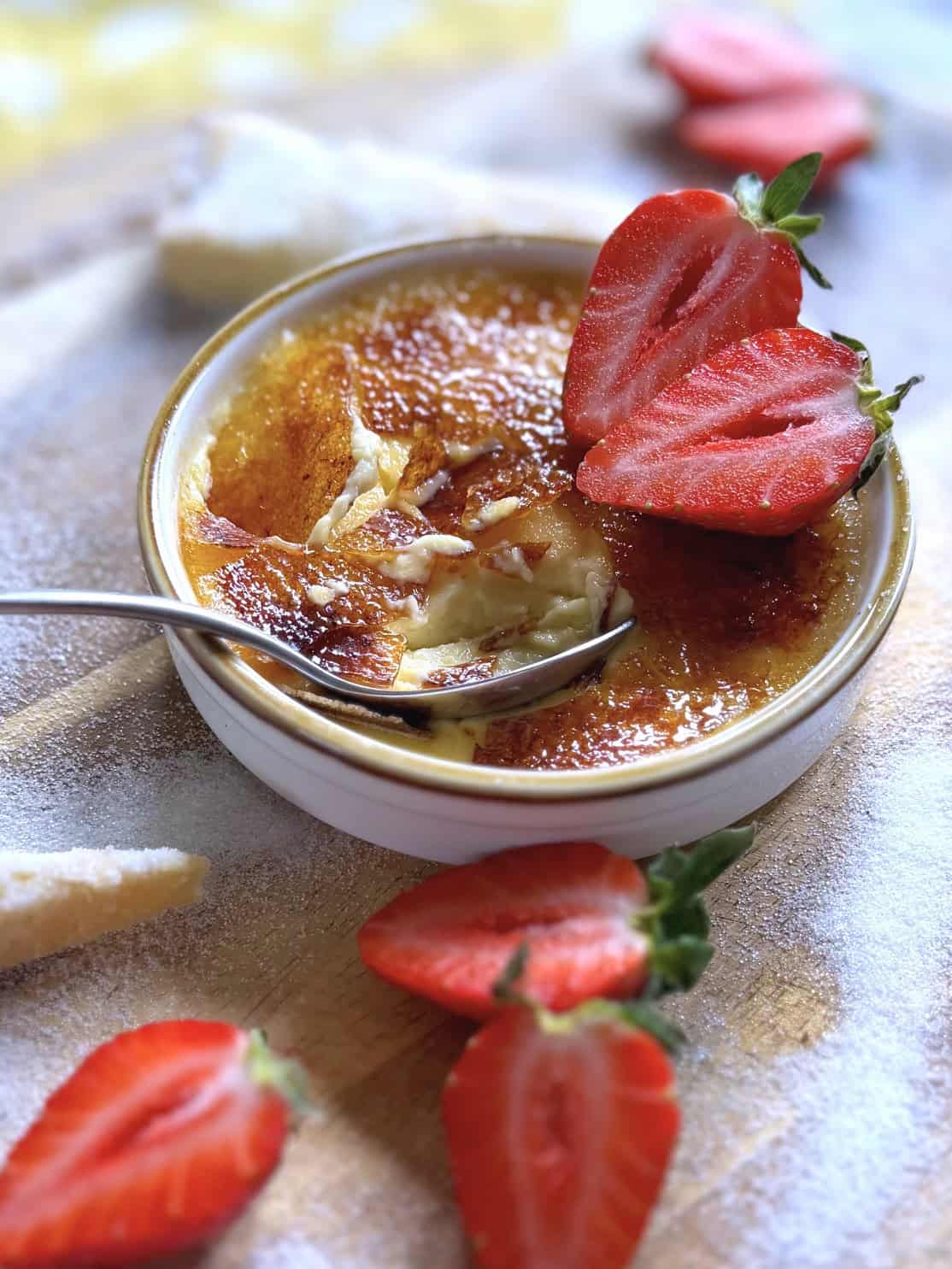
- Serve your crème brûlée ice‑cold from the fridge with the caramelised sugar still warm for the perfect contrast of temperatures and textures.
- Add a couple of pieces of my homemade shortbread on the side, the buttery crunch is the ideal combination for the silky vanilla custard.
- Fresh berries (raspberries, strawberries or blueberries) add a lovely pop of colour and a little acidity to balance the richness.
- If you're serving this for a dinner party or romantic dessert, brûlée the sugar at the table for a bit of theatre, always a crowd‑pleaser.
Variations of easy Vanilla creme brulee:
How to store Creme brulees:
Storage:
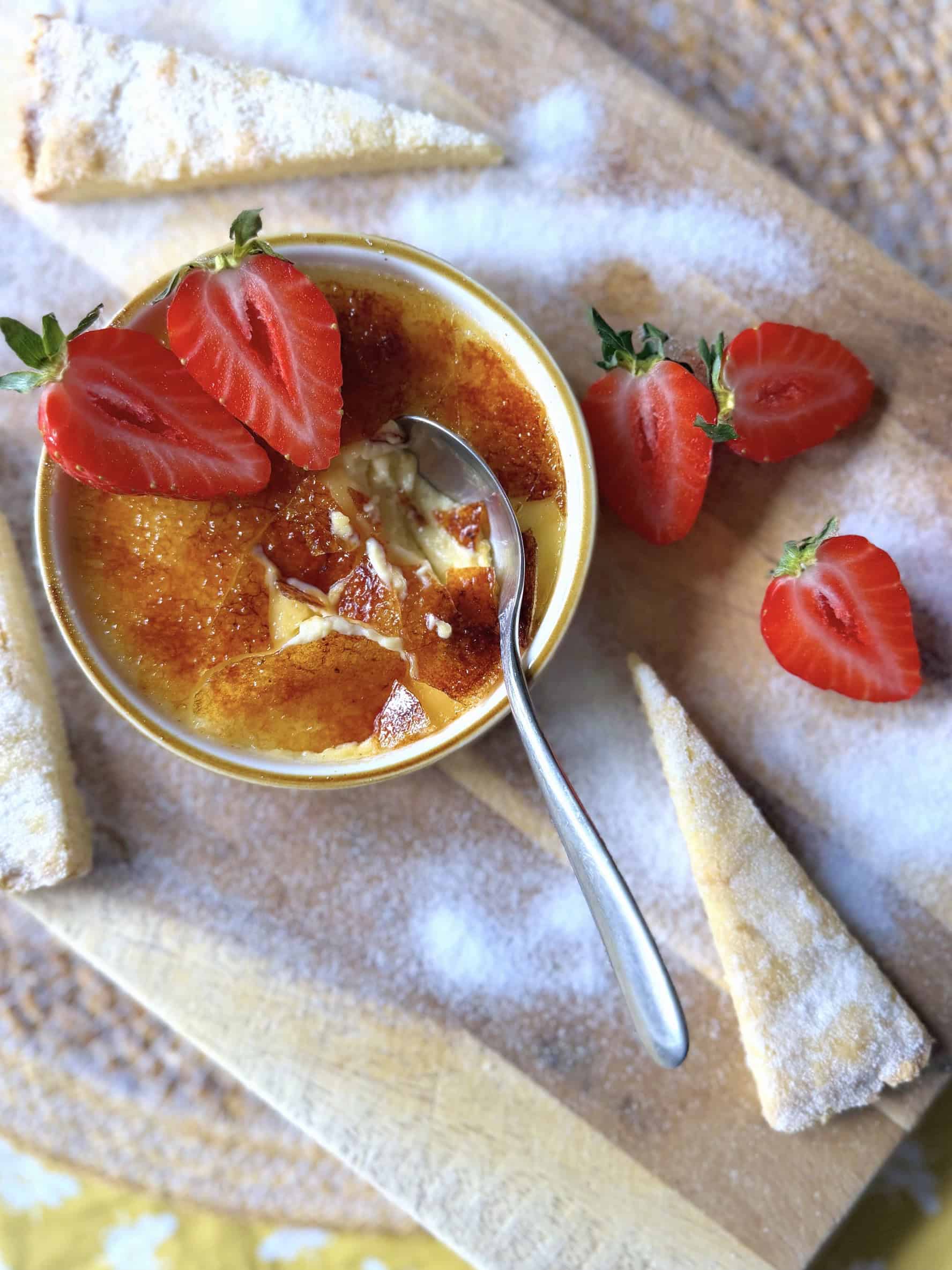
- Once the creme brulees have baked and cooled, keep them covered in the fridge for up to 3 days. Don't caramelise the sugar until just before serving, the topping will soften in the fridge. When you're ready to eat, sprinkle over the caster sugar and brûlée it fresh for that perfect crack.

- Low and slow wins the race – Crème brûlée is basically custard in its Sunday best. Bake it gently at a low temperature so it sets with that perfect wobble.
- Strain the custard – Yes, it feels like an extra step. Yes, it makes a massive difference. Straining catches any cooked egg bits and gives you that restaurant‑smooth finish.
- Tap out the bubbles – After pouring the custard into the ramekins, give them a gentle tap on the counter. Any bubbles on top will turn into little craters once baked.
- The wobble test – They're done when the edges are set but the centre still has a gentle wobble. They'll firm up as they cool.
- Chill properly – Give them at least 2 hours in the fridge, ideally longer. A cold custard under a hot caramel top is the whole point.
- Caramelise sugar – Keep the flame moving in circles. Hovering in one spot gives you burnt patches instead of that gorgeous amber sheen.
FAQ
What is crème brulee made of?
Classic crème brûlée is made from double cream, Milk, egg yolks, sugar, and vanilla. That's it – simple ingredients, fancy results.
Is Crème brulee basically custard?
Yes, creme brulee is basically custard, it's a baked custard with a posh caramelised sugar topping. The texture is richer and silkier than a stovetop custard thanks to the slow bake.
Is crème brulee French or Spanish?
Crème brûlée is traditionally French, though Spain has its own similar dessert, crema catalana, which is flavoured with citrus and cinnamon
How do I know when crème brûlée is done?
Look for set edges and a gentle wobble in the centre. If it ripples like water, it needs longer; if it's firm all the way through, it's overbaked
Why is my crème brûlée grainy?
This usually means the custard overheated and the eggs scrambled slightly. A low oven, a proper water bath, and straining the mixture prevent this.
Can I make crème brûlée ahead of time?
Yes, you can make creme brulee ahead of time, the custards can be baked and chilled up to 2 days in advance. Only torch the sugar topping just before serving so it stays crisp.
Did you enjoy this recipe? have a question? It would mean so much to me if you please leave a comment and a rating below!

Easy Crème Brûlée recipe at Home: A Simple Step‑by‑Step Recipe for Beginners
Ingredients
- 500 ml Double cream
- 185 ml Semi skimmed milk
- 1 Vanilla pod
- 120 grams Caster sugar
- 5 Egg yolks
- 1 Egg White
Instructions
- Heat the cream and milk – Add the cream, milk and 60g of the sugar to a heavy‑bottomed pan. Split the vanilla pod, scrape out the seeds and add both the seeds and the pod to the pan. Warm gently over a medium‑low heat until hot but not boiling.
- Whisk the eggs and sugar – In a mixing bowl, whisk the egg yolks, egg white and remaining 60g sugar until pale, thick and creamy. An electric whisk does the job great.
- Temper the eggs – Slowly pour the hot cream mixture into the egg mixture, whisking constantly so the eggs don't scramble.
- Strain the custard – Pass the mixture through a sieve into a jug to remove any lumps and the vanilla pod.
- Prepare the bain‑marie – Divide the custard between your ramekins and place them into deep‑sided baking trays. Boil the kettle and pour hot water into the trays until it reaches about two‑thirds of the way up the sides of the ramekins.
- Bake gently – Cover the trays with foil and carefully transfer to the oven. Bake at 150°C for 30-35 minutes, until the custards are set with no colour
- Chill – Remove from the water bath, cool to room temperature, then cover and refrigerate until completely cold.
- Caramelise the tops – When ready to serve, sprinkle a thin, even layer of caster sugar over each brulee. Hold the ramekin in one hand and use a blowtorch in the other, melting and turning the sugar until it forms a crisp, even caramelised topping
Notes
Related

Pairing
These are my favorite dishes to serve with [this recipe]: