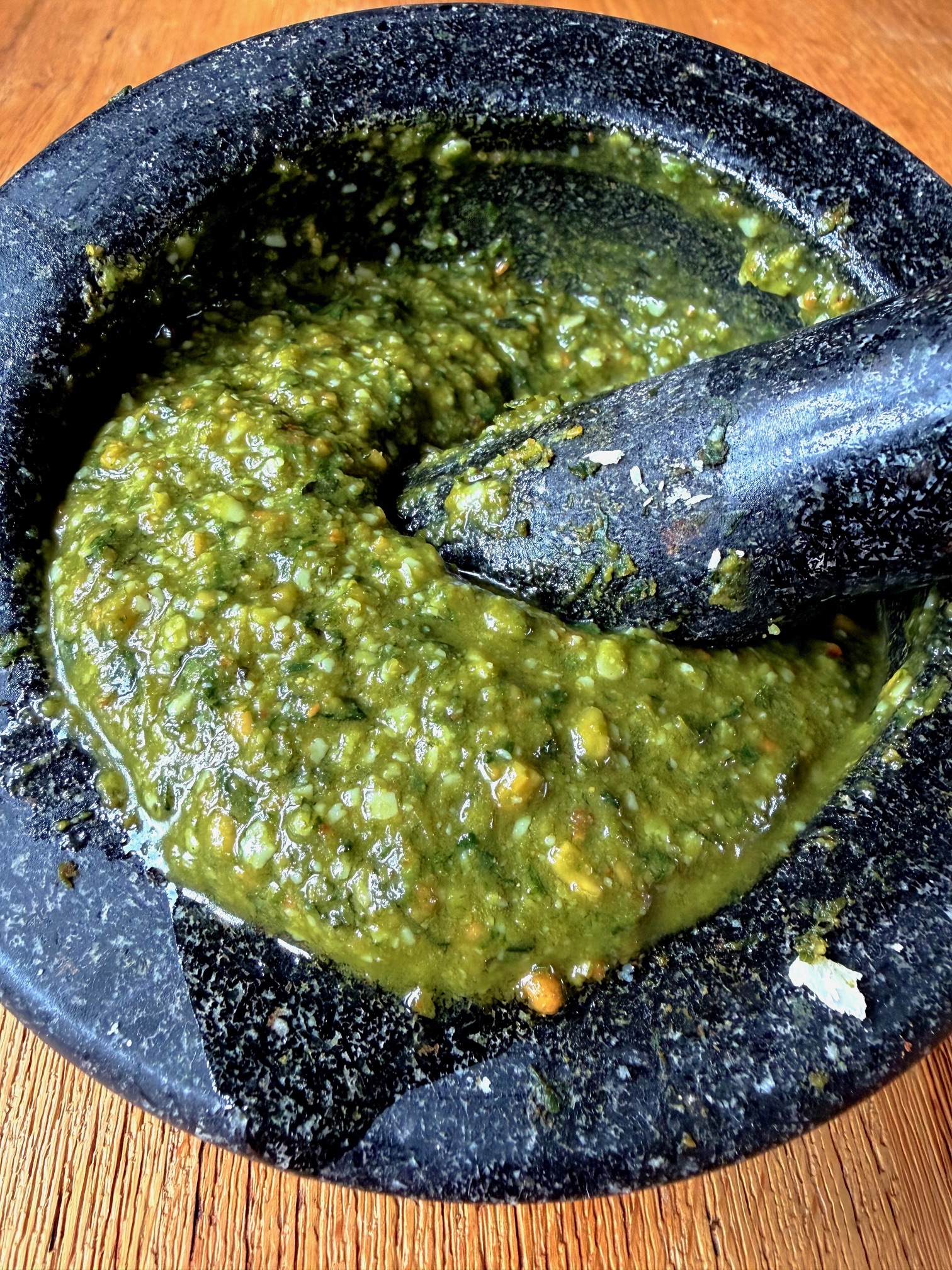
Homemade pesto recipe
Homemade pesto is the easiest way to turn fresh basil into a bright, flavour‑packed pesto sauce that’s perfect for quick weeknight dinner ideas and easy family dinners. This fresh basil pesto recipe shows you how to make pesto using a pestle and mortar or a blender, creating a classic basil pesto that’s ideal for pesto pasta, spreading, dipping, or stirring into your favourite meals.
Print
Pin
Share Recipe
Servings: 8
Equipment
- 1 pestle and mortar (or food processor)
Ingredients
- 60 grams basil
- 60 grams parmesan
- 60 grams pine nuts
- 2 clove garlic
- 110 mls extra virgin olive oil
- salt and pepper
Instructions
- Toast the pine nuts: Heat the oven to 180°C. Spread the 60g pine nuts on a baking tray and toast for 6–8 minutes until lightly golden and fragrant. Let them cool slightly.
- Prep the basil: Pick the leaves from the stems and pat them dry so the pesto stays thick and vibrant.
- Crush the garlic: Add 2 garlic cloves and a pinch of salt to your pestle and mortar. Grind into a smooth paste.
- Work in the basil: Add the 60g basil a handful at a time, grinding until the leaves break down into a deep green paste.
- Add the pine nuts: Tip in the toasted pine nuts and crush them into the garlic and basil until you have a coarse, nutty mixture.
- Mix in the Parmesan: Stir through the 60g grated Parmesan until everything comes together into a thick, rustic base.
- Add the olive oil: Slowly pour in 110ml extra virgin olive oil, stirring as you go to create a glossy, spoonable pesto sauce. Taste and adjust seasoning.
- If you’re short on time, add the basil, garlic, toasted pine nuts, and Parmesan to a food processor. Pulse until finely chopped, then drizzle in the olive oil while blending until the pesto reaches your preferred consistency. Season to taste.
Notes
- Toast the pine nuts properly — five minutes in the oven makes all the difference. Raw pine nuts taste like sadness; toasted pine nuts taste like you know what you’re doing.
- Dry basil = better pesto — any water on the leaves will dull the flavour and turn your pesto a murky green.
- Pestle and mortar gives you bragging rights — and a brighter, more traditional flavour. You’re crushing the basil instead of blitzing it, which keeps the oils intact and the taste fresher.
- Food processor is the weeknight hero — when the kids are hungry and the pasta water is already boiling, the processor gets pesto on the table in minutes. No judgement here!
- Add the oil slowly — whether you’re stirring or blending, a slow drizzle gives you that glossy, spoonable pesto instead of a greasy puddle.
- Season at the end — Parmesan is salty, pine nuts are rich, and basil can vary. Taste first, then adjust. It’s easier than explaining why dinner tastes like the sea!
- Keep it green — store leftovers with a thin layer of olive oil on top. It stops the air getting in and keeps your pesto looking fresh instead of “forgotten in the fridge.”
- Use it everywhere — pesto pasta is the obvious choice, but it’s also magic on sandwiches, stirred into soups, drizzled on roasted veg, or eaten straight off the spoon when no one’s watching. If your feeling fancy try it with your own homemade pasta.